What Documents Should I Gather Before Listing My Paso Robles Home?
September 20, 2026
September 20, 2026
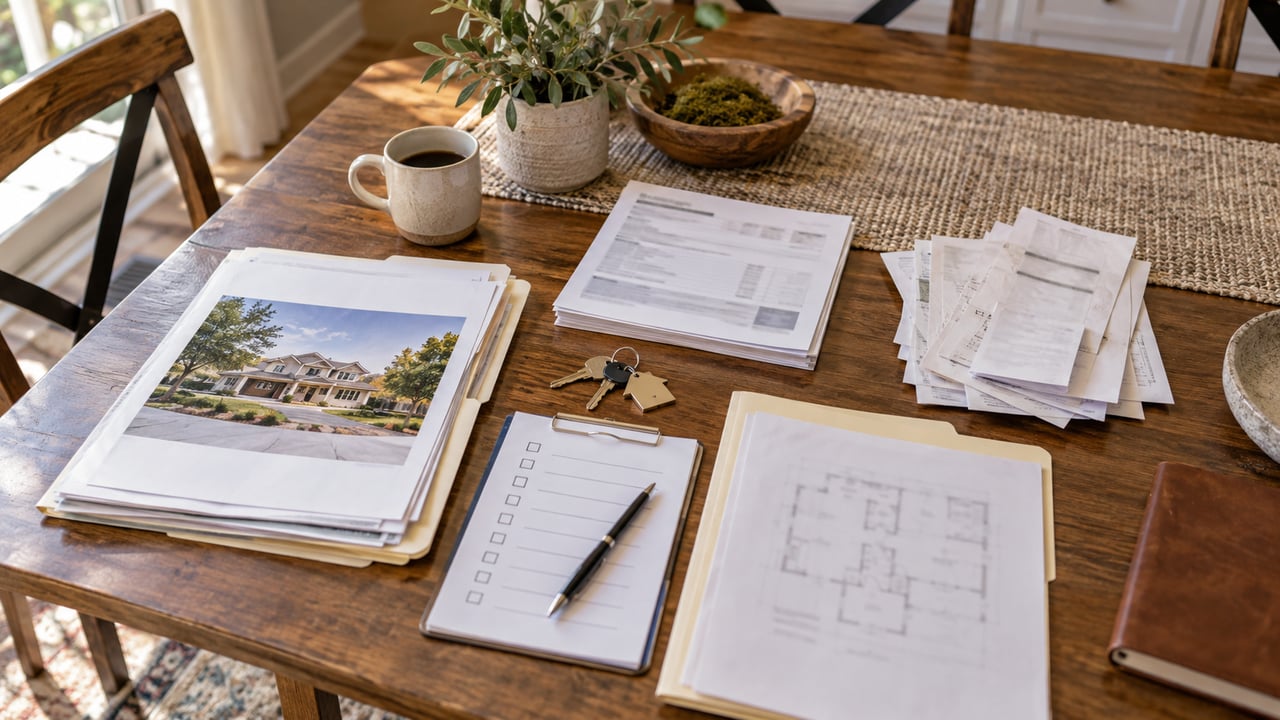
Before listing your Paso Robles home, gather the documents that confirm who owns the property, what is owed on it, how the home has been maintained, and which property details a buyer may need to review. You do not need a perfect binder before calling a real estate agent. Start with what you already have, then let your agent help identify what is relevant and what still needs to be requested.
The goal is simple. Good records help your listing team understand the property, prepare accurate marketing, anticipate questions, and keep avoidable surprises from slowing the sale.
Here’s the thing. Sellers often wait to contact an agent because they think every document must be found first. It does not. A good preparation meeting should give you a clear list based on your home, ownership, loan, improvements, and plans.
Your agent and the title or escrow professionals involved in the sale will need to confirm how title is held and who has authority to sell. You may already have a copy of the recorded deed from your purchase or a later ownership change. If you cannot find it, that is common. It can usually be obtained through the appropriate public records or title channels.
Gather any documents connected with a trust, estate, marriage, divorce, or other ownership change if those circumstances apply. Do not send sensitive records casually. Tell your agent what situation applies so the correct professional can explain which documents are actually needed and how they should be handled.
You should also have current identification available when escrow requests it. Names should be consistent with the ownership records. If a name has changed or an owner is deceased, address that early instead of discovering the issue close to signing.
A preliminary title report can identify recorded ownership, loans, easements, and other items that may affect the transaction. My article What Is a Preliminary Title Report and Why Is It Important? explains what this report does and why early review can be useful.
If the property has a mortgage, home equity line, or other loan secured by the home, gather the most recent statement for each account. Your escrow team will later request formal payoff figures from the lender, but current statements help identify the loan servicer and account information.
Do not estimate the payoff using the balance shown on a monthly statement. A formal payoff can include interest through a specific date and other lender charges. The statement is a starting point, not the final closing number.
If a loan was paid off but may still appear in the public record, keep any satisfaction or reconveyance paperwork you received. If you do not have it, tell your agent or escrow officer early. The goal is to give the title team time to research a release if needed.
Sellers sometimes forget about a line of credit because the balance is low or the account is no longer being used. If it is secured by the property, it still matters. Include it in the conversation.
Keep a current property tax bill available, especially if the mailing address differs from the property address. Your closing statement will account for taxes according to the transaction and closing date, but the bill can help confirm the assessor information and parcel number.
If the property is subject to a special assessment, community facilities charge, road agreement, or similar obligation, gather any notices you have received. Paso Robles properties vary widely. A home in town may have a different set of records than acreage outside the city limits.
This is one reason generic seller checklists can only go so far. The right document list depends on the actual property.
Repair receipts and service records can help answer buyer questions and show how the home has been cared for. Focus on meaningful property systems and improvements rather than saving every small household receipt.
Useful records may include:
Do not create claims you cannot support. If you remember work being completed but cannot locate the invoice, simply tell your agent what you know. Records are helpful, but guessing at dates, contractors, permits, or warranties creates a bigger problem than an incomplete file.
If you completed an addition, garage conversion, accessory dwelling unit, deck, pool, electrical upgrade, or other major project, gather the permits, plans, final approvals, and contractor documentation in your possession.
Do not assume every old improvement was permitted simply because it existed when you bought the property. Also, do not describe work as unpermitted without first confirming the facts. Bring the information to your agent so you can decide what research is appropriate.
Rural properties may have additional records involving wells, septic systems, grading, access, barns, workshops, agricultural improvements, or private roads. A Paso Robles listing strategy should account for those features from the beginning.
Buyers often ask practical questions about how a property functions. Gather recent utility information when it is relevant and available. This might include the names of service providers, propane tank ownership or lease terms, trash service, water source, sewer or septic information, and internet options.
You do not need to promise that a future buyer’s bills will match yours. Household size, usage, weather, and rates vary. The useful part is identifying the systems and providers accurately.
If the property has solar, find the purchase agreement, lease, power purchase agreement, current statement, warranty, and transfer information. Solar paperwork should be reviewed early because ownership and financing terms can affect the sale process.
If your home belongs to a homeowners association, gather the current contact information, payment details, and any rules or notices you have. Escrow will usually order the formal disclosure package through the appropriate channel, but your existing records help your agent understand the community and identify questions early.
Also note any planned assessment, pending architectural request, violation notice, or approval related to the property. Do not hide an issue and hope it disappears. Early information gives you and your agent time to determine the correct next step.
If the property is rented, occupied by a family member, or subject to another occupancy arrangement, tell your agent before the listing plan is built. Gather any written lease, amendments, payment records, deposits, notices, and property-management documents that apply.
Tenant-occupied sales require careful planning around access, communication, timing, and the terms of the occupancy. Your real estate agent can coordinate the sale strategy, but legal questions about tenant rights or notices should be directed to the appropriate California professional.
A one-page timeline can be surprisingly helpful. List the year you purchased the home, major improvements, important repairs, system replacements, and anything else a buyer may reasonably ask about.
Keep it factual. For example:
This history helps your agent prepare property features and respond to questions. It also makes it easier to see which facts are documented and which still need confirmation.
Gathering records is not the same as completing seller disclosures. Disclosures are a formal part of the California sale process and should be completed carefully based on your actual knowledge and the guidance provided by the professionals handling the transaction.
Do not copy old answers without reviewing them. Do not let a contractor invoice replace a known fact about the property. Records support the process, but they do not make the decisions for you.
Your agent should explain the workflow and help you stay organized. Questions that require legal advice should go to a qualified California attorney.
Property files can contain loan numbers, bank information, signatures, account details, and personal identification. Store them securely. Do not leave them on a kitchen counter during photography or showings, and do not email a full folder to people who do not need it.
When a specific record is requested, confirm who is requesting it and why. Share only through the method recommended for the transaction.
Do not let a missing receipt or misplaced deed keep you from starting. Your first step is to make three groups:
That list is more useful than a box of unsorted paper.
My guide What Should I Do Before Listing My Home in Paso Robles? covers the broader preparation process. For a full seller overview, read the Paso Robles Home Seller Guide.
Document preparation also supports an accurate estimate of your likely sale proceeds. Your agent can prepare a seller net sheet using the anticipated price, loan information, commissions, taxes, escrow and title charges, and other expected items.
The numbers will change as the price, terms, and closing date become known. Still, an early estimate helps you plan your next move with clearer expectations. What Closing Costs Do Sellers Pay in California? explains the common categories sellers may see.
Start with this working list and adjust it to your property:
Gathering documents early does not mean handing every page to every buyer. It means your listing team can identify what matters, confirm facts, prepare accurate materials, and respond when a legitimate question comes up.
At Pillar Real Estate, I help Paso Robles and San Luis Obispo County homeowners build a clear selling plan around the actual property. That includes deciding what to prepare, what to request, and what can wait. The right strategy should make the process feel more manageable from start to finish.
If you’re thinking about selling and want a step-by-step overview of how the process works from preparation to closing, I’ve created a seller resource that walks through what to expect.
This is a helpful place to start if you’re gathering information and weighing your options.
Amber
Amber Johnson, Founder
Pillar Real Estate
805.835.3425
[email protected]
1345 Park St. Paso Robles, CA 93446
DRE# 01925434
Amber Johnson | September 20, 2026
The records that help confirm ownership, payoff information, property history, and a smoother listing process.

Amber Johnson | September 18, 2026

Amber Johnson | September 18, 2026

Amber Johnson | September 18, 2026
How wells, septic systems, acreage, access, and the buyer pool shape a rural-property sale.

Amber Johnson | September 17, 2026
What concession requests can signal about buyer leverage, affordability, and current negotiations.

Amber Johnson | September 17, 2026
What sellers should know about owned, financed, and leased solar before listing.

Amber Johnson | September 17, 2026
How roof condition, insurance, buyer financing, and repair costs can shape the right decision.
Amber Johnson | September 17, 2026

Amber Johnson | September 17, 2026
You’ve got questions and we can’t wait to answer them.

Amber Johnson, Founder
Pillar Real Estate
805.835.3425
DRE# 01925434
1345 Park Street
Paso Robles, CA 93446