Mortgage Rates Above 7%: What SLO County Home Buyers Should Consider
September 17, 2026

September 17, 2026
Mortgage rates recently moved back above 7%, and it's understandable that some prospective home buyers are looking at that number and wondering:
Should I just wait?
Higher mortgage rates matter.
They directly affect borrowing costs and can have a significant impact on a buyer's monthly mortgage payment.
But if you're considering buying a home in San Luis Obispo County, the interest rate isn't the only number worth evaluating.
Sometimes a change in rates can also change the environment in which you're negotiating.
Higher Rates Can Affect Buyer Behavior
When mortgage rates rise, some prospective buyers may decide to pause their home search.
Others may reduce their target purchase price.
Some may simply need time to reevaluate their finances.
That doesn't automatically mean every home will have less competition or that sellers will suddenly offer large concessions.
Real estate is property-specific.
But on certain homes, reduced buyer activity may create a different negotiating environment than you would encounter in a highly competitive market.
That's why buyers shouldn't look only at the headline mortgage rate.
Look at the Entire Transaction
When I'm helping a buyer evaluate a potential purchase, there are multiple pieces of the equation to consider.
Purchase Price
What is the seller asking?
More importantly, what price and terms can ultimately be negotiated?
Mortgage Rate
What financing options are actually available to you based on your loan program and financial qualifications?
Your lender should be your resource for specific rates, loan products, and qualification questions.
Monthly Payment
The interest rate matters partly because of what it does to the payment.
Buyers should understand the estimated total monthly housing expense associated with a potential purchase, not simply focus on a rate advertised online.
Seller Concessions
Depending on the property, seller, loan program, and transaction, it may be possible to negotiate seller concessions toward certain allowable buyer costs.
Repairs
Property condition can also become part of the overall negotiation.
The appropriate strategy depends on the home, inspections, contract, seller, and buyer priorities.
Competition
How much interest is there in the property?
Are you competing against multiple buyers?
Has the property been sitting on the market?
Every listing can present a different situation.
A Recent Example: More Than $33,000 in Seller Concessions
Here's why looking at the entire transaction matters.
Recent clients of mine negotiated a reduced purchase price plus more than $33,000 in seller concessions.
Those concessions helped them cover costs that included an interest-rate buydown, closing costs, repairs, and other allowable costs associated with their purchase.
Using part of the concessions toward the rate buydown helped reduce their interest rate and monthly payment compared with the financing terms without that buydown.
That's a meaningful part of their particular transaction.
But it's important to understand what this example does, and does not mean.
It does not mean every buyer will negotiate $33,000 in concessions.
It doesn't mean every seller will agree to a rate buydown.
And it doesn't mean buying at a higher prevailing mortgage rate is automatically the right decision.
It demonstrates why the entire structure of an offer and transaction matters.
Can a Seller Help Buy Down Your Mortgage Rate?
Depending on the loan program and transaction, seller concessions may sometimes be applied toward eligible closing costs or financing expenses, which can potentially include an interest-rate buydown.
There are limits and requirements governing seller concessions, and they can vary based on financing and transaction details.
That's why your lender needs to be involved in determining what's permissible and what a particular buydown would actually accomplish.
The goal isn't simply to say:
“Get the seller to buy down the rate.”
The better question is:
“If we have negotiating room, where does using that money create the most value for this particular buyer?”
Is It Better to Negotiate the Price or the Interest Rate?
There isn't one answer for every buyer.
A purchase-price reduction and a mortgage-rate buydown can affect your finances differently.
Your down payment, financing, time horizon, loan structure, available cash, and other factors can influence which approach makes sense.
This is an area where your real estate agent and lender can help you understand the different components of a potential transaction.
Don't Assume You Can “Just Refinance Later”
You'll sometimes hear:
“Marry the house, date the rate.”
I don't build a buying strategy around assuming that refinancing will be attractive or available later.
Rates could decline.
They could remain elevated.
A borrower's circumstances could change.
Future refinancing also involves qualification and potentially additional costs.
If a purchase only makes sense if you're guaranteed a significantly lower mortgage rate in the future, that's something you should think through carefully.
I would rather help a buyer evaluate whether the transaction makes sense based on the information and options available today.
Should You Buy Now or Wait?
That's the question many buyers really want answered.
And it depends on you.
Your finances.
Your expected time in the home.
Your available cash.
Your monthly payment comfort level.
Your housing needs.
The property.
The seller.
The competition.
And the terms we're able to negotiate.
A higher mortgage rate is an important part of that decision.
It just isn't the entire decision.
What's the Entire Opportunity?
Instead of looking at a home and asking only:
“What's today's mortgage rate?”
I encourage my buyers to look at the bigger picture.
What is the purchase price?
What does the payment look like?
What can we negotiate?
Are seller concessions available?
Are there repairs to consider?
What's the competitive environment?
And does the entire transaction make sense for your financial situation and goals?
If higher mortgage rates have you wondering whether you should buy now or wait, message me RATE.
We can look at the real estate side of the equation together, involve your lender for the financing side, and help you understand what options may be available before you make your decision.
Amber Johnson, Founder
Pillar Real Estate
805.835.3425
[email protected]
1345 Park St. Paso Robles, CA 93446
DRE# 01925434
This article is for general informational purposes and is not financial, lending, tax, or legal advice. Mortgage rates, financing programs, qualification requirements, seller-concession limits, and allowable uses of credits vary. Consult the appropriate qualified professionals regarding your individual situation.

Amber Johnson | October 26, 2026
Compare trail access, drive time, terrain and weather with the routine you actually want before choosing an Atascadero home.
Amber Johnson | October 25, 2026
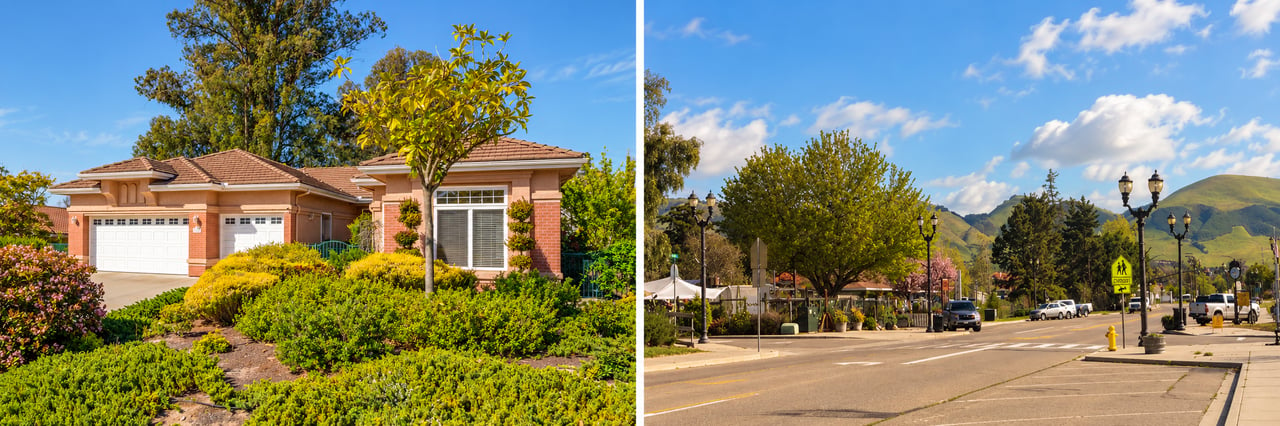
Compare home settings, road patterns, community amenities and daily routes before choosing between these two Nipomo areas.
Amber Johnson | October 25, 2026
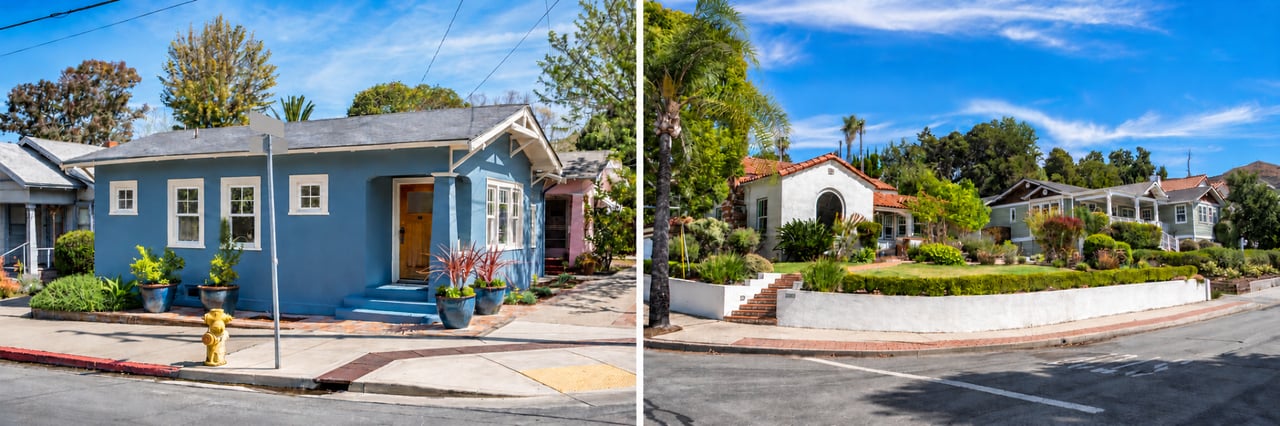
Compare housing patterns, access, street activity and daily routes before choosing between these San Luis Obispo areas.

Amber Johnson | October 25, 2026
Test both routes, work schedules and the trip from a specific home before deciding whether Oceano supports the household's routine.

Amber Johnson | October 25, 2026
Verify service at the exact address, backup connectivity, power reliability and workspace needs before choosing a Creston property.
Amber Johnson | October 25, 2026
Set buyer expectations with accurate positioning, thoughtful presentation and firsthand checks at different times of day.

Amber Johnson | October 24, 2026

Amber Johnson | October 21, 2026

Amber Johnson | October 21, 2026
You’ve got questions and we can’t wait to answer them.
Amber Johnson, Founder
Pillar Real Estate
805.835.3425
DRE# 01925434
1345 Park Street
Paso Robles, CA 93446