How Does Living Near the Paso Robles Municipal Airport Affect a Home Sale?
September 30, 2026
September 30, 2026
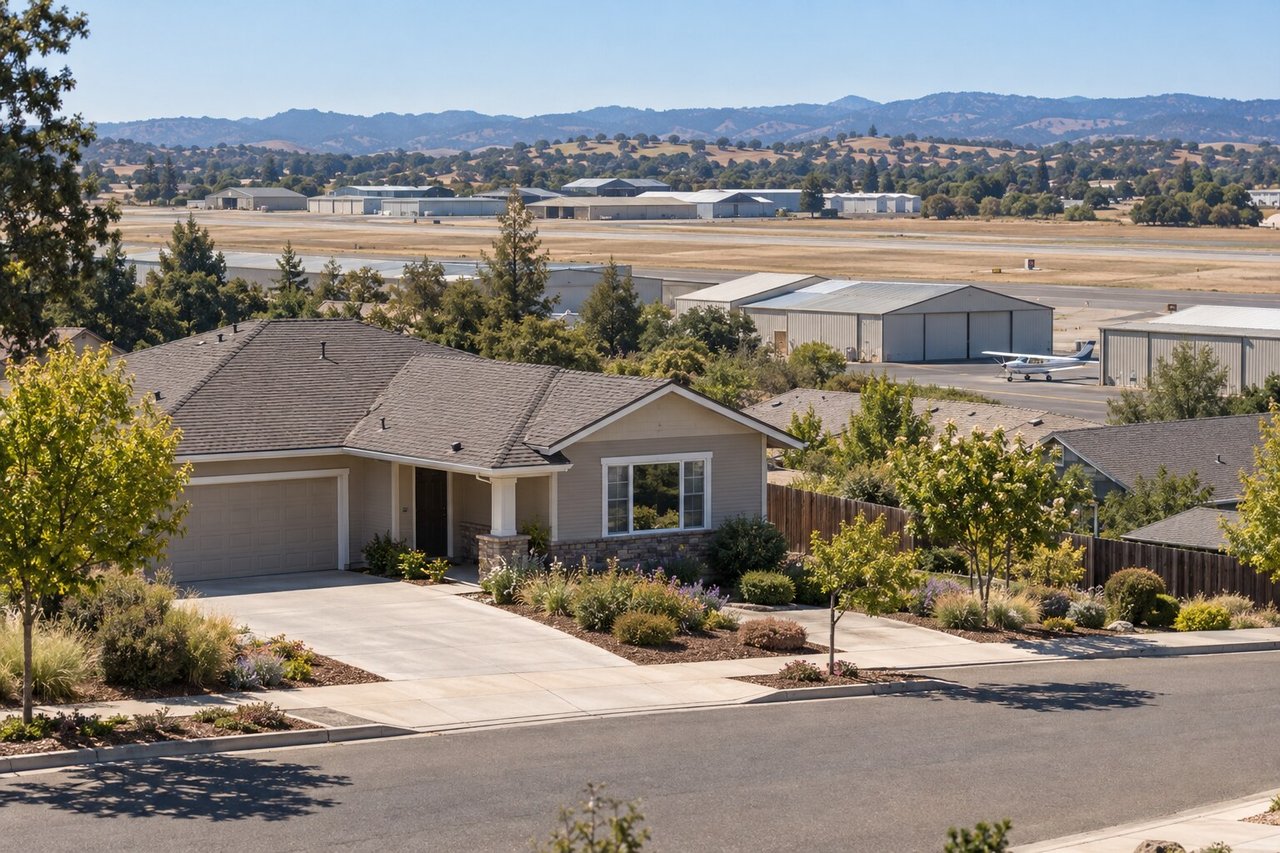
Living near the Paso Robles Municipal Airport can affect a home sale, but proximity alone does not determine the outcome. What matters is how the property actually experiences the airport. Aircraft noise, the home’s position, access to nearby roads, surrounding land uses, and buyer preferences all shape demand.
Here’s the thing. Two homes can be the same distance from the airport and create very different impressions. One may have a clear view of hangars or regular aircraft activity. Another may feel like a quiet residential property with convenient access to employment, services, and major roads. Sellers need to understand the experience buyers will have at the property, not just the distance shown on a map.
When buyers hear that a home is near an airport, they may picture constant noise, large commercial aircraft, or heavy traffic. The actual setting around the Paso Robles Municipal Airport can be much more specific. A buyer’s reaction will depend on what they hear and see during a showing, how often activity is noticeable, and whether it affects the areas where they expect to relax.
That is why a broad label such as “near the airport” is not enough. A seller should look at the property’s exact position, the direction the home faces, the placement of bedrooms and outdoor spaces, and the features between the home and airport activity. Distance matters. So do elevation, landscaping, buildings, and the surrounding neighborhood.
The right strategy starts with the property itself. It does not begin with an assumption that airport proximity is automatically negative or automatically convenient.
Noise is usually the first concern buyers raise. The important question is not whether aircraft can ever be heard. It is how noticeable the activity is inside the home, in the yard, and during the times buyers are most likely to use those spaces.
A brief sound outdoors may not concern one buyer. Another buyer who works from home, sleeps during the day, or values a very quiet backyard may feel differently. The same feature can produce different reactions because buyers are comparing the home with their own routines.
Sellers should experience the property the way a buyer will. Walk through the main living areas with the windows open and closed. Spend time in bedrooms, the backyard, and any patio or entertaining area. Notice whether aircraft activity interrupts conversation or simply registers in the background. This gives you a more useful understanding than a map pin alone.
If the home is well insulated or has updated windows, buyers may notice less sound indoors. Those features can be presented accurately as part of the home’s overall comfort. They should not be framed as a guarantee that no aircraft will ever be heard.
Property position changes how airport proximity feels. A home with a direct view toward hangars or open airport land may make the connection obvious. A home on a lower street, behind mature landscaping, or within a more enclosed residential setting may feel more separated.
The orientation of the backyard can also matter. Buyers often spend more time evaluating outdoor space than sellers expect. If the primary patio faces away from airport activity, that may create a different experience from a yard with a direct line of sight toward the runway area.
This is part of the larger question of how much a neighborhood affects a home’s sale price in Paso Robles. Buyers are not purchasing the structure in isolation. They are buying the setting, access, views, nearby uses, and daily experience that come with it.
Airport proximity is not only about sound. Location can also offer practical advantages. Depending on the property, buyers may appreciate access to nearby roads, employment areas, services, or the broader North County business community.
A buyer who works in aviation, owns an aircraft, travels for business, or values access to the airport may see the location differently from a buyer who prioritizes complete separation from any aviation activity. Neither buyer is wrong. They are looking for different things.
This is why sellers benefit from understanding what buyers consider when choosing a neighborhood in Paso Robles. The best marketing does not try to persuade every person. It gives the right buyer a clear and accurate picture of the location.
Some buyers will remove any home near an airport from their search. Others will not consider it a meaningful issue after visiting the property. Most will evaluate it alongside price, condition, lot size, commute, neighborhood feel, and the alternatives available at the same time.
That means demand can change as competing inventory changes. If several similar homes are available in quieter-feeling locations, buyers may expect a stronger value proposition from the home near the airport. If the property offers a better layout, improved condition, usable outdoor space, or more convenient access, those benefits may keep it competitive.
A seller cannot control every buyer preference. The goal is to position the home for the buyers who can appreciate its full package.
Location decisions are rarely based on one nearby feature. Buyers also consider how long it takes to reach work, schools, shopping, medical services, downtown Paso Robles, and Highway 101. A property that supports a buyer’s daily routine can remain attractive even when there is a nearby use they want to understand.
This is especially relevant for buyers asking whether they can live in Paso Robles without a long commute. Airport-area access may be a practical benefit for some households. For others, a different neighborhood may better match where they spend their time.
Good marketing connects the property to the buyer’s real decision. It explains access and setting without hiding the airport or making exaggerated claims about convenience.
Airport proximity should not be converted into an automatic price adjustment. There is no single amount that applies to every nearby home. The effect depends on how the property compares with recent sales, current competition, condition, upgrades, lot characteristics, and the way buyers respond during the listing period.
The most useful comparable properties are those that share similar location influences. A sale across town may be similar in size and age but offer a completely different setting. A closer sale may provide better context if it has comparable exposure to aircraft activity, road access, or nearby commercial uses.
Pricing too aggressively can magnify buyer hesitation. Pricing too conservatively without evidence can leave money on the table. The right strategy uses the closest available comparisons and then watches actual showing activity, feedback, and offer quality.
A seller does not need to redesign the property around the airport. Preparation should focus on what makes sense for the home and the likely buyer.
Start with the areas buyers will use most. Make sure windows and exterior doors close properly. Address obvious maintenance concerns. Clean and define outdoor spaces so buyers can picture how they would use them. If landscaping provides privacy or visual separation, maintain it so that benefit is easy to see.
Presentation also matters. Strong photography can show the home’s relationship to the neighborhood without creating a misleading impression. Interior photos should emphasize light, layout, condition, and livability. Exterior images should give buyers an honest understanding of the setting.
Generic preparation advice is often expensive and unnecessary. It depends on your situation. A local review can help determine whether sound-related improvements, landscaping work, or simple maintenance would actually support the sale.
Trying to hide the airport is not a useful marketing plan. Buyers can see maps, satellite images, and nearby landmarks before they visit. If the location surprises them at the showing, trust drops quickly.
Accurate marketing sets expectations. It can identify the home’s neighborhood, access, layout, condition, and other strengths while allowing buyers to decide how the location fits their needs.
The distinction between location and property is important. Buyers often ask whether they should choose the perfect location or the perfect house. In reality, most are balancing both. A strong home in a location that works for their routine can be the right choice, even if another buyer would choose differently.
Sellers should not try to schedule every showing around the quietest possible moment. That approach can create problems if a buyer later experiences normal activity that was not apparent during the first visit.
Instead, the home should be shown as it normally lives. Keep the property comfortable, well lit, and easy to access. Let buyers spend enough time indoors and outside to evaluate the setting for themselves.
If a buyer asks about aircraft activity, answer what is known without guessing. Avoid broad promises about future schedules, flight frequency, or development. Clear, measured answers help buyers make their own informed decision.
Once the home is listed, buyer feedback becomes useful data. If several qualified buyers raise the same concern, that pattern deserves attention. The response may involve pricing, presentation, marketing emphasis, or simply allowing enough time for the right buyer to find the property.
One comment does not define the market. Repeated feedback combined with weak showing activity can signal that the value proposition needs adjustment. Strong activity with no location objections may confirm that the initial positioning is working.
A clear plan should identify what will be monitored from the start. That keeps sellers from reacting emotionally to every individual opinion.
These questions turn a general concern into a property-specific strategy. They also help sellers separate assumptions from what buyers are actually experiencing.
Living near the Paso Robles Municipal Airport can influence a home sale, but the effect depends on the property’s exact position and the buyer’s priorities. Aircraft noise, visual exposure, road access, outdoor spaces, condition, and competing inventory all matter.
The strongest plan is accurate and specific. Understand the experience at the property. Compare it with the right homes. Prepare the spaces buyers will evaluate closely. Then market the home to the people most likely to appreciate what it offers.
Airport proximity is one part of the decision, not the entire story. With clear pricing and thoughtful presentation, sellers can give buyers the information they need and protect the home’s strongest value.
If you are considering a sale near the Paso Robles Municipal Airport, I can help you evaluate the property’s position, likely buyer pool, and the right strategy for your goals. Visit Sell With Amber to start the conversation.
Amber
Amber Johnson, Founder
Pillar Real Estate
805.835.3425
[email protected]
1345 Park St. Paso Robles, CA 93446
DRE# 01925434
https://pillarrealestate.com/
Amber Johnson | September 30, 2026
How aircraft noise, access, property position, and buyer preferences can influence demand.

Amber Johnson | September 29, 2026
How market pace, pricing, competition, and property condition can shape the meaning of this number.

Amber Johnson | September 29, 2026
How safety, proximity to structures, removal cost, and curb appeal can shape the decision.

Amber Johnson | September 29, 2026
How panel age, labeling, visible condition, and buyer confidence can influence preparation.

Amber Johnson | September 29, 2026

Amber Johnson | September 29, 2026
Amber Johnson | September 29, 2026
How moisture source, current dryness, repair scope, and buyer questions can guide the next step.

Amber Johnson | September 29, 2026
How seal failure, visibility, energy concerns, and repair cost can shape the decision.

Amber Johnson | September 28, 2026
You’ve got questions and we can’t wait to answer them.

Amber Johnson, Founder
Pillar Real Estate
805.835.3425
DRE# 01925434
1345 Park Street
Paso Robles, CA 93446