Should I Buy the Perfect Location or the Perfect House?
July 29, 2026
July 29, 2026
You find a house you love.
The kitchen is updated.
The floor plan works.
The backyard has exactly the space you wanted.
There's just one problem.
You aren't sure about the location.
Then you find another home.
It's in the area you love.
The commute works.
You already like spending time nearby.
But the house itself isn't quite what you pictured.
Now you're stuck.
Do you choose the better house or the better location?
Here's the thing.
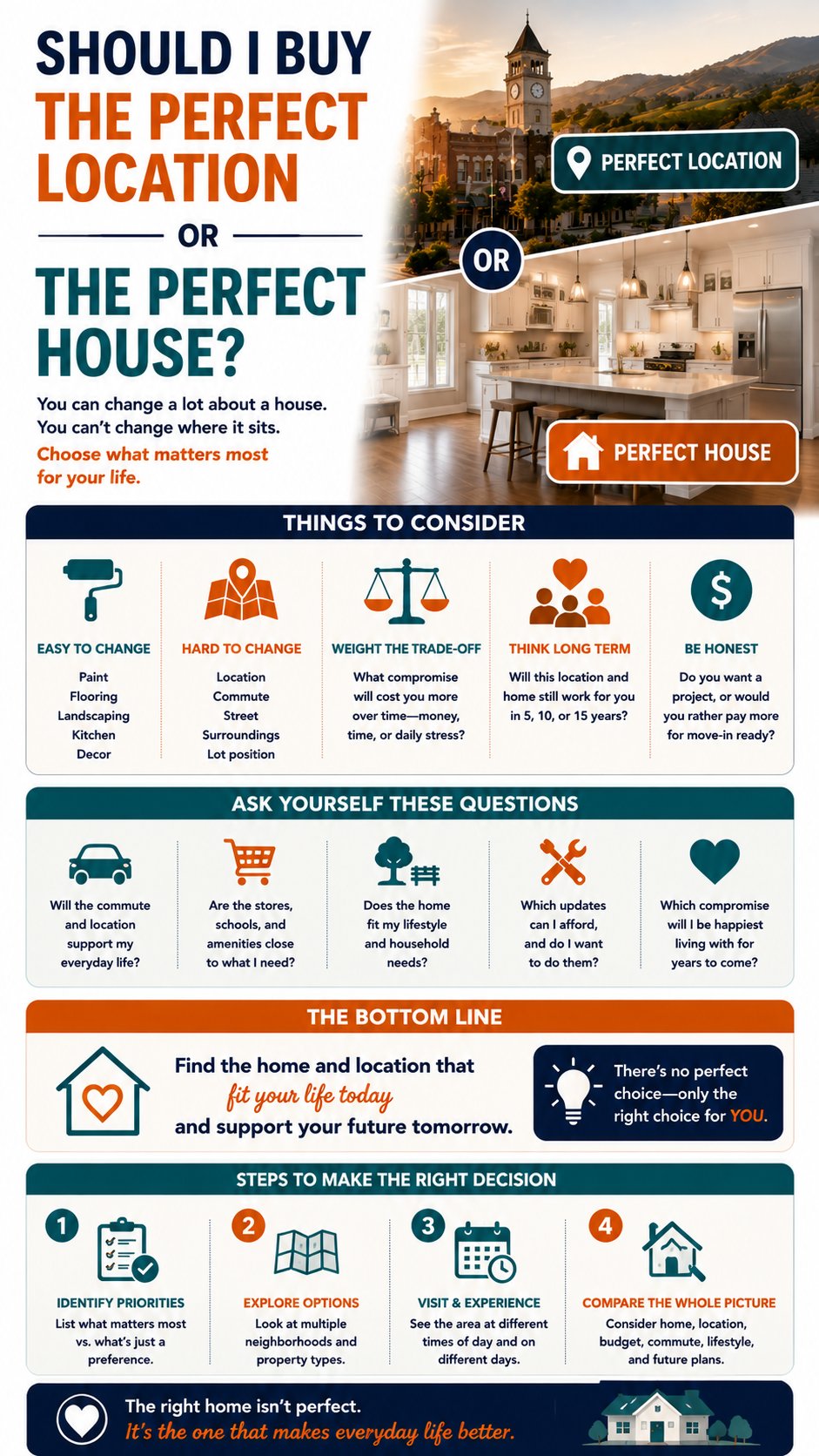
You can change a lot about a house. You can't change where it sits.
That doesn't automatically mean location should win every time.
But it does mean location deserves more weight than buyers sometimes give it.
The right decision depends on what you're compromising on, what can realistically be changed, and what makes sense for your goals.
Amber is a real estate agent in Paso Robles, CA helping buyers throughout San Luis Obispo County compare homes, neighborhoods, and the trade-offs that come with both. Her approach is hyperlocal because the right strategy depends on the specific property, neighborhood, buyer, and goals, not generic advice.
The perfect house in the wrong location can become a frustrating compromise. The less-than-perfect house in the right location may give you options you didn't see at first.
Why This Decision Is So Difficult
When you're touring homes, the house gets most of your attention.
That's natural.
You're walking through the kitchen.
Opening closets.
Looking at bedrooms.
Standing in the backyard.
The neighborhood can almost become background scenery.
But once you own the home, your experience doesn't stop at the property line.
You'll drive those streets every day.
You'll make that commute.
You'll use the nearby stores and services.
You'll experience whatever comes with that particular location.
The house is where you live.
The location helps shape how you live.
Both matter.
The Biggest Misconception
Buyers sometimes hear:
"Always buy the worst house in the best neighborhood."
I think that's too simple.
What if that house needs more work than you can realistically afford?
What if the floor plan doesn't work for your household?
What if you're buying a project when you don't actually want one?
Location matters.
But so does the house.
The goal isn't blindly choosing one over the other.
It's understanding which compromises are temporary and which ones you're likely to live with for as long as you own the property.
Ask Yourself What Can Actually Be Changed
This is where the decision often becomes clearer.
Don't like the paint?
Change it.
Old flooring?
That can be replaced.
Dated kitchen?
Maybe that's a future project.
Landscaping needs work?
You can improve it over time.
But there are other things that aren't nearly as easy to change.
The street.
The commute.
The surrounding properties.
The lot's position.
The general setting.
That's why two compromises that seem equal during a showing may be very different after you move in.
One can be fixed.
The other comes with the property.
Be Honest About Whether You Really Want a Project
This matters more than people think.
It's easy to walk into an older home and say:
"We can just redo the kitchen."
Maybe you can.
But do you actually want to?
Renovations require money.
Time.
Decisions.
And patience.
There's nothing wrong with buying a home that needs work.
There's also nothing wrong with deciding you don't want your first year of homeownership to involve contractors and construction.
Be honest with yourself.
Sometimes paying more for a home that's already closer to what you want makes sense.
Sometimes accepting cosmetic imperfections gives you access to a location you otherwise couldn't afford.
It depends on your situation.
A dated kitchen can be remodeled. Before choosing the location, think carefully about which compromises can realistically change and which ones can't.
Don't Confuse "Perfect" With "Updated"
This is something I want first-time buyers to think about.
A beautiful house isn't automatically the better house.
Fresh paint photographs well.
New flooring feels good.
An updated kitchen can make a strong first impression.
But cosmetic updates can sometimes distract buyers from the bigger picture.
Maybe another home has an older kitchen but a better lot.
A more functional floor plan.
A location that cuts twenty minutes from your commute.
Or simply a setting that fits your life better.
Don't let finishes make the entire decision for you.
The things that are hardest to change often deserve the most attention.
Think About the Cost of the Compromise
Every home involves some kind of compromise.
The question is what that compromise will cost you.
And I don't mean only money.
A longer commute costs time.
A renovation costs money and energy.
A smaller yard may affect how you use the property.
A different location may change your everyday routine.
When you're comparing two homes, don't simply ask:
"Which house do I like better?"
Ask:
"Which compromise am I more comfortable living with?"
That's often a much easier question to answer.
What I'm Seeing Right Now
Working with buyers throughout Paso Robles, Templeton, Atascadero, and San Luis Obispo County, I see this decision come up all the time.
Buyers start with a picture of the house they want and the exact location where they want it.
Then their actual search begins.
That's when real estate becomes about priorities.
Maybe the budget gets you more house in Atascadero.
Maybe a smaller or less updated home gets you the location you want in Paso Robles.
Maybe Templeton gives you a combination you hadn't considered.
There isn't one correct answer.
The buyers who tend to feel best about their decision understand what they're gaining and what they're giving up.
They're not searching for perfection.
They're deciding which trade-offs make sense for their goals.
A Real-Life Example
I worked with buyers who thought they knew exactly what they wanted.
They loved one particular area.
But they also had a very specific picture of the house.
Updated kitchen.
More space.
A good-sized yard.
Move-in ready.
Then we started looking.
The homes in their preferred location that checked every box were outside the budget they wanted to maintain.
So they had a decision to make.
Move farther away and get more house?
Or stay in the location they preferred and compromise on some of the finishes?
At first, the newer homes were tempting.
They photographed beautifully.
Everything felt finished.
But we kept coming back to one question:
"What matters most once the excitement of the house wears off?"
For them, it was location.
They didn't want the additional driving.
They liked where they spent their time.
They wanted their everyday routine to stay relatively simple.
Eventually, they chose a home in the location they preferred.
It wasn't perfect.
The kitchen was dated.
The flooring wasn't what they would have chosen.
There were projects they knew they'd eventually want to tackle.
But those were things they could change.
The location wasn't.
Once they looked at the decision that way, it became much easier.
The Biggest Mistake
The biggest mistake is assuming you have to choose the house that impresses you most during the showing.
That's understandable.
A beautifully updated home makes an immediate impression.
But you're not buying a showing.
You're buying the life that comes after it.
Six months after closing, you probably won't be thinking about how impressive the kitchen looked the first time you walked in.
You'll be living your normal routine.
Driving to work.
Running errands.
Coming home at the end of the day.
That's why I encourage buyers to think beyond the first impression.
What This Process Should Feel Like
Choosing between location and the house itself shouldn't feel like deciding which dream you're willing to give up.
It should feel like understanding your priorities.
There will be trade-offs.
That's normal.
The goal is knowing which ones matter to you.
Maybe you're willing to update a bathroom over time because you love the neighborhood.
Maybe you'd rather drive farther because having more space matters more.
Maybe you don't want projects at all, and a move-in-ready home is worth compromising somewhere else.
None of those answers are wrong.
What matters is that you're making the choice intentionally.
How This Connects to the Bigger Picture
In the last article, we talked about choosing the right neighborhood.
That conversation naturally leads here.
Once you know which locations fit your lifestyle, you still have to decide what you're willing to compromise on to live there.
That's where priorities become important.
Related: How Do I Know Which Neighborhood Is Right for Me?
The right home doesn't have to be perfect on closing day. It needs to give you the things that matter most and a path to improve the things that don't.
Steps: How to Decide Between the House and the Location
Step 1: Separate Must-Haves From Preferences
Write down what you truly need.
Then write down what you'd simply like to have.
Be careful about putting cosmetic features on the must-have list.
Granite countertops and new flooring may be nice.
Your commute, property type, budget, and space needs may have a much bigger impact on everyday life.
Step 2: Identify What You Can Change
Walk through the home and separate the problems into two categories.
Things you can realistically change.
And things you can't.
Paint belongs in the first category.
Location belongs in the second.
That simple exercise can bring a lot of clarity.
Step 3: Be Realistic About Improvements
Don't automatically assume you'll renovate everything later.
Ask what those projects might require.
Would you actually want to do them?
Can you comfortably budget for them?
Would you be happy living with the home as it is if the projects take longer than expected?
Those answers matter.
Step 4: Picture Everyday Life
Forget the showing for a minute.
Imagine you've already lived there for a year.
What's your commute like?
Where do you spend weekends?
How does the home function?
Which compromise are you noticing every day?
That's usually more useful than asking which property looked better during a 30-minute showing.
So... Should You Buy the Perfect Location or the Perfect House?
If I had to choose where buyers should put more thought, I'd tell them to pay very close attention to location.
Not because the house doesn't matter.
It does.
But many things about a house can change.
The location can't.
At the same time, don't buy a home you genuinely dislike simply because someone told you location is everything.
The right decision is usually somewhere in the middle.
Find the location that supports the life you want.
Then find a house within that location whose compromises you can comfortably live with.
That's the right strategy.
There May Not Be a "Perfect" Choice
This is worth saying.
Sometimes buyers spend too much time comparing two good options because they're waiting for one to become obviously perfect.
That may never happen.
One home might have the better kitchen.
Another might have the better street.
One might give you more space.
Another might shorten your commute.
That's real estate.
The goal isn't finding a home with zero compromises.
It's finding the combination of house, location, price, and lifestyle that makes the most sense for your goals.
The Real Question to Ask
Instead of asking:
"Should I choose the better house or the better location?"
Ask yourself:
"Which things can I change later, and which things will I have to live with?"
That question tends to make the decision much clearer.
Next Steps
If you're comparing homes in Paso Robles, Templeton, Atascadero, or anywhere in San Luis Obispo County, I'd be happy to help you look beyond the listing photos.
We can compare the properties.
The neighborhoods.
The price.
The potential improvements.
And most importantly, what everyday life might look like in each one.
You don't need the perfect house.
You need a home and location that make sense for your goals.
From start to finish.
FAQ
Is location more important than the house when buying a home?
It depends on your priorities, but location deserves serious consideration because it can't be changed. Many features inside a home can be updated over time.
Should I buy an outdated home in a neighborhood I really like?
It can make sense if the home fits your budget and you're comfortable with its current condition. Be realistic about the cost, time, and effort required for any improvements you're planning.
Is it better to get more house farther away?
For some buyers, yes. For others, the additional commute or change in lifestyle isn't worth the extra space. Think about how the location will affect your everyday routine.
What home features should I be willing to compromise on?
Cosmetic features are often easier to compromise on because they can potentially be changed later. Your priorities will depend on your budget, goals, and how much work you're comfortable taking on.
What should I consider before choosing between two homes?
Compare more than price and square footage. Think about location, commute, property condition, future improvement costs, layout, and how each home fits the way you actually live.
Amber Johnson, Founder
Pillar Real Estate
805.835.3425
[email protected]
1345 Park St. Paso Robles, CA 93446
DRE# 01925434
Amber Johnson | September 20, 2026
The records that help confirm ownership, payoff information, property history, and a smoother listing process.

Amber Johnson | September 18, 2026

Amber Johnson | September 18, 2026
Amber Johnson | September 18, 2026
How wells, septic systems, acreage, access, and the buyer pool shape a rural-property sale.
Amber Johnson | September 17, 2026
What concession requests can signal about buyer leverage, affordability, and current negotiations.
Amber Johnson | September 17, 2026
What sellers should know about owned, financed, and leased solar before listing.
Amber Johnson | September 17, 2026
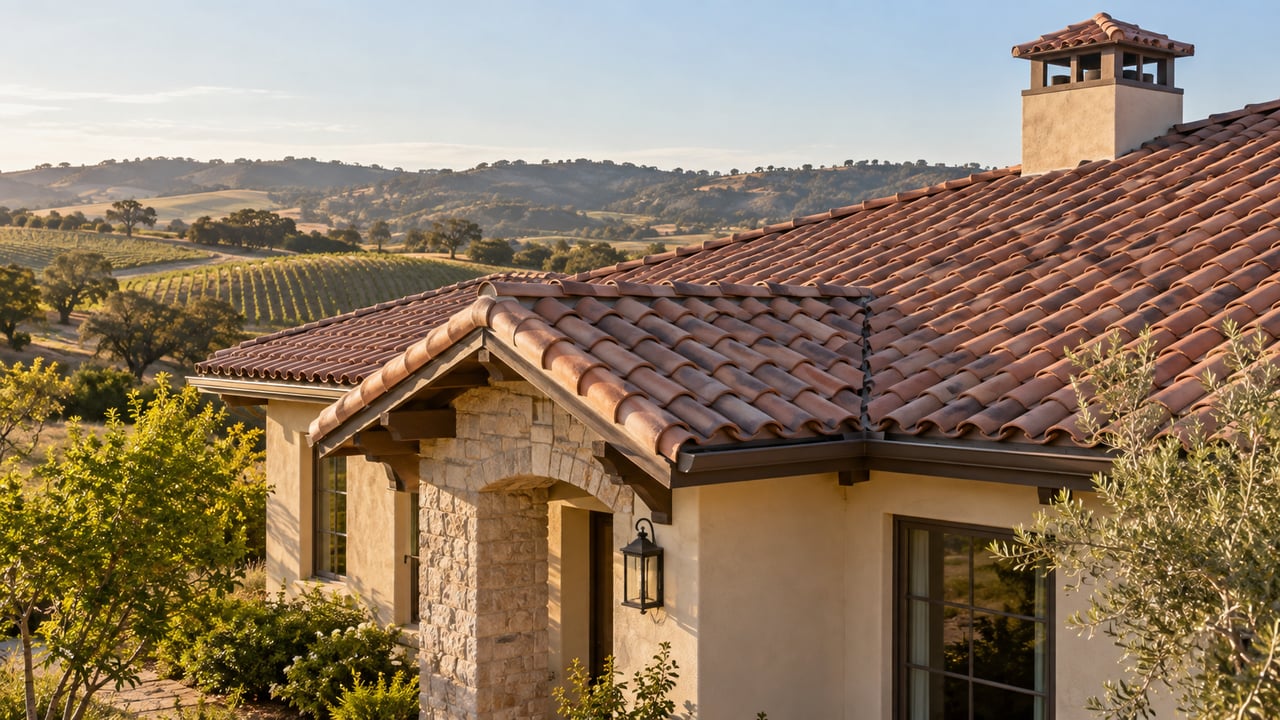
How roof condition, insurance, buyer financing, and repair costs can shape the right decision.
Amber Johnson | September 17, 2026

Amber Johnson | September 17, 2026
You’ve got questions and we can’t wait to answer them.
Amber Johnson, Founder
Pillar Real Estate
805.835.3425
DRE# 01925434
1345 Park Street
Paso Robles, CA 93446