What Should Buyers Check Before Buying a Templeton Home with a Shared Well?
November 4, 2026
November 4, 2026
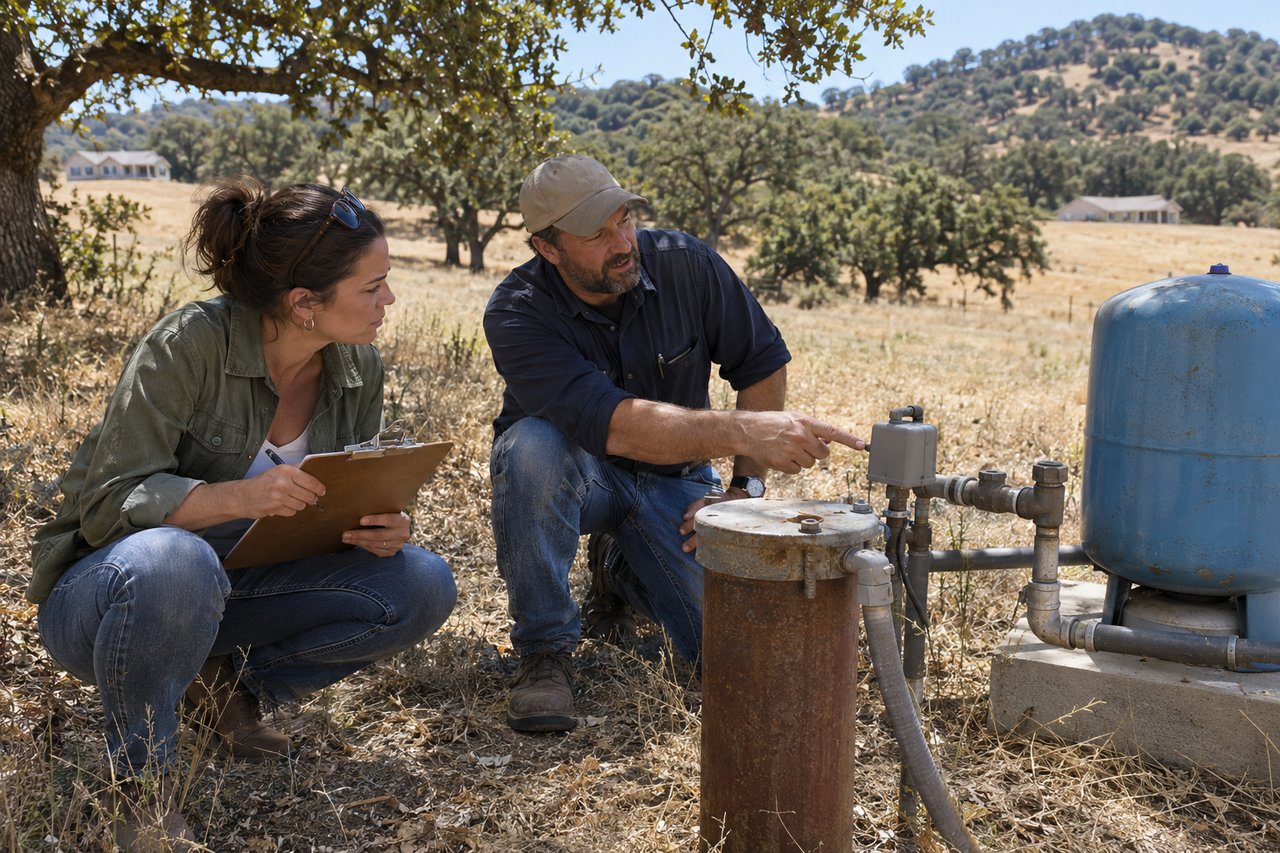
Before buying a Templeton home with a shared well, check the water supply, the physical equipment and the written arrangement connecting the property to that supply. You need to understand what serves the home, who is responsible for it, how costs are handled and what current testing shows. A running kitchen faucet does not answer all of those questions.
I would organize the review early in the purchase process. Well inspections, laboratory results, title questions and document review involve different people. Starting with a clear list helps you find gaps while there is still time to investigate them, rather than discovering near closing that an important answer remains uncertain.
I'm Amber Johnson, founder of Pillar Real Estate. I help buyers evaluate homes in Templeton, Paso Robles and the rest of SLO County. With a shared well, my role is to help coordinate the investigation and keep the questions clear. The appropriate well professionals, laboratory, title team and legal advisers should address the technical and document-specific conclusions.
Start by asking the seller to identify the water source and the properties it serves. Do not assume the well is on the parcel you are buying or that every nearby home participates in the same arrangement. Ask for a clear explanation of the existing system and the records supporting it.
Locate the well, any storage or pressure equipment, and the connection to the house with the people qualified to identify them. A property visit can help you understand the layout, but it should be supported by records. If a component sits on another parcel, note that for the title and access review.
Also ask whether all water used at the property comes from this source. A household supply, irrigation arrangement or another use may raise different questions. The goal is a complete description of the present setup, not a general statement that the property has water.
Request the shared-well agreement, any amendments and the documents the seller relies on for the property's use of the system. Ask your title team to help identify relevant recorded documents. If something is missing or unclear, have the appropriate adviser explain what additional review is needed.
Read for practical questions: Which properties participate? Who owns which equipment? How are decisions made? What happens when a repair is needed? Do not assume the answer from the way the neighbors have handled things informally.
The County's Environmental Health land-use resources include shared-well agreement forms, but a form is not evidence that a particular property has a complete or suitable agreement. The actual documents for the home need their own review. Questions about enforceability, transfer or obligations belong with a qualified legal adviser.
Ask how the well professional will reach the equipment during the purchase investigation. Then consider how maintenance access works after you own the property. The route, gates and location of equipment all deserve attention, particularly when the well is not next to the home.
Have the title and legal review address the documented access arrangement rather than relying solely on a seller's statement that nobody has had a problem. A friendly relationship is useful, but it does not resolve every question about future access.
During the site visit, ask the well professional whether the equipment can be reached for the work it may need. Keep physical access and documented rights as separate questions. A route that exists on the ground and a document that describes access should be evaluated together by the right people.
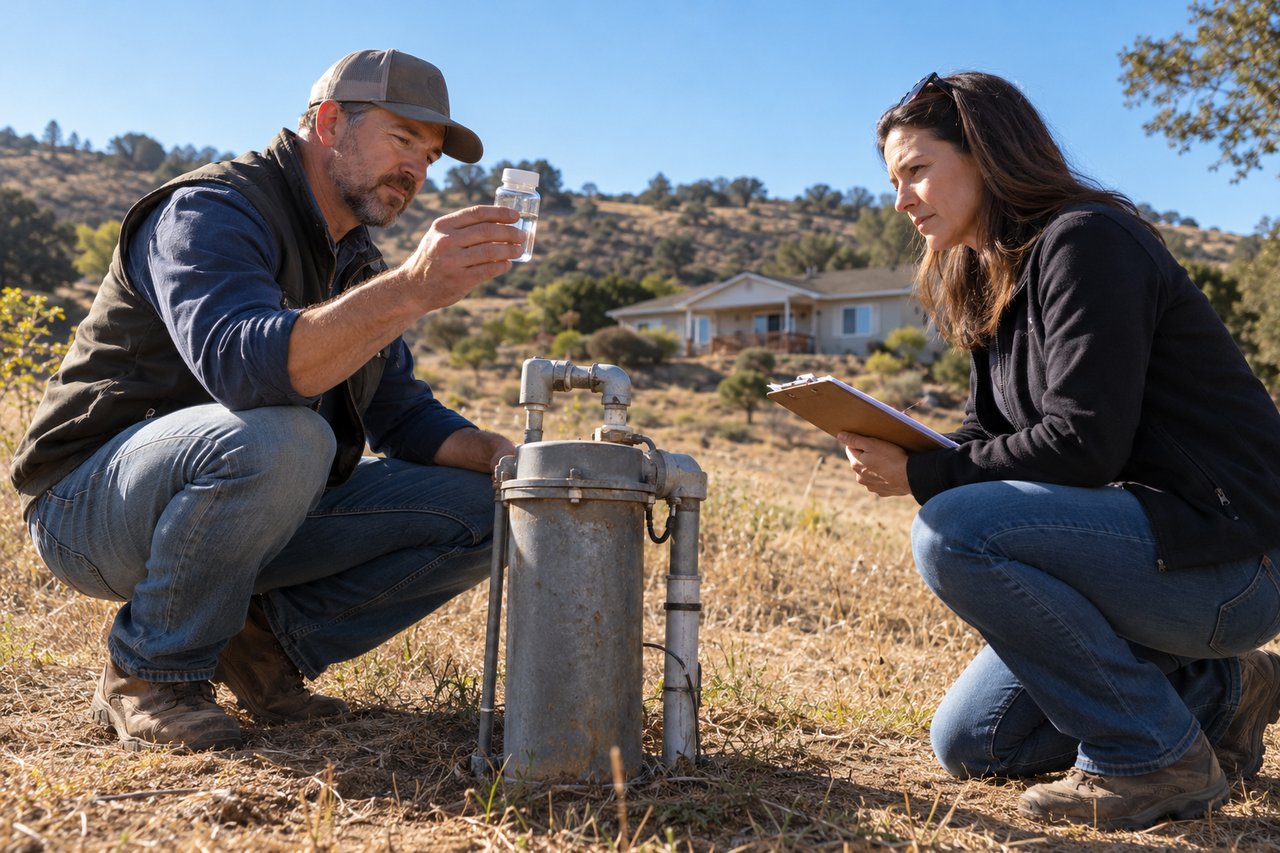
Request prior laboratory reports and arrange appropriate current testing with guidance from the laboratory, well professional and County resources. Ask which tests are suitable for the property and how samples should be collected. Do not choose the scope by assuming one old report covers every concern.
San Luis Obispo County's Private Well Owner Resources explains that some contaminants can only be identified through laboratory testing. Clear appearance or familiar taste is not a substitute for results. Have the laboratory or other qualified professional explain what the report does and does not establish.
Check the sample date, sample location and any treatment equipment involved. If water is tested after treatment, ask what that means for understanding the source and the water delivered to the home. If a concern appears, get professional guidance on further evaluation before treating it as resolved.
A water-quality report and an evaluation of available supply answer different questions. Ask a qualified well professional what testing and records are appropriate for assessing the system's performance. A brief demonstration at one faucet should not become a promise about all household needs.
Explain how you expect to use the property. The professional needs context about the current homes served and your intended water needs. If you are considering a future use, raise it directly instead of assuming the shared system will support it.
Our guide to living off a private well in Paso Robles provides background on questions private-well buyers face. A shared Templeton system adds its own participants and documents, so the investigation still needs to be specific to the property.
Ask the well professional to identify the components, describe their condition and explain recommended follow-up. That may include the pump, controls, pressure equipment, storage or treatment components present at the property. The inspection scope should make clear what was examined and what was not.
Request available installation, service and repair records. A seller may know when work occurred, but invoices and reports can make the history easier to understand. If a component was replaced, ask which component and whether related work remains outstanding.
I would not estimate remaining equipment life from appearance or treat a recent repair as proof that the whole system is in good condition. Use the professional's findings to understand the present setup and the questions that still require an answer.
Ask for the method used to allocate electricity, testing, routine service and repairs. Compare that explanation with the agreement and available payment history. A verbal estimate of a typical monthly amount is only one piece of the picture.
Find out how larger work is approved and paid for. Is there a reserve? Who contacts the contractor? How are participants notified? What happens when people disagree about a proposed repair? Have document-specific interpretations addressed by the appropriate adviser rather than making assumptions.
The seller-focused article on selling a Paso Robles home with a shared well gives another perspective on why organized records matter. As a buyer, you want the information needed to understand your role before agreeing to take it on.
Request the history of service interruptions, supply concerns, repairs and testing issues known to the seller. Ask what happened, who evaluated it and what work followed. Keep a distinction between a problem being described and a problem being documented as addressed.
If participants can provide useful operational information, ask appropriate questions through the purchase process. Their experience may help explain how the arrangement functions. It should support the investigation, not replace inspections, records or review of the agreement.
Discuss how an interruption would be handled now. Who receives the first call, who can authorize work and how are the households informed? A clear process can help you understand the responsibility you would be accepting without pretending that any system is guaranteed never to have a problem.
If you are financing the purchase, tell your lender early that the home uses a shared well. Ask what documents, testing or review the lender needs for your loan. Do not assume an arrangement that worked for another buyer will automatically satisfy your lender.
Share the relevant information as it becomes available and track any remaining conditions. Waiting until the end of the transaction can leave less room to obtain an additional report or clarification. The lender should give you the requirements that apply to your situation.
Likewise, if a planned change in use is central to the purchase, get the appropriate professional and agency answers before relying on it. This article does not establish that a specific shared well can support another dwelling, expanded irrigation or any other proposed use.
A shared well is one part of deciding whether a home fits. Access, the house, maintenance expectations and location still matter. You may be comparing a rural property with a home closer to town, and the responsibilities can be part of that tradeoff.
Our comparison of downtown Templeton and a rural property outside town can help frame the broader choice. It does not establish the water source for any listing. Confirm the services and arrangements at each property you consider.
Some buyers are comfortable taking an active role in a documented shared system. Others decide that the responsibility does not fit their plans. Neither preference needs to be justified by a blanket claim that shared wells are always good or always a problem. The decision comes from the actual arrangement and your comfort with it.
Keep a written list of outstanding items: missing records, questions for the well professional, laboratory follow-up, title matters and lender conditions. Assign each question to the person who can answer it. An unanswered question should remain visible instead of quietly becoming an assumption.
If findings raise concerns, discuss your options with the appropriate professionals and your agent while reviewing the purchase terms and deadlines. Do not treat reassurance as a substitute for the evidence you need. The goal is an informed decision about this home and this water arrangement.
If you are considering a Templeton home with a shared well, I can help organize that process. At Pillar Real Estate, we can identify the records to request, coordinate the right specialists and keep the property decision focused on your goals. You should understand the supply, equipment and shared responsibilities before deciding to move forward.
Amber
Amber Johnson
Founder, Pillar Real Estate
805.835.3425
[email protected]
1345 Park St. Paso Robles, CA 93446
DRE# 01925434
Website: https://pillarrealestate.com/

Amber Johnson | November 4, 2026
Compare the cost, timing and buyer impact of each option before choosing.
Amber Johnson | November 4, 2026
Review the well arrangement, records and equipment before committing to the property.

Amber Johnson | November 3, 2026
Think through market access, travel and how often the routine fits your week.

Amber Johnson | November 3, 2026
Compare the daily routes and home settings that matter to you in each area.

Amber Johnson | November 3, 2026
Test parking, daily routes and the layout of a specific home before deciding.

Amber Johnson | November 3, 2026
Show how the yard can be used while setting clear expectations about the slope.

Amber Johnson | November 3, 2026
Verify the assigned space, governing documents, access, dimensions and guest-parking rules before relying on the parking arrangement.

Amber Johnson | November 3, 2026
Use both groups of listings to understand choice without assuming a single number tells the whole story.
Amber Johnson | November 3, 2026
Review well records, testing, equipment and water needs before making the property decision.
You’ve got questions and we can’t wait to answer them.

Amber Johnson, Founder
Pillar Real Estate
805.835.3425
DRE# 01925434
1345 Park Street
Paso Robles, CA 93446