How Should I Sell a Paso Robles Home with a Shared Well?
October 6, 2026
October 6, 2026
A shared well does not have to make your Paso Robles home hard to sell. It does, however, give buyers a set of practical questions that deserve clear answers. Where is the well? Which properties use it? Who maintains the pump and pays for repairs? What records show how the arrangement has worked? My advice is to organize those answers before the first showing. A buyer who can understand the water arrangement can focus on whether the home suits them. A buyer who has to reconstruct the arrangement during escrow may become cautious even when the system has served the property well.
I am Amber Johnson, founder of Pillar Real Estate. When I help sellers in Paso Robles and the surrounding countryside, I start with what a buyer needs to know to make a sound decision. For a home with a shared well, that means describing the property accurately, finding the documents you actually have, and making a plan for the questions you cannot answer yet. Here is how I would prepare the sale.
“Shared well” can describe several different arrangements. One well might serve two neighboring homes, or it might supply more parcels. A well may sit on your land while the pump, storage tank, power supply, or distribution lines cross a boundary. The physical setup matters, but so does the written arrangement, if one exists. Do not assume that owning the parcel with the well means you control every part of the system, or that a neighbor's use is informal simply because everyone has gotten along.
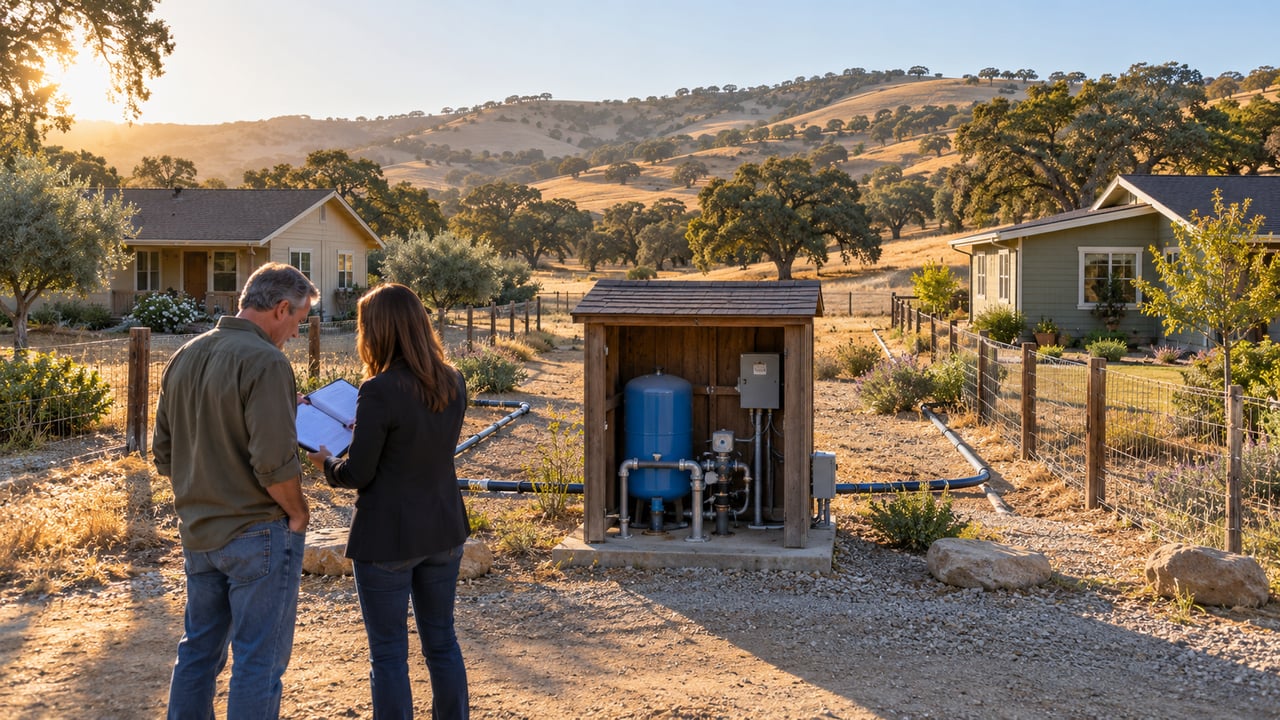
Walk the system with the records you have. Identify the well location, pump equipment, tanks, meters, lines, and any access route used for service. Note which parts you can see and which locations remain uncertain. If your understanding comes from a neighbor or prior owner rather than a document, label it that way. A seller can be candid without pretending to know more than the evidence supports. That distinction builds confidence when buyers, inspectors, and their advisers start asking for specifics.
If there is a recorded or private shared-well agreement, obtain a complete copy early. Look for provisions about who may use the water, how expenses are divided, who arranges maintenance, how emergency repairs are handled, and how users gain access to equipment. Check whether the agreement identifies the parcels and whether its map or legal description matches the property being sold. An old agreement may use names or parcel descriptions that require a title professional to interpret. Your goal is to present the agreement, not to offer your own legal interpretation of it.
Ask your title company or a qualified real estate attorney to help resolve uncertainty about recorded rights, easements, or obligations. An agreement may also refer to a separate easement for a pipe or driveway. If the arrangement has changed over time, gather any amendments and avoid telling buyers that an unwritten practice overrides the documents. When a question remains open, explain what has been requested and who is reviewing it. Waiting until a buyer's lender or title review raises the issue can compress an otherwise manageable conversation into a closing deadline.
Put the available records in one place: the well agreement, well completion or drilling records if you have them, pump and pressure-system invoices, service reports, water tests, any flow or yield information, electricity records tied to the equipment, and correspondence about shared expenses. Do not represent an old test as a current result or a past production figure as a guarantee of future supply. Date every record and keep its original context. If something is missing, make a short list rather than filling the gap with a guess.
For background on the questions a purchaser may ask about water supply, my guide to living off a private well in Paso Robles explains the basics from the buyer's side. A shared system adds another layer: a buyer needs to understand both the water source and the relationship among the users. A tidy packet makes that distinction easier to discuss. It also lets you find out promptly if a professional recommends updated testing or another inspection before the home goes on the market.
Do not promise that the well is “strong,” “plentiful,” or “problem free” unless a qualified professional has provided evidence for the specific claim. Ask a well contractor which components they can evaluate and what a report would cover. The pump, electrical controls, pressure tank, storage, filtration, and distribution piping may have different owners or maintenance arrangements. A water-quality test addresses different questions from a production test. Buyers may order their own inspections, and the scope they choose may differ from yours.
In rural Paso Robles, water is only one part of the property picture. Buyers considering land, outbuildings, and utility systems often compare several moving parts at once. My article on what buyers should know about Paso Robles acreage can help frame those broader questions. For this sale, keep your shared-well answers tied to this home's actual documents and observed system. Broad statements about rural property are no substitute for a clear description of the equipment serving the house.
Buyers commonly want to know how routine power costs, testing, pump replacement, and unexpected repairs are handled. If each user pays a fixed share, collect the agreement or invoices that show it. If there is a meter, determine what it measures and who reads it. If neighbors have simply settled costs as they arose, describe the practice accurately and disclose that the written terms may not answer every question. Do not turn an informal custom into a promised future payment arrangement.
Access deserves the same attention. A contractor may need to enter one parcel to repair a pump serving another. Ask where the equipment is, which gates or roads are used, and what rights the documents describe. If a buyer asks whether they can add a dwelling, increase irrigation, or change usage, refer them to the agreement and appropriate professionals. Those questions may depend on the system's capacity, property rights, and current requirements. Your listing should tell buyers what comes with the home today, not imply approval for a use no one has verified.
Try seeing the arrangement through a buyer's eyes. Is the water source physically on the subject property? How many users share it? Has the pump been replaced? Who holds the test results? Is there a written process if a repair is disputed? Have there been outages or leaks that should be disclosed? Are the utility charges separate from household electric use? Some answers may be simple. Others may need a contractor, title company, neighbor, or attorney. Making that list now lets you work through uncertainty at a sensible pace.
You do not need to make every record look perfect. In fact, a missing report or older agreement should be identified plainly. The objective is a reliable account that a buyer can investigate. Keep copies of the questions you send to professionals and the responses you receive. If a neighbor supplies information, record who said it and when, and distinguish it from a professional report. That habit helps you avoid conflicting descriptions across the listing, seller disclosures, showing conversations, and escrow.
A shared well is an important property feature, but it is not the whole story of your Paso Robles home. Good marketing can show the setting, layout, condition, land use, and daily function while making the water arrangement easy to find in the property information. A buyer should not have to discover it late. At the same time, a listing description should not turn into a technical or legal argument. State that the home is served by a shared well, point to available documents, and let qualified reports support any detailed condition claims.
Pricing should reflect the complete property and the evidence available about the system. I would review comparable homes carefully, including differences in location, acreage, condition, and water setup. I would also watch how buyers respond once the records are available. There is no universal shared-well discount that applies to every property. An organized agreement and credible maintenance history can reduce uncertainty, while unresolved access or cost questions may affect how a buyer evaluates risk. We should base strategy on this home and the current alternatives buyers can actually consider.
Complete the seller disclosures truthfully and with attention to what you know about the well, repairs, interruptions, water quality, and any neighbor disputes. If you are unsure how a question applies, ask your real estate professional or legal adviser before answering. Provide requested records through the normal transaction process and keep a record of what was delivered. Do not rely on a conversation at a showing as the only way an important issue reaches the buyer. Clear written information helps everyone work from the same set of facts.
A buyer may investigate other rural systems at the same time. For example, a home with a private wastewater system raises separate questions, which I cover in my guide to septic systems in Paso Robles. Keep those files distinct. A septic inspection cannot answer a shared-well question, and a well test cannot answer a septic question. Organizing each system on its own terms makes the due-diligence period easier for buyers and avoids the impression that one report covers everything.
First, request the agreement, title information, and any recorded maps you do not already have. Second, collect service and testing records from your own files. Third, identify the equipment and access route, noting what you know from observation and what still needs confirmation. Fourth, decide with your agent whether a well professional should inspect or test before launch. Fifth, write a factual summary of the arrangement that matches the documents. That sequence turns a vague concern into a manageable set of tasks.
If a major issue comes to light, address it directly. A repair, missing agreement, or unresolved neighbor question may change your timing, disclosures, or pricing discussion. Sometimes a seller decides to offer the property in its present condition, but “as is” is not a reason to hide a material fact or skip clear records. My guide to selling a Paso Robles home as is explains the broader decision. For a shared well, the most useful step is still to show buyers exactly what is known and what they should verify.
Once you accept an offer, respond promptly to reasonable requests for documents, access, and inspections under the contract. Confirm who can give a contractor access to shared equipment and coordinate that access without assuming the neighbor is available at any time. If a report raises a new question, let the relevant professional explain its scope. Then discuss any proposed repair, credit, or timing change through the transaction process. Early preparation helps, but the buyer must still be free to perform their own due diligence.
The best sale plan is straightforward: document the rights, explain the physical system, identify the maintenance arrangement, disclose known issues, and give buyers room to verify. I help Paso Robles sellers make those steps part of the listing strategy so the water arrangement is handled with clarity from the start. If you are thinking about selling a home with a shared well, I would be glad to review what you have and help you decide which questions to answer before going live.
Tell me what you know about the well, the agreement, and the property. We can build a practical preparation plan for your Paso Robles sale. Sell With Amber.
Amber Johnson
Founder, Pillar Real Estate
805.835.3425
[email protected]
1345 Park St. Paso Robles, CA 93446
DRE# 01925434
Website: https://pillarrealestate.com/
Amber

Amber Johnson | October 6, 2026
Compare daily routes, parking, recreation, housing patterns, and the routines each part of San Luis Obispo supports.

Amber Johnson | October 6, 2026

Amber Johnson | October 6, 2026
Compare two commute directions, work schedules, daily errands, and neighborhood priorities before choosing where to live.
Amber Johnson | October 6, 2026
Clarify the well agreement, available records, maintenance responsibilities, and buyer questions before the home reaches the market.

Amber Johnson | October 6, 2026
Review noise, driveway access, parking, pedestrian activity, home condition, and resale considerations before making an offer.

Amber Johnson | October 5, 2026
Consider trail access, seasonal conditions, nearby streets, recreation, and practical neighborhood routines.

Amber Johnson | October 5, 2026

Amber Johnson | October 5, 2026

Amber Johnson | October 5, 2026
You’ve got questions and we can’t wait to answer them.

Amber Johnson, Founder
Pillar Real Estate
805.835.3425
DRE# 01925434
1345 Park Street
Paso Robles, CA 93446