What Should Buyers Check Before Buying a Nipomo Home with a Private Well?
November 3, 2026
November 3, 2026
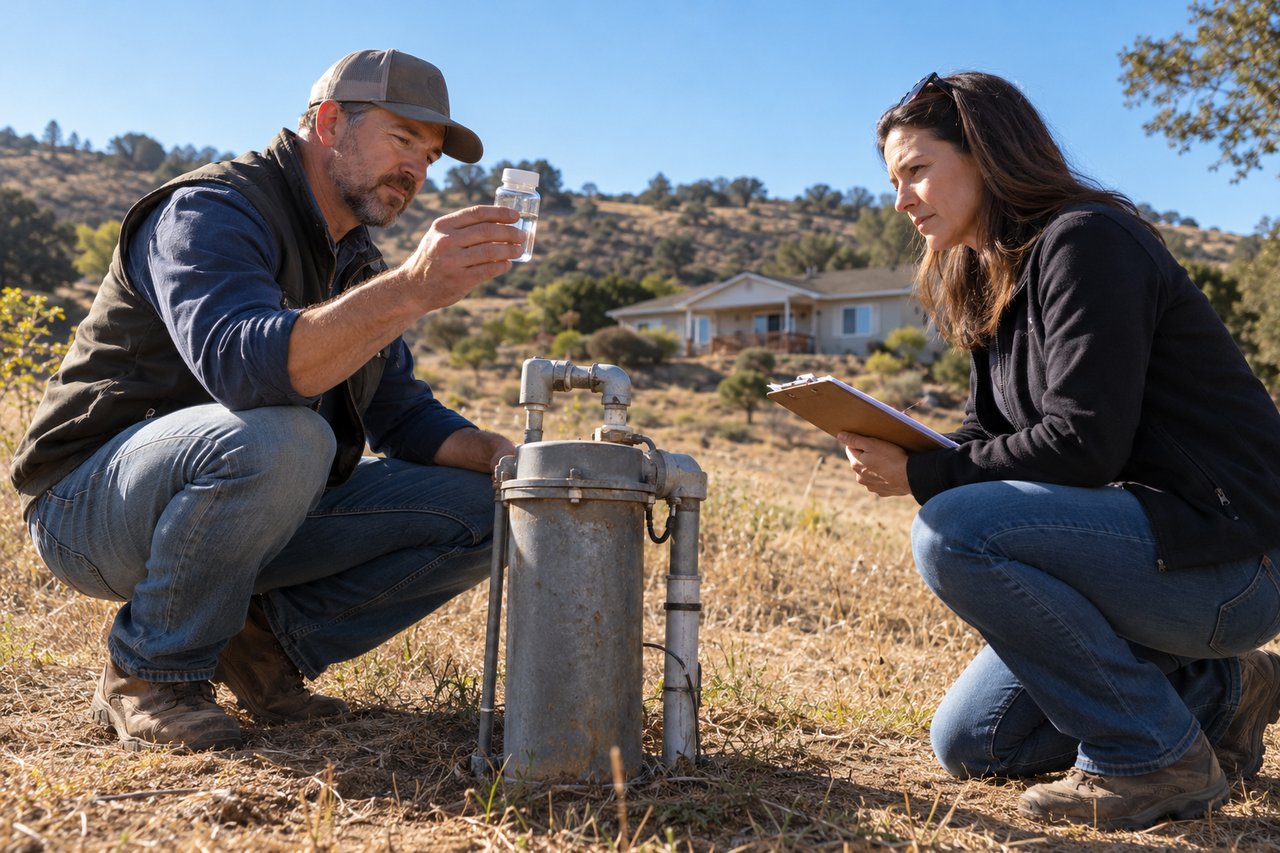
Before buying a Nipomo home with a private well, confirm which water source serves the property, review the available well records, arrange appropriate water-quality and system testing, and understand the equipment and responsibilities you would take on. A working kitchen faucet does not answer those questions.
Keep water quality, available supply, physical condition and ownership rights separate in your review. A favorable result in one area does not establish the others. The goal is to understand the particular property well enough to decide whether it supports your household and your plans.
I'm Amber Johnson, founder of Pillar Real Estate in Paso Robles. I help Nipomo buyers organize property questions before relying on an appealing home or setting. A private well deserves its own qualified review alongside the house, the transaction documents and the rest of the ownership budget.
Ask how the house receives water and which parts of the property use that supply. Identify the well, any storage and treatment equipment, and any other water arrangement described by the seller. Don't assume every fixture or outdoor area is served in the same way.
Clarify whether the well serves only this property or is part of a shared arrangement. If it is shared, request the relevant agreements and information about ownership, access, expenses and decision-making. A casual description that neighbors split the bill should not replace the underlying documents.
Confirm the property address, parcel and jurisdiction associated with the records you receive. Nearby wells and a familiar mailing address are not substitutes for information about the actual water source you would depend on.
Request available construction information, permits, well logs, prior test reports, equipment records and service invoices. Ask where missing records may be obtained and seek help from the appropriate County office or qualified well professional. Keep the source and date of each document visible.
Compare the records with the physical system through the appropriate professional. An older description may not account for later pump work, treatment changes or another alteration. Note gaps instead of filling them with assumptions about what must have happened.
Our article about living off a private well in Paso Robles offers broader ownership context. For a Nipomo purchase, use the actual property's records and current local guidance to determine what needs further investigation.
San Luis Obispo County's private-well resources explain that some contaminants can only be identified through laboratory testing. Clear-looking water and an agreeable taste do not establish the full quality of the supply. Ask qualified professionals what testing is appropriate for this well and your purchase.
Work with an appropriate laboratory and follow its sampling instructions. Confirm who will collect the sample, where it will be taken and how handling and delivery will be managed. Ask whether the proposed scope meets any lender or transaction requirements as well as the questions you want answered.
The California State Water Resources Control Board recommends ongoing testing for domestic wells and provides resources for finding accredited laboratories. Use current guidance and qualified interpretation when deciding what results mean. Don't treat a limited test panel as confirmation about every possible constituent.
When a report is provided, check that it identifies the correct source, the collection date and what was analyzed. Ask whether the sample came from untreated well water or a point after treatment. Those details affect what the report can tell you about the system.
A prior report can be useful history without establishing current conditions. Ask the laboratory, Environmental Health or another appropriate professional whether updated testing or a different scope is needed. Don't assume that a seller's old result answers the questions for your purchase.
If a finding needs explanation, get that explanation from a qualified source. Ask about any recommended confirmation, treatment evaluation or other follow-up. Keep health-related conclusions and advice about water use with the appropriate professionals rather than trying to interpret unfamiliar results yourself.
A water-quality report does not establish how much water the system can provide for your intended use. Arrange an appropriate evaluation of well performance and discuss its scope and limitations with a qualified well professional. Understand what was measured, under what conditions and on what date.
Ask how the findings relate to the household and outdoor uses you expect. A seller's experience with a smaller household or different landscape may not predict your needs. Be specific about essential uses without assuming every future expansion is supported.
Also ask what the evaluation cannot predict. A test describes the conditions assessed; it is not a promise that supply will remain unchanged indefinitely. Review available history and professional recommendations without turning a single number into a guarantee about long-term performance.
Clarify who will inspect the well equipment and what the inspection includes. A general home inspection should not be assumed to provide a complete evaluation of a private-well system. Identify where a qualified well contractor, electrician or another specialist is appropriate.
Ask about the pump, pressure equipment, controls, accessible piping, storage and other components that apply to this property. Review service history and recommended work. Have the professional distinguish an observed condition from something that cannot be assessed within the inspection's scope.
If repairs are recommended, obtain a clear description and current estimate. Confirm which components are included, what access is needed and whether further evaluation or approvals may affect the work. A broad allowance is less useful than understanding the actual task.
Identify the treatment equipment present and ask what each component is intended to address. Request available installation, maintenance and service information. The presence of a filter or other device does not, by itself, establish that it is correctly sized, maintained or effective for the relevant concern.
Discuss the relationship between testing before and after treatment with the appropriate professional. Ask how performance should be verified and what ongoing service is required. Keep product claims separate from results established for this water and this system.
Clarify recurring supplies, service visits and replacement needs using current information. Treatment can be part of a workable ownership plan, but you should understand the actual responsibilities before counting on it. Do not assume a newly installed component eliminates every follow-up question.
If the well, lines or related equipment involve another parcel or shared area, obtain the relevant recorded documents and agreements. Ask appropriate title and legal professionals to clarify rights and obligations where needed. Visible use is not a substitute for a documented arrangement.
Consider practical access for routine service and significant repairs. Ask how contractors reach the equipment and whether the route depends on permissions or arrangements that need confirmation. Keep physical convenience and legal access as related but separate questions.
For a shared well, clarify how costs, maintenance decisions, interruptions and future work are handled. Don't assume the current owners' informal cooperation describes every obligation you would inherit. An unresolved arrangement deserves attention within the transaction's actual review process.
Confirm the property's wastewater arrangement independently. If it has a septic system, include the appropriate inspection and records review rather than treating the water-source investigation as a review of the whole property. Ask qualified professionals about any relationship or site condition that needs attention.
Our discussion of selling a Nipomo home with a septic system offers the seller's perspective on organizing information. As a buyer, your task is to understand the actual setup, findings and responsibilities that affect your decision.
The same care applies to other independent systems. Our article about buying a Nipomo home with a propane tank can help keep separate equipment questions organized. A favorable well result should not distract from unresolved issues elsewhere.
Tell your lender that the property uses a private well and request the documentation and testing requirements relevant to your loan. Start early enough to understand what remains outstanding. A seller's prior financing experience does not establish the requirements for your transaction.
If your plans include additional living space, substantial landscape changes or rental use, confirm the applicable requirements before relying on those plans. Ask the relevant authorities and qualified professionals what review is needed for the actual address and use. Do not assume current service establishes approval for a different arrangement.
Build an ownership budget around current quotes and available records. Include relevant operation, service, testing and anticipated work. Another owner's bills can provide context, but different use and future repairs may change your costs. Understand who you would contact when service is needed.
Summarize what is confirmed about quality, supply, equipment, access and responsibilities. List any missing records, unresolved findings or recommended follow-up clearly. Discuss material questions within the transaction's terms and deadlines rather than allowing uncertainty to become an assumed favorable answer.
Ask each professional to explain the limits of the work performed. Keep reports, estimates and supporting documents together so you can compare the findings. If you proceed, retain that information for ownership and establish an appropriate maintenance and testing plan with qualified guidance.
A private well can be part of a property that fits your needs when you understand the system and the responsibilities involved. The decision should rest on verified information about that well, not on the appearance of the yard, a neighbor's experience or a confident statement without supporting records.
I help Nipomo buyers coordinate these questions while keeping the home and the larger move in view. At Pillar Real Estate, my Paso Robles and SLO County work connects property details with the way you plan to live.
Visit Sell With Amber to discuss a Nipomo home purchase and organize the private-well questions to resolve before you commit.
Amber
Pillar Real Estate | Amber Johnson, Founder
805.835.3425 | [email protected]
1345 Park St. Paso Robles, CA 93446 | DRE# 01925434

Amber Johnson | November 3, 2026
Verify the assigned space, governing documents, access, dimensions and guest-parking rules before relying on the parking arrangement.

Amber Johnson | November 3, 2026
Use both groups of listings to understand choice without assuming a single number tells the whole story.
Amber Johnson | November 3, 2026
Review well records, testing, equipment and water needs before making the property decision.

Amber Johnson | November 2, 2026
Compare the routes from specific homes to the errands you actually make.

Amber Johnson | November 2, 2026
Amber Johnson | November 2, 2026
Compare condition, repair cost and buyer expectations before replacing a front door.

Amber Johnson | November 2, 2026
Compare timing, rental availability, moving costs and what you need to learn before deciding whether to rent first.

Amber Johnson | November 2, 2026
Review permits, condition and intended use before counting a converted garage as living space.

Amber Johnson | November 2, 2026
Walk the route from a specific home to the businesses you would actually use.
You’ve got questions and we can’t wait to answer them.

Amber Johnson, Founder
Pillar Real Estate
805.835.3425
DRE# 01925434
1345 Park Street
Paso Robles, CA 93446