Should I Recaulk Tubs and Showers Before Selling My Paso Robles Home?
September 30, 2026
September 30, 2026
Yes, worn or failing caulk around tubs and showers is usually worth addressing before you sell a Paso Robles home. Fresh, properly applied sealant can improve the bathroom's appearance and help protect joints where water may otherwise reach the wall, tub edge, shower pan, or surrounding materials.
The important word is properly. Caulk should not be used to hide staining, loose tile, damaged grout, movement, or an active moisture problem. If the existing bead is cracked, separated, discolored, or missing in places, find out whether the issue is limited to the sealant. Then choose a repair that matches the condition.
Bathrooms receive close attention during showings. Buyers look at the tile, fixtures, corners, edges, and visible maintenance. A ragged bead of caulk can make an otherwise clean bathroom feel unfinished. It can also raise questions about how long the seal has been failing and whether water has reached areas that are difficult to see.
Most buyers cannot tell from one glance whether the concern is cosmetic or more involved. They see gaps, peeling material, or dark discoloration and may assume the repair is larger than it is. Correcting a straightforward caulk problem before listing removes that uncertainty.
This is the same reason small repairs deserve a place in the broader preparation plan. My guide to repairs to consider before selling a home in Paso Robles explains how to prioritize visible maintenance without turning the process into an unnecessary remodel.
Look closely at every joint where the tub or shower meets another surface. Common areas include the rim of a tub, the bottom edge of a shower enclosure, vertical corners, fixture penetrations, and transitions between different materials. The correct treatment can vary by location and by the manufacturer's installation details.
Caulk that has pulled away, split, hardened, or disappeared no longer creates a continuous seal. A bead that feels soft, looks swollen, or repeatedly discolors may deserve closer evaluation. Check nearby grout, tile, trim, drywall, and flooring too. The goal is to understand the condition, not simply cover what is visible.
Pay attention to movement. A tub or shower base that shifts under normal use can cause a new bead to separate again. Loose tile, cracked grout, or a moving enclosure may point to a different repair. Recaulking alone will not correct the source of that movement.
Recaulking is often a reasonable project when the surrounding surfaces are sound and the existing sealant has simply reached the end of its useful condition. A clean, continuous bead can make the joint look maintained while restoring the protection that the sealant is meant to provide.
The project is especially worthwhile when the bathroom is otherwise clean and functional. Worn caulk may be the one detail that draws attention away from the rest of the room. Correcting it can support a stronger presentation without replacing tile, fixtures, or the tub itself.
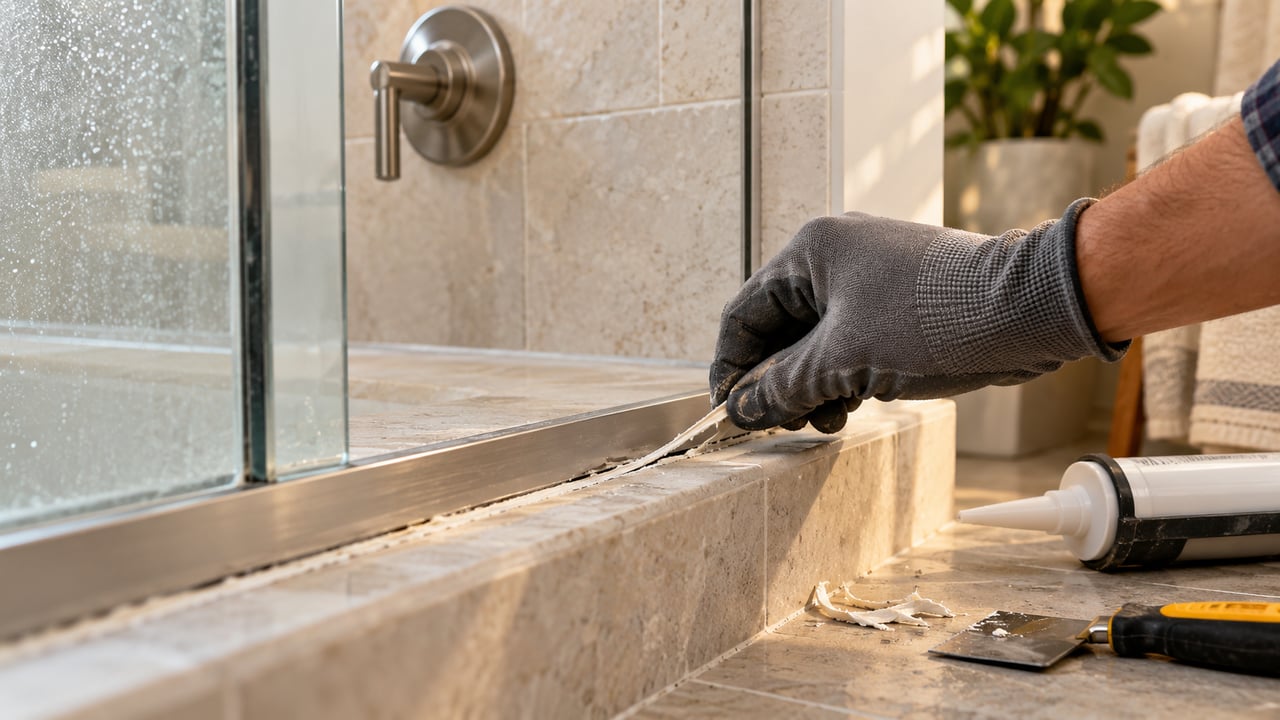
Choose a sealant suited to the specific wet-area application. Surface preparation matters. The old material should be removed as completely as practical, and the joint should be clean and dry before the new bead is applied. Follow the product instructions for preparation, bead size, tooling, and cure time.
If you are not confident that you can remove the old material cleanly or create a consistent seal, hire someone experienced with bathroom repairs. A messy bead, smeared sealant, or gaps in the new application can look worse than the original condition.
Stop before recaulk work if you see signs that suggest a larger issue. Soft drywall, loose tile, damaged trim, deteriorated backing, persistent dampness, staining outside the wet area, or a musty odor may need professional evaluation. Replacing the visible bead without understanding the surrounding condition can delay the right repair.
The same applies when water appears outside the tub or shower after use. The source may involve the enclosure, door sweep, plumbing connection, shower pan, tub, drain, or another component. Caulk may be part of the correction, but it should not be treated as a universal solution.
A qualified contractor, plumber, tile professional, or other appropriate specialist can help identify the source. The right person depends on what you find. This is where the hyperlocal strategy matters: prepare the specific property for its likely buyer, its condition, and your goals instead of relying on a generic repair list.
Discoloration does not always tell you why the caulk looks that way. Age, cleaning products, surface contamination, trapped moisture, and the type of sealant can all affect appearance. Cleaning may improve a sound bead, but it will not repair separation, cracks, or missing sections.
Do not apply a second bead over deteriorated material just to make it look fresh for photos. New sealant needs a suitable surface. Layering it over loose or contaminated caulk can create an uneven finish and may fail quickly.
If discoloration returns after cleaning or replacement, look at ventilation and moisture control. A bathroom fan that is weak, noisy, or not used consistently may leave the room damp longer. The caulk is one part of the bathroom's overall condition, not the only part.
A home inspector may note deteriorated sealant, visible gaps, staining, damaged materials, or evidence of moisture. An inspector may also recommend further evaluation without identifying the full source. That uncertainty can lead to buyer questions during the inspection period.
Addressing a simple sealant failure before the inspection can reduce one predictable concern. If the issue is not simple, learning about it before listing gives you time to understand the repair scope and make a strategic decision. My article about what happens when a home inspection finds problems explains how findings can affect requests and negotiations.
No cosmetic repair should replace an honest evaluation of the condition. The value of early preparation is clarity. You can decide what makes sense for your goals before a buyer's deadline is controlling the conversation.
An older bathroom does not need to look new to show well. Buyers generally understand that materials age. What they want to see is that the room is clean, functional, and reasonably maintained.
If the tile, tub, or shower is older but sound, a neat caulk repair may be enough. Trying to make one joint look perfect while ignoring loose fixtures, damaged grout, or obvious wear elsewhere will not change the overall impression. Look at the room as a whole.
This does not require a renovation. It requires a clear priority list. Clean thoroughly, correct active maintenance issues, and avoid starting a larger project that will not be completed to a good standard before photography and showings.
You can sell a home without completing every repair. The question is whether leaving this particular condition supports the sale strategy. If the recaulk project is limited, affordable, and easy to complete correctly, leaving visible gaps may create more concern than the work saves.
If inspection shows damage behind the joint or a larger water-control issue, the decision becomes more involved. You may choose to repair it, price with the condition in mind, or present the property as-is. Get enough information to make that choice deliberately.
For sellers weighing those options, my guide to selling a Paso Robles home as-is or fixing it up offers a practical way to compare repair scope, buyer expectations, timing, and goals.
Start with the smallest reliable scope. If the existing caulk has failed but the surrounding materials are sound, the project may be limited to removal, preparation, and replacement. If there is movement or moisture damage, the correct scope may be larger.
Consider how the bathroom fits the rest of the home. In a recently updated bathroom, a rough caulk line can stand out. In an original bathroom, a clean functional repair may be appropriate without replacing finishes. The work should solve the problem and make sense for the home's price position.
Do not let one maintenance item expand into an unplanned bathroom remodel. My article on how much to spend preparing a home before selling can help you compare this project with other pre-listing priorities.
Recaulk tubs and showers before selling when the sealant is cracked, separated, missing, or visibly worn and the surrounding materials are sound. It is a focused repair that can improve appearance and restore a water-resistant joint.
Do not use caulk to hide damage. If you see movement, persistent dampness, loose materials, or staining, investigate the source first. Then choose the repair that protects the home and makes sense for your sale.
If you want help deciding which pre-listing repairs deserve your time and money, Sell With Amber. I help Paso Robles homeowners build a clear preparation plan that supports a strong presentation without spending on projects buyers may not value.
Amber Johnson, Founder
Pillar Real Estate
805.835.3425
[email protected]
1345 Park St. Paso Robles, CA 93446
DRE# 01925434

Amber Johnson | October 26, 2026

Amber Johnson | October 26, 2026

Amber Johnson | October 26, 2026
Compare trail access, drive time, terrain and weather with the routine you actually want before choosing an Atascadero home.

Amber Johnson | October 25, 2026
Compare home settings, road patterns, community amenities and daily routes before choosing between these two Nipomo areas.

Amber Johnson | October 25, 2026
Compare housing patterns, access, street activity and daily routes before choosing between these San Luis Obispo areas.

Amber Johnson | October 25, 2026
Test both routes, work schedules and the trip from a specific home before deciding whether Oceano supports the household's routine.

Amber Johnson | October 25, 2026
Verify service at the exact address, backup connectivity, power reliability and workspace needs before choosing a Creston property.

Amber Johnson | October 25, 2026
Set buyer expectations with accurate positioning, thoughtful presentation and firsthand checks at different times of day.

Amber Johnson | October 24, 2026
You’ve got questions and we can’t wait to answer them.

Amber Johnson, Founder
Pillar Real Estate
805.835.3425
DRE# 01925434
1345 Park Street
Paso Robles, CA 93446