How Should I Market a Grover Beach Home near the Train Tracks?
October 25, 2026
October 25, 2026
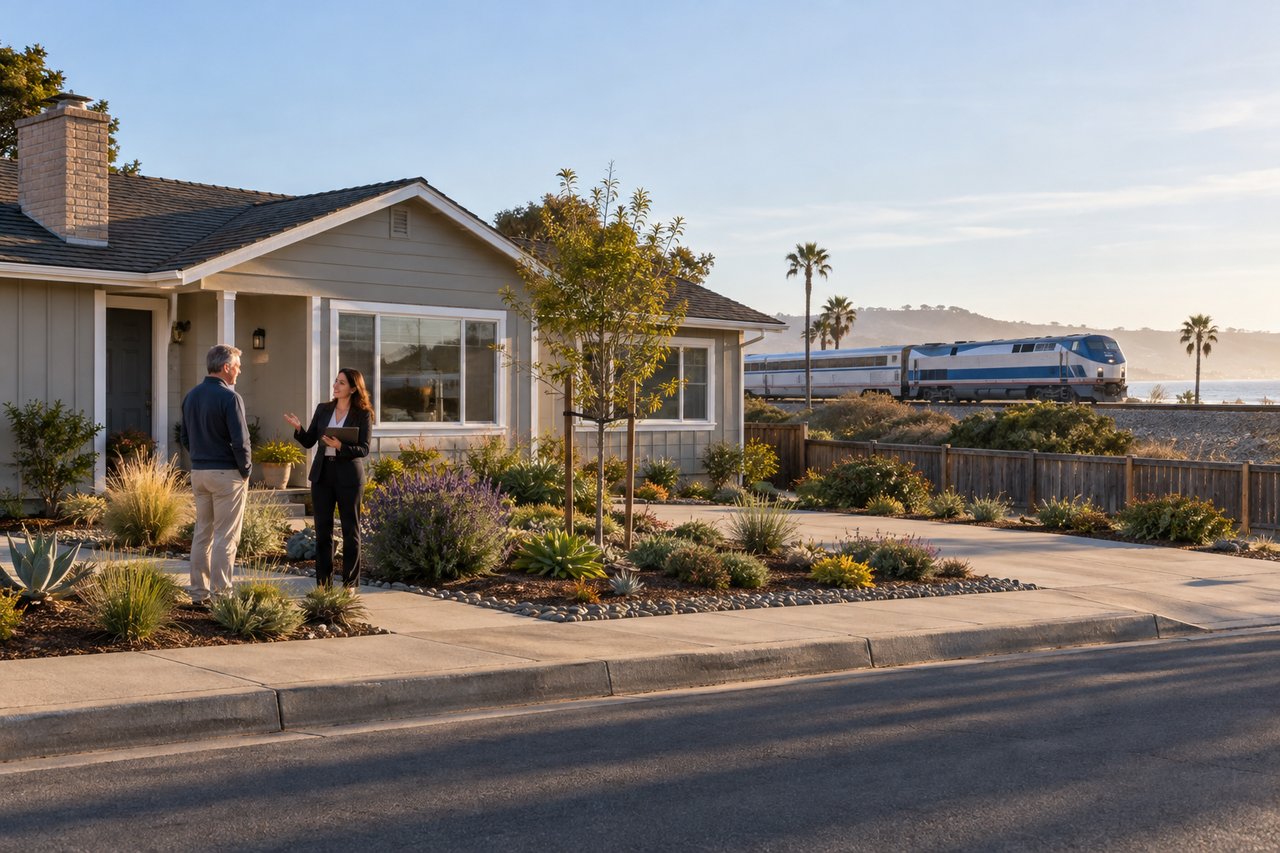
Market the home honestly, price it against relevant alternatives, and give buyers a clear picture of daily life. A railway corridor is part of the property's setting. Trying to hide it can create a poor first showing and questions about everything else in the listing.
That doesn't mean the tracks should become the entire story. Your home's layout, condition, outdoor space and access still matter. The goal is to present the full property accurately so buyers can decide whether it makes sense for their lives.
I'm Amber Johnson, founder of Pillar Real Estate. I help Grover Beach and SLO County homeowners prepare, position and market their homes. My approach starts with the specific property, nearby competition and the seller's goals. A home near train tracks needs that same individual attention.
Before choosing a price or writing the description, spend time at the property with the railway setting in mind. Listen inside the main rooms and outside. Notice which windows face the corridor, where people are likely to sit, and how the bedrooms relate to it.
Visit at different times when possible. One short appointment won't establish every condition a future owner might experience. Train activity can vary, and a quiet visit isn't proof that the setting is always quiet. Keep observations specific rather than turning a limited sample into a promise.
Ask the seller what they've noticed during ownership. Which spaces do they use most? Do they close windows during certain activities? Have they made any improvements related to comfort? Those answers help us understand the home, but they shouldn't be presented as guarantees about future operations.
Separate documented facts from personal reactions. One person may barely notice a passing train; another may find it distracting. Neither reaction tells us what every buyer will think. Marketing works better when people receive useful information and enough opportunity to assess it themselves.
A house several blocks away may have the same bedroom count and a similar size, yet appeal to a different buyer pool. We need to examine the setting along with condition, lot use, layout, parking and other meaningful differences.
If recent nearby sales share a railway influence, they may provide useful context. They still need review. Distance from the tracks, orientation, elevation and intervening structures can change the experience. We shouldn't treat all homes near a rail line as interchangeable.
When direct comparisons are limited, broaden the analysis carefully. Look at competing homes buyers can choose now and the tradeoffs each offers. A stronger kitchen or larger yard may matter, but it doesn't erase every other difference. The price needs to make sense for the whole property.
I wouldn't apply a made-up percentage discount just because tracks are nearby. There isn't a responsible universal number for this decision. The right price comes from evidence, current alternatives and the specifics of your home. Review the assumptions behind the recommendation before committing to it.
The opening description should explain what the home offers. That might be a useful floor plan, a comfortable outdoor area or practical access to places buyers use. Choose features we can support with photographs, property information and direct observation.
Then describe the setting plainly. Avoid dramatic language, but don't imply a secluded or silent location if that isn't accurate. A buyer who understands the surroundings before arriving can focus on whether the home's benefits fit their priorities.
Photos should show the property attractively and truthfully. We can select strong angles without removing meaningful surroundings or creating a misleading impression of the lot. Aerial photography may help explain relationships when it adds useful context and can be captured appropriately.
The same principle applies to other limitations. My article on marketing a Grover Beach home without a garage explains why a specific tradeoff belongs inside an accurate overall presentation. Clear information helps us reach buyers who can accept the home as it is.
Start with ordinary maintenance. Repair windows or doors that don't close properly. Address loose hardware and obvious deferred upkeep. These tasks can help the property show well, but we should avoid claiming they will eliminate railway sound.
If you're considering specialty windows, insulation or another larger project, get advice from qualified professionals. Ask what the work can realistically accomplish, what it costs and whether any approvals are needed. Compare that expense with your likely selling timeline and other priorities.
Don't buy an expensive improvement based only on the hope that it will change every buyer's reaction. A proposed project may improve comfort for some uses while leaving other aspects of the setting unchanged. We need a practical reason to spend the money.
Keep receipts and available product details for work already completed. Buyers may appreciate knowing what was installed and when. Describe the documented improvement itself. Avoid words such as soundproof unless a qualified professional can support that precise claim for the property.
Walk through the yard from a buyer's perspective. Is there a comfortable place to sit? Can people understand the relationship between the house, fencing and nearby corridor? Does the space feel maintained and easy to evaluate?
Simple preparation may be enough: remove clutter, maintain existing planting and make useful areas visible. Don't add screening that creates a misleading expectation about sound reduction. Privacy and sound are different concerns, and a visual barrier doesn't establish an acoustic result.
Check that any improvements stay within the property's boundaries and respect applicable restrictions. Don't suggest access to railway land or encourage anyone to approach tracks. Marketing should make the home's own usable space clear without treating the corridor as an extension of the yard.
Keep lifestyle claims grounded. An attractive outdoor photograph can show how the space is arranged. It cannot promise how every hour will feel. Buyers should have the opportunity to visit, listen and decide whether the setting works for their intended use.
A showing should help buyers evaluate the home, not steer them away from noticing something important. Avoid using loud music or other distractions to cover the surroundings. Open, straightforward presentation protects confidence in the information we're providing.
Give buyers reasonable time to look at the rooms and outdoor areas they care about. Someone working from home may focus on an office location. Someone with a different schedule may have other priorities. Let those questions guide a useful visit.
If a buyer wants another appointment to understand the setting, consider accommodating it when practical. That doesn't guarantee an offer, but it can help them make a more informed choice. A serious concern is better understood before negotiations advance than discovered late.
We can also point buyers toward broader community information. Everyday life near West Grand Avenue gives related local context. It should supplement a property visit rather than replace the buyer's own review of the exact location.
Work with your agent on the required disclosure process. Provide accurate information about conditions you know, answer questions honestly and ask for professional guidance where needed. A marketing description isn't a substitute for the applicable disclosure documents.
Don't guess about rail schedules, future service or possible infrastructure changes. If a question requires information from an operator or public agency, identify the appropriate source. An old schedule or a neighbor's recollection shouldn't become a promise in a listing.
Consistency matters across the description, video, showing conversations and written information. Buyers shouldn't hear one version online and another after making an offer. Clear records and careful wording help everyone understand what is known and what still needs investigation.
After launch, look for patterns in actual buyer feedback. Are visitors accepting the location but questioning condition? Are they comparing the home with alternatives at another price? Is the online presentation setting accurate expectations before showings?
One comment doesn't define the market. Several consistent responses deserve attention. We can review the price, presentation and competing listings together rather than reacting with an automatic renovation or an unsupported discount.
The broader question is whether the home offers a convincing combination of features and tradeoffs. My guide to living in Grover Beach provides community context, while your sale plan should stay focused on the property buyers are actually considering.
A home near train tracks doesn't need a fictional story about perfect quiet. It needs accurate information, sensible preparation and a price supported by relevant evidence. Buyers can accept different tradeoffs when they understand what they're choosing.
If you're preparing to sell in Grover Beach, let's review the home before you spend money on changes. We'll look at what buyers will notice, which improvements make sense and how to present the property clearly from start to finish.
Talk with Amber Johnson at Pillar Real Estate about a plan that fits your home and your goals. Visit Sell With Amber to start the conversation.
Amber
Amber Johnson, Founder
Pillar Real Estate
805.835.3425
[email protected]
1345 Park St. Paso Robles, CA 93446
DRE# 01925434

Amber Johnson | October 26, 2026
Compare trail access, drive time, terrain and weather with the routine you actually want before choosing an Atascadero home.

Amber Johnson | October 25, 2026
Compare home settings, road patterns, community amenities and daily routes before choosing between these two Nipomo areas.

Amber Johnson | October 25, 2026
Compare housing patterns, access, street activity and daily routes before choosing between these San Luis Obispo areas.

Amber Johnson | October 25, 2026
Test both routes, work schedules and the trip from a specific home before deciding whether Oceano supports the household's routine.

Amber Johnson | October 25, 2026
Verify service at the exact address, backup connectivity, power reliability and workspace needs before choosing a Creston property.
Amber Johnson | October 25, 2026
Set buyer expectations with accurate positioning, thoughtful presentation and firsthand checks at different times of day.

Amber Johnson | October 24, 2026

Amber Johnson | October 21, 2026

Amber Johnson | October 21, 2026
You’ve got questions and we can’t wait to answer them.
Amber Johnson, Founder
Pillar Real Estate
805.835.3425
DRE# 01925434
1345 Park Street
Paso Robles, CA 93446