How Should I Market a Paso Robles Home with Covered RV Parking?
November 26, 2026
November 26, 2026
Show the parking area clearly while checking dimensions, access and how buyers may use it.
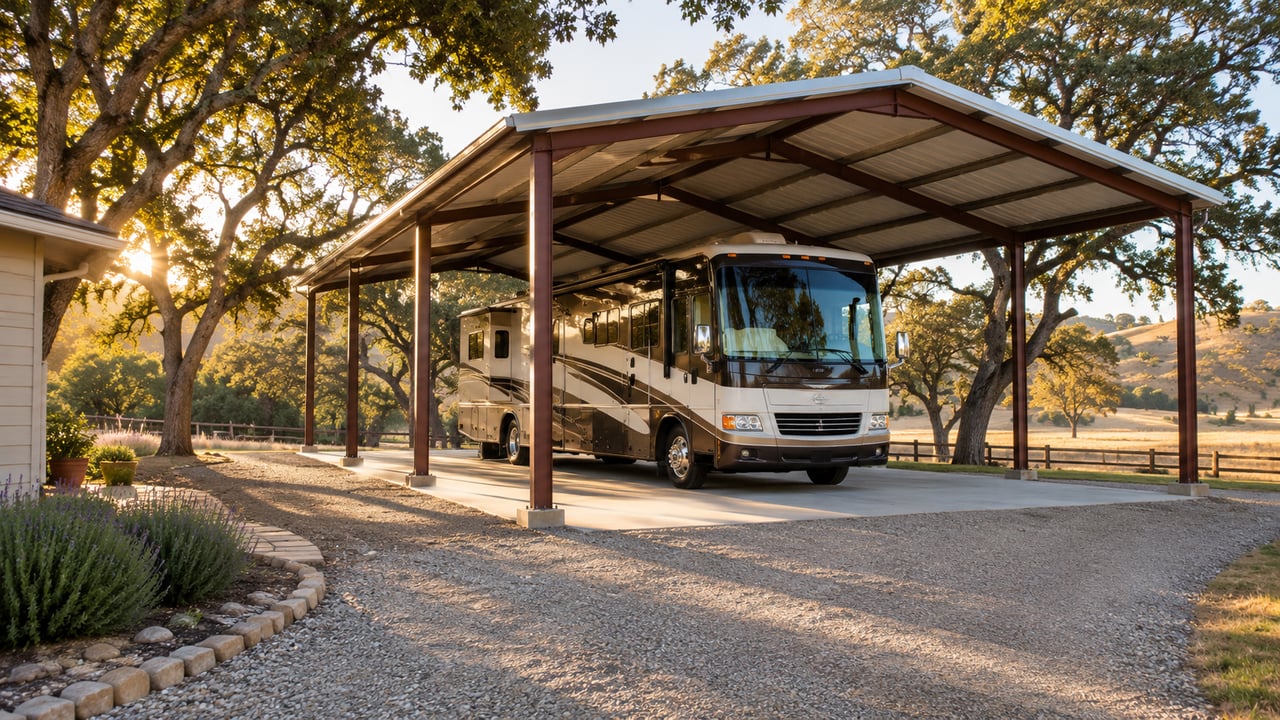
Market covered RV parking by showing exactly what the space offers, how a vehicle reaches it, and which details buyers should confirm. Clear photographs, useful measurements, and available property records make the feature easier to evaluate. A roof over a parking bay can attract attention, but the marketing needs to answer practical questions before it makes broad promises.
Here's the thing: an RV owner isn't just looking for a large rectangle beside a house. They need to know whether their vehicle fits, whether they can turn into the space, and whether the arrangement works alongside everyday parking. My approach is to prepare those details before photography and make the feature part of the home's overall story.
Before calling the area covered RV parking, walk through it and collect the information you actually have. Is the structure open on the sides? What supports the roof? Is the parking surface paved, gravel, or another material? How does it connect to the driveway and the rest of the property? Describe the existing setup plainly.
Gather available plans, permits, final inspection records, installation paperwork, and repair receipts. If records are incomplete, identify the unanswered questions instead of assuming the structure is approved because it has been there for years. An earlier listing description is background information, not confirmation of the current condition or permitted use.
For property within city limits, the City of Paso Robles Building Division provides a starting point for permit questions and directs owners to contact staff when requirements are unclear. Confirm the property's jurisdiction before seeking records. A Paso Robles mailing address alone shouldn't determine which agency you contact.
You don't need to turn the listing into a permit file. You do need accurate wording and a clear way to provide available documentation when buyers ask. That preparation helps keep the marketing consistent with what can be supported.
A roof's overall size doesn't tell an RV owner whether the parking bay works. Measure the usable width between supports and the available length of the parking surface. Note the lowest overhead obstruction along the actual path into the bay. Be clear about where each measurement was taken.
Roof edges, braces, lights, gates, and changes in grade can affect usable clearance. A tall vehicle also has equipment above its main body. Buyers should compare their own vehicle's complete dimensions with the space and arrange an appropriate fit assessment. Don't promise that every motorhome, trailer, or fifth wheel will fit.
If measurements are approximate, label them that way. Avoid a headline that calls the bay oversized without explaining its dimensions. Specific details give buyers a better starting point than an adjective. They also help people decide whether a showing makes sense for their needs.
Keep a simple measurement sheet available with the listing information. Include the measurement date, the points measured, and any areas that need further confirmation. The goal is useful information, not a guarantee of vehicle compatibility.
The parking bay may be generous while the route into it is tight. Photograph and describe the driveway approach, gate opening, turns, slopes, and nearby structures. Consider whether a towing vehicle has room to maneuver before and after the trailer is parked.
Look at the arrangement when the household's everyday vehicles are present. Does an RV block the garage? Can someone use the main driveway without moving another vehicle? Is there a practical walking route from the house? These details help buyers understand the property as a working home.
Don't stage an unsafe driving demonstration just to obtain marketing footage. A photographer can show the route from several stationary viewpoints. If a buyer needs to test access, coordinate that separately with the owner and appropriate professionals rather than treating a photo session as proof.
My guide to keeping an RV at a San Miguel home raises related questions about fitting RV ownership into a property. For this Paso Robles listing, keep every claim tied to the actual parking bay and access route.
Remove loose items, spare materials, and unnecessary storage from the parking area. Sweep or tidy the surface as appropriate. Clear the approach so buyers can see the edges, supports, and usable space. A parking bay filled with belongings is harder to judge from a small phone screen.
Look for maintenance concerns before the photographer arrives. Loose panels, damaged posts, visible staining, or an uneven surface deserve attention and appropriate professional review. Cleaning improves presentation, but it shouldn't conceal conditions buyers need to understand.
If an RV will remain in the photographs, choose an arrangement that shows scale without hiding the structure. Keep enough of the approach visible to explain how the vehicle is positioned. Remove personal items and identifying details from the scene where practical.
If the bay will be empty, avoid making it look larger through extreme camera angles. The feature should feel recognizable when a buyer arrives. Accurate presentation is more useful than a dramatic image that creates the wrong expectation.
Start with a wider view connecting the home, driveway, and parking cover. Follow with a three-quarter view showing the opening and roof. Add a view along the approach and a closer image of the parking surface. Each photograph should explain something different.
A single close shot of an RV under a roof may leave buyers unsure where the structure sits. A distant aerial may show the location but hide the practical clearance. Use the combination that makes the layout understandable without requiring buyers to guess.
When an aerial image is appropriate and lawfully obtained, use it to explain the relationship between structures and access. Don't draw boundary lines unless their basis is clear and appropriate. Marketing graphics shouldn't imply a surveyed property line or access right that hasn't been established.
A short video can help show the transition from the driveway to the bay. Keep it steady and factual. Text labels can identify verified measurements, but avoid claims about rental use, living arrangements, or future improvements unless those claims have been confirmed.
Lead with the feature's verified practical benefit. For example, a description might note a covered parking bay beside the driveway, approximate usable dimensions, and the availability of records. The exact sentence should reflect the property, not a standard promise applied to every listing.
Separate existing equipment from possible uses. A nearby outlet doesn't establish a dedicated RV electrical connection. A hose connection doesn't establish a complete hookup arrangement. If a system matters to the marketing, document what is installed and have qualified professionals address technical questions.
Don't describe the area as an income opportunity, guest residence, or additional living space simply because an RV can be parked there. Parking and occupancy are different questions. Buyers who have a specific plan should investigate it with the relevant agency and their own advisers.
Useful descriptions respect what remains unknown. If the seller cannot verify a feature, the wording should acknowledge that limitation. Confidence comes from clarity, not from making the broadest claim possible.
Covered RV parking may appeal to buyers who own a recreational vehicle or expect to purchase one. It may also interest someone with another storage need, depending on the property's actual permissions and dimensions. Let the verified setup guide the audience and message.
As a listing agent, I want the marketing to show why the feature matters while keeping the home itself central. A useful parking bay doesn't replace the floor plan, condition, location, or price. Buyers need to see how the full property supports their priorities.
Use strong photography consistently across the listing, video, and digital marketing. Keep the dimensions and descriptions consistent too. If one channel says covered parking while another promises full hookups without support, the inconsistency creates avoidable questions.
Someone comparing communities may also find my discussion of San Luis Obispo living for a household that owns an RV helpful. That broader comparison shouldn't be used to imply the same rules apply to this property.
Don't attach an automatic price premium to the parking cover. The seller's construction expense, personal convenience, and a buyer's willingness to pay are different things. Review relevant competing properties and available comparable sales with the feature in context.
Ask whether likely buyers in the home's price range will value the setup and whether its design is practical. A well-presented feature can strengthen the property's appeal without supporting a precise standalone value. Avoid claiming that it adds a specific amount unless reliable evidence supports that conclusion.
The same principle applies to other specialized improvements. My article on marketing a Paso Robles home with a detached greenhouse explains the importance of presenting a property's particular use clearly. The strategy should fit the improvement and the buyer pool.
Prepare for questions about dimensions, roof condition, surface maintenance, drainage, lighting, electrical equipment, and how the seller currently uses the area. Keep documentation organized so an interested buyer can review what exists without waiting for a last-minute search.
For a showing, keep the approach accessible and the bay easy to see. Explain which items are included in the sale and which are personal property. Don't let a parked vehicle or removable equipment become an assumed part of the purchase.
The strongest marketing plan is straightforward: verify the details, prepare the area, show the access, and describe the feature accurately. Then connect covered RV parking to the home's overall value for the right buyer. That's how I would make it a useful selling point without overselling what it can do.
If you’re thinking about selling a home in Paso Robles or elsewhere in San Luis Obispo County, I’d be happy to help you create a marketing plan based on your property, timing, and goals.
Amber
Pillar Real Estate | Amber Johnson, Founder
805.835.3425 | [email protected]
1345 Park St. Paso Robles, CA 93446 | DRE# 01925434
Amber Johnson | November 26, 2026
Show the parking area clearly while checking dimensions, access and how buyers may use it.
Amber Johnson | November 26, 2026
Read the two measures together without treating one month as a complete market verdict.
Amber Johnson | November 26, 2026
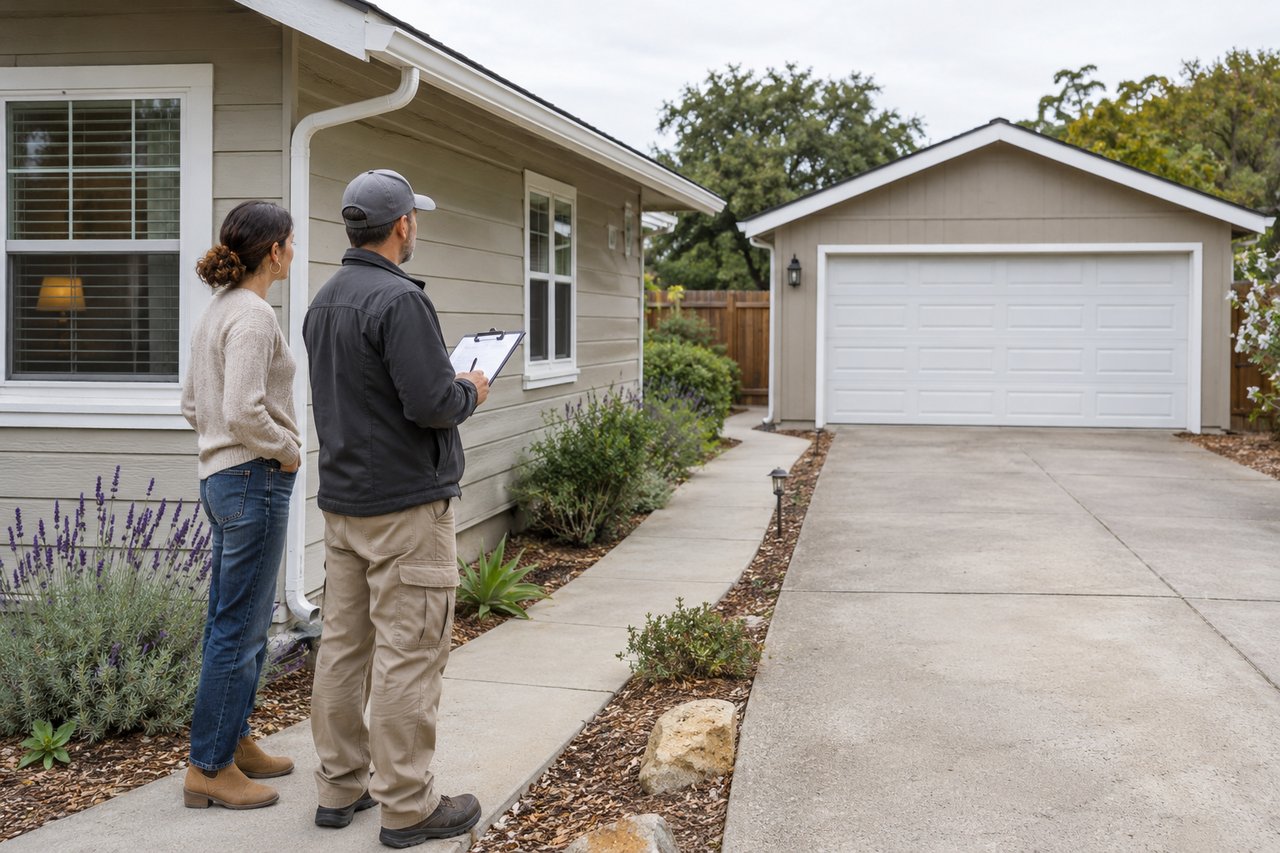
Confirm the garage's condition, access, utilities, and practical fit for your vehicles and storage.

Amber Johnson | November 25, 2026
Think about route access, weather, parking, and how often you would actually get out.

Amber Johnson | November 23, 2026

Amber Johnson | November 21, 2026
Amber Johnson | November 21, 2026
Test the route, travel schedule and home location against your actual week.

Amber Johnson | November 21, 2026
Use both measures to judge current competition and buyer activity without overreading one week.
Amber Johnson | November 21, 2026
Understand inspection options, service history and the scope of any needed work.
You’ve got questions and we can’t wait to answer them.
Amber Johnson, Founder
Pillar Real Estate
805.835.3425
DRE# 01925434
1345 Park Street
Paso Robles, CA 93446