Can I Keep an Oceanfront Running Routine While Living in Pismo Beach?
November 25, 2026
November 25, 2026
Think about route access, weather, parking, and how often you would actually get out.
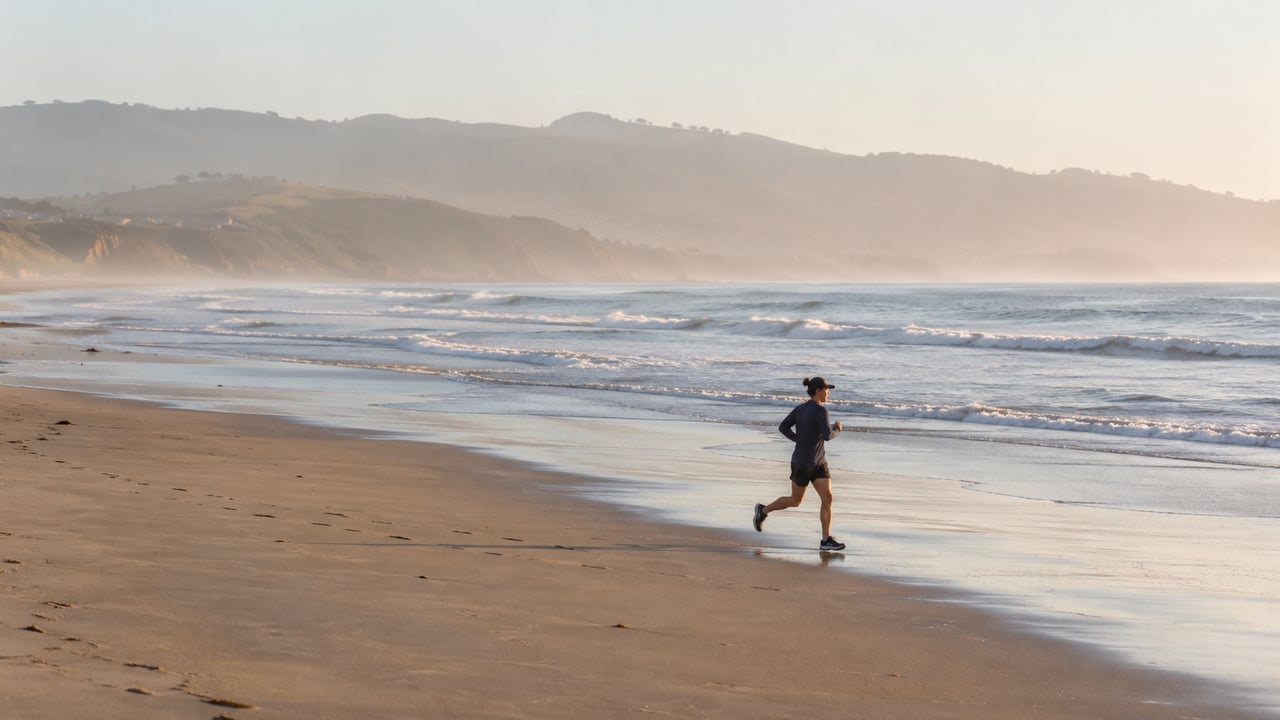
Yes, you can keep a regular oceanfront running routine while living in Pismo Beach. The better question is whether the home you choose makes that routine practical on an ordinary weekday. Your answer depends on your distance from reliable beach access, how comfortable you are planning around tides and weather, and whether you have a backup route when the sand is not a good option.
Living near the coast can make running feel like a natural part of the week. It can also be easy to picture a routine that looks great during a weekend visit but becomes less convenient once work, errands, parking, and changing beach conditions enter the picture. Here is how I would evaluate it before choosing a home.
Before looking at neighborhoods, be honest about what you mean by an oceanfront running routine. Do you want a short run before work three mornings a week? Are you training for longer distances? Do you want firm sand at low tide, or would a paved route with ocean views work just as well?
Those answers change the home search. A runner who wants twenty quiet minutes near the water has different needs from someone training for a half marathon. One may prioritize quick access to the shoreline. The other may need a dependable route that continues when the tide is high or the wind picks up.
I would write down four basics:
This keeps the search focused on how you live instead of how a listing photo makes you feel.
The shoreline can be a very different running surface from one day to the next. Lower tides may expose a wider stretch of firm, damp sand. Higher tides can narrow the usable area and push runners onto softer sand. Surf, seasonal changes, debris, and creek flow can also affect where you can comfortably run.
That does not make a beach routine unreliable. It means tide awareness becomes part of the routine. NOAA publishes official tide predictions, and checking them can help you decide whether the shoreline works for the distance and time you have planned.
If your schedule is flexible, you may enjoy planning longer beach runs around favorable conditions. If your only available window is always at the same hour, a paved backup becomes more important. The goal is not to force every run onto the sand. It is to have enough good options that the routine survives changing conditions.
Pismo Beach offers several ways to reach or enjoy the coast, but they are not all the same. The main beach, pier, promenade, and creek area includes public restrooms, sand showers, benches, drinking fountains, recreation areas, and nearby parking. The City also identifies access points such as the Wilmar Stairs, where runners can reach the beach and continue toward the pier when shoreline conditions allow.
Farther north, the Shell Beach area offers bluff-top and coastal options. Eldwayen Ocean Park is described by the City as a one-and-a-half-mile oceanfront park with grassy areas, benches, on-street parking, beach stairs, and tide pools. Margo Dodd Park provides another bluff-top setting with ocean views and nearby coastal terrain.
These choices matter because oceanfront running does not have to mean running only on wet sand. A routine can combine the promenade, neighborhood streets, bluff areas, and beach access. That mix may be more realistic year-round.
When touring homes, I would not rely only on a map pin that appears close to the ocean. Look at the actual route from the property. A short straight-line distance can still involve a steep grade, a busy crossing, stairs, limited sidewalks, or a longer path to a usable access point.
The coast has its own rhythm. The City of Pismo Beach notes that morning coastal fog and gusty afternoon wind are common during spring and summer. The City also describes temperatures that generally remain moderate throughout the year.
For many runners, cooler mornings are a benefit. Fog can make an early run feel calm, but it can also reduce visibility. Bright clothing, reflective details, and extra attention near streets and driveways make sense. Afternoon wind can change the effort level, especially on an exposed beach or bluff route.
Weather should influence the home search in a practical way. Ask yourself whether you would still run if the morning is gray, the wind is up, or the shoreline is less inviting than it was during your showing. If the answer is yes, the routine is probably a real priority. If the answer is no, you may prefer a home that offers easier access to several types of exercise rather than paying a premium for proximity you will rarely use.
Here is the thing: people usually keep routines that are easy to start. A beautiful route is helpful, but convenience is what gets you out the door on a busy Tuesday.
A home close enough for a warm-up walk or jog removes the need to find parking. A home farther away may still work if the drive is quick and predictable. The right choice depends on how much setup you will tolerate before deciding to skip the run.
Consider these location questions:
A home does not need to be directly on the water to support the routine. In some cases, being a few blocks inland with an easy route to the coast may work better than a property with an ocean view but awkward pedestrian access.
If you expect to drive to the shoreline, test parking at the times you are most likely to run. Conditions on a quiet weekday morning may be very different from a sunny weekend, holiday period, or busy summer afternoon.
The main pier area has nearby parking, and some coastal parks rely on on-street parking. Availability can still vary. If your routine depends on finding a convenient space every time, build that into your decision instead of treating it as a small detail.
Think about what happens after the run too. Is there room at home for damp shoes, towels, and basic gear? Is there an outdoor hose or an easy place to shake off sand? These are small property details, but they can make a coastal routine much easier to maintain.
The strongest plan has two versions. Route A is the run you are excited about. Route B is the run you can complete when the tide, surf, fog, wind, or your schedule changes.
For example, your preferred route may begin on the beach near the pier when the sand is firm. Your backup could use the promenade and nearby streets. If you live closer to Shell Beach, your first choice may include bluff-top ocean views, while your backup uses neighborhood streets with less exposure.
You do not need to decide on a precise route before buying. You should confirm that more than one workable option exists. A routine is far more likely to last when one inconvenient condition does not cancel the whole plan.
One of the best things you can do is try the routine during your home search. Pick the time of day you normally run and start near the area you are considering. Pay attention to the parts that will affect daily life.
Try it more than once if the routine is a major reason for moving. A weekday morning and a weekend afternoon can give you a better sense of traffic, parking, activity, and wind.
If oceanfront running is central to your week, tell your agent early. It should be treated as a real housing need, similar to commute time, yard use, or access to everyday services.
Searches can then consider more than a city name. You can compare actual access, grades, sidewalks, parking, storage for outdoor gear, and the drive time to alternate routes. You can also weigh coastal proximity against other priorities such as home size, noise, outdoor space, and budget.
Buyers sometimes assume the closest property is automatically the best fit. It depends on your situation. A slightly more inland home may offer an easier route, better parking, or a layout that supports the rest of your life. A smaller home nearer the coast may be the right trade if running by the water is one of the main reasons you want to live in Pismo Beach.
You may also want to read this local guide to Pismo Beach summer activities, learn why buyers enjoy living in Pismo Beach, consider what beachfront living is actually like, and review the cost of living in Pismo Beach.
Yes. Pismo Beach can support a regular coastal running routine, especially if you choose a home with practical access and give yourself more than one route. The deciding factors are not limited to how close the property looks to the water. Tide timing, wind, fog, parking, grades, and your willingness to use a paved backup all matter.
The right strategy is to test the routine before you buy. Run at your normal time, check the actual access, and picture yourself doing it during an ordinary week. If the route still feels convenient when the day is busy and the weather is less than perfect, you have probably found a routine that can last.
If you’re thinking about selling a home in Paso Robles or elsewhere in San Luis Obispo County, I’d be happy to help you create a marketing plan based on your property, timing, and goals.
Amber
Pillar Real Estate | Amber Johnson, Founder
805.835.3425 | [email protected]
1345 Park St. Paso Robles, CA 93446 | DRE# 01925434
Amber Johnson | November 25, 2026
Think about route access, weather, parking, and how often you would actually get out.

Amber Johnson | November 23, 2026

Amber Johnson | November 21, 2026

Amber Johnson | November 21, 2026
Test the route, travel schedule and home location against your actual week.

Amber Johnson | November 21, 2026
Use both measures to judge current competition and buyer activity without overreading one week.
Amber Johnson | November 21, 2026
Understand inspection options, service history and the scope of any needed work.

Amber Johnson | November 20, 2026
Consider bike storage, route access and how rides fit into your ordinary week.

Amber Johnson | November 20, 2026
Compare commute convenience with traffic exposure at the specific homes you tour.

Amber Johnson | November 20, 2026
You’ve got questions and we can’t wait to answer them.
Amber Johnson, Founder
Pillar Real Estate
805.835.3425
DRE# 01925434
1345 Park Street
Paso Robles, CA 93446