What Is the Difference Between an Interest Rate and APR on a Mortgage?
August 18, 2026

August 18, 2026
If you're buying a home, you'll probably hear two numbers that sound almost identical.
Interest rate.
And...
APR.
Many buyers assume they're the same thing.
They're not.
Understanding the difference can help you compare loan options and make a more informed financial decision.
If you're buying a home in Paso Robles, Templeton, Atascadero, San Miguel, or anywhere in San Luis Obispo County, this is one of those mortgage terms that's worth understanding before you choose a loan.
I’m a real estate agent in Paso Robles, CA helping buyers and sellers throughout San Luis Obispo County make confident real estate decisions through clear communication, practical education, and thoughtful guidance. After more than 13 years in real estate, I’ve found that helping clients understand the process often removes much of the stress that comes with buying a home.
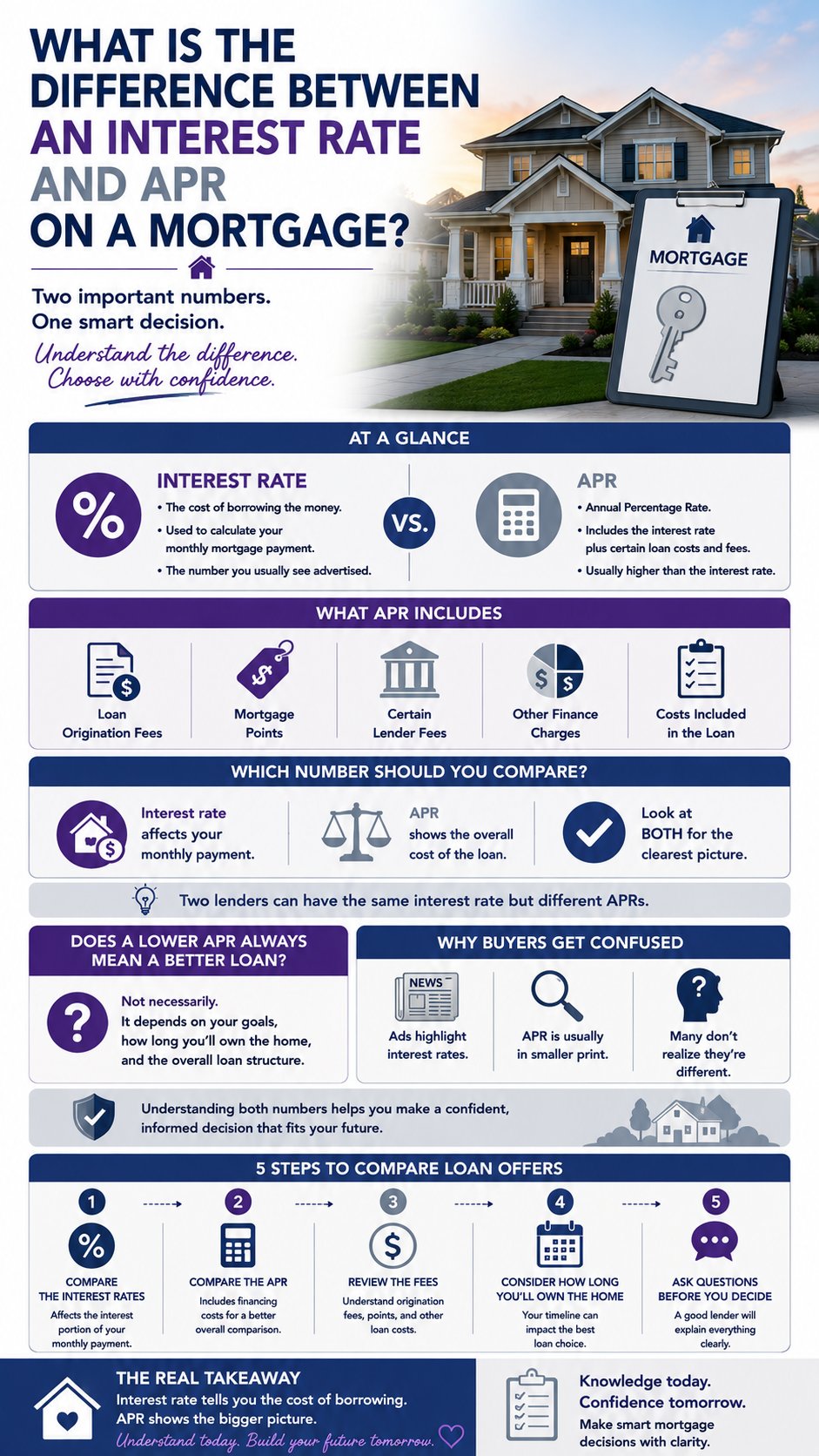
The interest rate and APR are connected.
But they measure two different things.
What Is an Interest Rate?
Your interest rate is the percentage your lender charges you to borrow money.
Think of it as the cost of borrowing the loan itself.
That rate is used to calculate the interest portion of your monthly mortgage payment.
Generally speaking, a lower interest rate means you'll pay less interest over the life of the loan, assuming all other factors stay the same.
It's the number you'll usually see advertised.
What Is APR?
APR stands for Annual Percentage Rate.
It includes the interest rate plus certain loan-related costs and fees.
Those may include things like:
Because APR factors in these additional costs, it's usually higher than the interest rate.
Why Are They Different?
Here's a simple way to think about it.
The interest rate tells you the cost of borrowing money.
The APR gives you a broader picture of what that loan may cost over time because it includes some of the upfront financing costs.
That's why two lenders might advertise the exact same interest rate...
But show different APRs.
Which Number Should You Compare?
The answer is...
Both.
The interest rate affects your monthly payment.
The APR helps you compare the overall cost of different loan offers.
Looking at both numbers gives you a more complete picture than looking at either one by itself.
Does a Lower APR Always Mean a Better Loan?
Not necessarily.
It depends on your situation.
For example, if you plan to stay in the home for many years, paying additional upfront costs for a lower interest rate might make sense.
If you expect to move sooner, a different loan structure could be more beneficial.
That's why it's important to talk with your lender about how each loan fits your long-term plans instead of simply choosing the lowest advertised number.
Why Buyers Sometimes Get Confused
Mortgage advertisements often highlight the interest rate because it's easy to understand.
APR is usually shown in smaller print.
Many buyers don't realize the two numbers represent different things.
Once you understand that APR includes certain financing costs while the interest rate reflects the cost of borrowing the money itself, comparing loans becomes much easier.
What I'm Seeing Right Now
After helping buyers throughout Paso Robles, Templeton, Atascadero, San Miguel, and San Luis Obispo County for more than 13 years, I've found that most people don't need to become mortgage experts.
They simply need someone to explain the terms in plain English.
When buyers understand the difference between an interest rate and APR, they ask better questions, compare loan options more confidently, and make decisions that fit their goals.
Knowledge doesn't eliminate every decision you'll have to make.
But it does make those decisions much easier.
From start to finish.
A Real-Life Example
I was working with buyers who had received loan estimates from two different lenders.
They were excited because one lender was advertising a slightly lower interest rate.
Naturally, they assumed it was the better loan.
Before making a decision, we slowed down and looked at the complete loan estimates.
That's when they noticed something.
Although the interest rate was a little lower, the APR was higher because of the additional loan costs and fees.
That didn't automatically make it a bad loan.
It simply meant they needed to understand what they were paying for.
Once their lender explained the differences, they felt much more comfortable comparing the two options.
Instead of choosing based on one number, they chose the loan that made the most sense for their plans.
That's exactly how the process should work.
The Biggest Mistake
The biggest mistake buyers make is comparing interest rates without looking at the APR.
The interest rate is important because it affects your monthly payment.
The APR is important because it gives you a broader picture of the loan's overall cost.
Looking at only one number can make two loan offers appear more similar than they actually are.
What This Process Should Feel Like
Mortgage terms shouldn't feel confusing.
You don't need to become a loan expert overnight.
You simply need to understand enough to ask good questions and compare your options confidently.
A good lender should be able to explain the differences in plain English and help you understand which loan fits your goals.
How This Connects to the Bigger Picture
In the last article, we talked about home warranties and how they can provide additional peace of mind after you buy a home.
Now we're shifting to another important part of the buying process.
Understanding your financing.
Knowing the difference between an interest rate and APR helps you make more informed decisions long before closing day.
Next, we'll answer another question buyers ask all the time:
What does a home inspector actually look at?
Steps: How to Compare Mortgage Loan Offers
Step 1: Compare the Interest Rates
The interest rate affects the interest portion of your monthly mortgage payment.
It's an important number, but it isn't the only one you should review.
Step 2: Compare the APR
If you're buying a home in Paso Robles, Templeton, Atascadero, San Miguel, or San Luis Obispo County, look at the APR on each loan estimate.
Because it includes certain financing costs, it gives you a better comparison between lenders.
Step 3: Review the Loan Fees
Ask your lender to explain any origination fees, discount points, or other costs that affect the APR.
Understanding those charges helps you compare loans more accurately.
Step 4: Think About How Long You'll Own the Home
The best loan isn't always the one with the lowest advertised interest rate.
How long you expect to stay in the home can influence which financing option makes the most sense.
Step 5: Ask Questions Before You Decide
A good lender should be willing to explain every part of your loan estimate.
The more you understand before closing, the more confident you'll feel about your decision.
So... What's the Difference Between an Interest Rate and APR?
The interest rate tells you the cost of borrowing the money.
The APR provides a broader picture by including the interest rate plus certain financing costs.
Both numbers matter.
Looking at them together gives you a much better understanding of your mortgage options than looking at either one alone.
The Best Mortgage Decisions Start With Understanding
After helping buyers throughout San Luis Obispo County for more than 13 years, I've found that people don't need complicated explanations.
They need clear ones.
Once buyers understand what these numbers represent, comparing loan offers becomes much less intimidating.
That's one more reason education is such an important part of the home buying process.
From start to finish.
The Real Question to Ask
Instead of asking:
"Which lender has the lowest interest rate?"
Ask:
"Which loan gives me the best overall value for my situation?"
That's the question that leads to smarter financial decisions.
Next Steps
If you're planning to buy a home in Paso Robles, Templeton, Atascadero, San Miguel, or San Luis Obispo County, understanding your financing options before writing an offer can make the process much less stressful.
Learn more about how I help buyers navigate every step of the home buying process by visiting:
👉 https://pillarrealestate.com/buying
Whether you're buying your first home or your next home, my goal is to help you understand the process so you can make informed decisions with confidence.
From start to finish.
FAQ
Is the interest rate the same as the APR?
No. The interest rate is the cost of borrowing the money, while the APR includes the interest rate plus certain financing costs and fees.
Why is the APR usually higher than the interest rate?
Because the APR includes additional loan-related costs, such as certain lender fees and finance charges, it is often higher than the interest rate.
Should I compare interest rates or APR when choosing a mortgage?
Compare both. The interest rate affects your monthly payment, while the APR helps you compare the overall cost of different loan offers.
Can two lenders offer the same interest rate but different APRs?
Yes. If the lenders charge different fees or include different financing costs, the APR can vary even when the interest rate is the same.
Does the loan with the lowest APR always make the most sense?
Not always. The best loan depends on your financial goals, how long you expect to own the home, and the overall loan structure.
Who can help me understand my loan estimate?
Your lender should explain your loan estimate in detail and answer any questions about the interest rate, APR, fees, and financing options so you can choose the loan that best fits your needs.
Amber Johnson, Founder
Pillar Real Estate
805.835.3425
[email protected]
1345 Park St. Paso Robles, CA 93446
DRE# 01925434

Amber Johnson | September 22, 2026
Amber Johnson | September 21, 2026
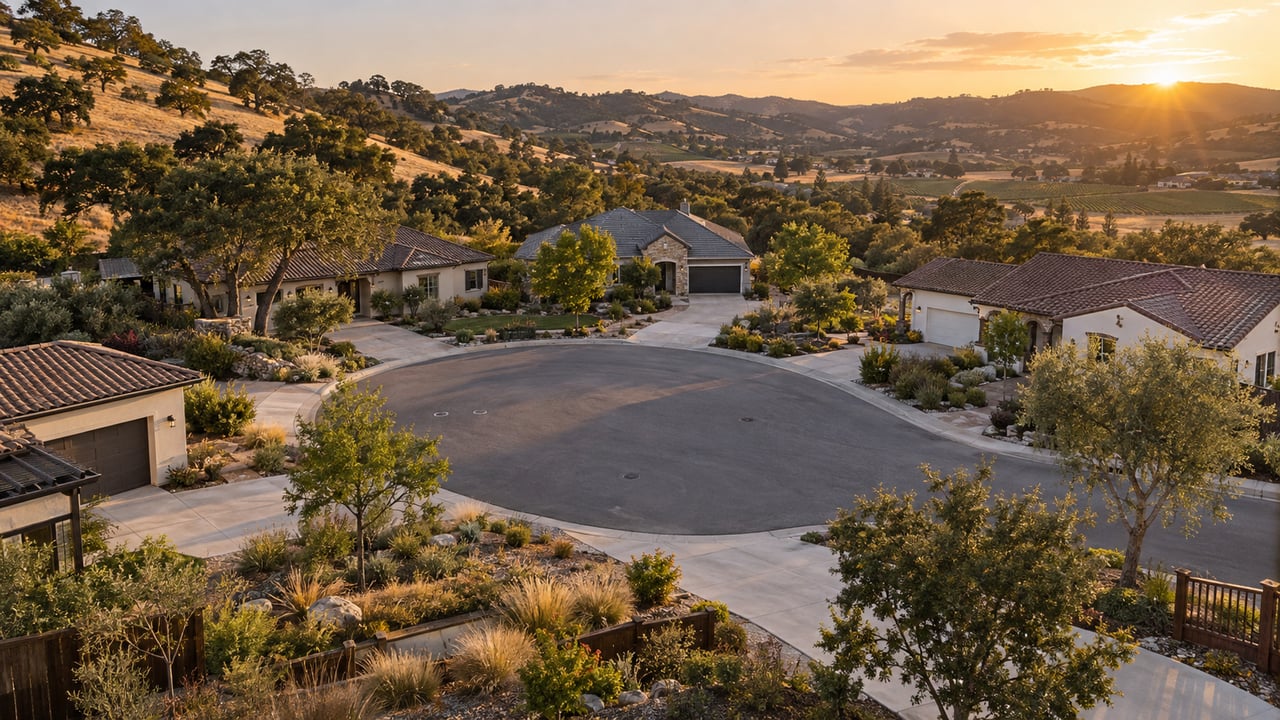
How traffic patterns, privacy, parking, lot shape, and buyer preferences can influence marketing and value.

Amber Johnson | September 21, 2026
The price, credits, repairs, timing, and other terms Paso Robles sellers may need to evaluate this season.
Amber Johnson | September 21, 2026
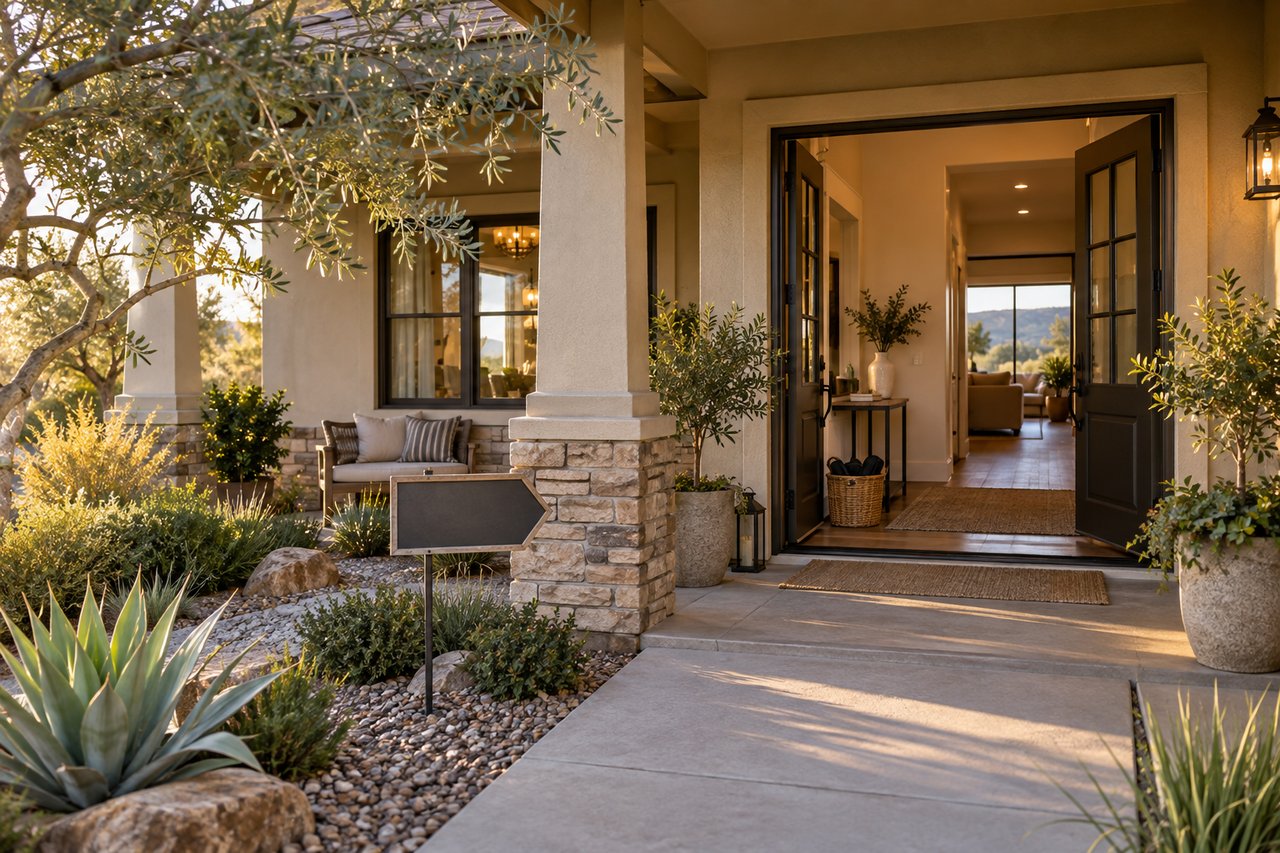
When an open house can support a launch, when private showings may matter more, and how to judge the results.
Amber Johnson | September 20, 2026
How garage organization, storage, access, and visible maintenance can influence a buyer’s overall impression.

Amber Johnson | September 20, 2026
Why seller absence usually gives buyers more freedom to look, talk, and form an honest impression.

Amber Johnson | September 20, 2026
The records that help confirm ownership, payoff information, property history, and a smoother listing process.

Amber Johnson | September 18, 2026

Amber Johnson | September 18, 2026
You’ve got questions and we can’t wait to answer them.

Amber Johnson, Founder
Pillar Real Estate
805.835.3425
DRE# 01925434
1345 Park Street
Paso Robles, CA 93446