How Does the Mix of Condos and Houses Affect San Luis Obispo Market Numbers?
October 5, 2026

October 5, 2026
San Luis Obispo market numbers can change even when individual home values are relatively steady. One reason is the mix of properties that sold during the period. A month with more condos and smaller homes may produce a lower median or average sale price. A month with more larger detached houses may push those figures higher. That shift does not automatically mean every home in San Luis Obispo gained or lost the same amount of value.
This distinction matters because San Luis Obispo is not one uniform housing category. Buyers and sellers are looking at condos, townhomes, small bungalows, larger detached homes, different neighborhoods, varied lot sizes, and properties in very different condition. When all of those sales are combined into one headline number, the composition of the group affects the result.
The median sale price is the middle price in a group of closed sales when the prices are arranged from lowest to highest. Half of the sales are below that point and half are above it. The median is useful because it is less affected by one unusually high or low sale than an average.
Still, the median depends on which homes sold. If a period includes more condos and smaller houses, the middle sale may be a lower-priced property type. If the next period includes more larger detached homes, the middle sale can move higher even if buyers are paying similar prices for comparable properties.
That is why a rising median does not prove that every home appreciated by the same percentage. A falling median does not prove that every owner lost value. The article Home Values Rise Even as Median Prices Fall explains this relationship in more detail. The key is to separate a change in the homes being measured from a change in what buyers will pay for a particular home.
An average sale price is calculated by adding the sale prices and dividing by the number of sales. A few higher-priced detached homes can pull the average upward. Several lower-priced condo sales can pull it downward. Because of that sensitivity, an average can change sharply in a period with relatively few transactions or an unusual collection of sales.
Neither the median nor the average is wrong. Each summarizes the group placed into the calculation. The problem begins when someone reads the number as if it describes every property equally.
When I review a San Luis Obispo market report, I want to know what is inside the total. How many sales were condos or townhomes? How many were detached houses? Were the houses mostly smaller, older homes or larger, renovated properties? Which neighborhoods produced the closings? Those questions give the headline number context.
Imagine one group of sales that contains several condos, two small detached homes, and one larger house. Now imagine a second group with only one condo and several larger detached homes. The second group is likely to show a higher median and average simply because it contains more of the higher-priced property type.
That does not necessarily mean the condo market rose or the small-home market fell. To answer those questions, you would compare condos with similar condos and smaller detached homes with similar detached homes. You would also account for location, condition, size, parking, outdoor space, and other features that influence buyer decisions.
This is the same reason a homeowner should not apply a citywide percentage directly to an individual property. The property needs its own relevant comparison set.
Condos and detached houses often attract overlapping but different buyer priorities. A condo buyer may be comparing association costs, parking, shared maintenance, rules, common areas, and proximity to work or services. A detached-home buyer may place more weight on lot size, privacy, expansion potential, a garage, or outdoor space.
Financing and insurance questions can also differ by property. A condo buyer may need to review the association, project documents, assessments, insurance structure, and lender requirements. A detached property may involve more direct responsibility for the roof, exterior, drainage, yard, and other systems.
Because the decision process is different, demand can move differently across categories. A single citywide figure can hide that separation. If more buyers are competing for a certain type of smaller home while larger homes take longer to sell, or the reverse, the overall median will not explain the full pattern.
Not all condos should be grouped together, and not all detached houses should be grouped together. A compact one-bedroom condo serves a different need from a larger multi-bedroom unit. A small bungalow on a modest lot is different from a larger house with more bedrooms, parking, and outdoor space.
When the size distribution changes, market numbers can change with it. A period with more small units may show a lower price per sale. A period with more large homes may show a higher total sale price. Price per square foot may add another point of comparison, but it also needs context. Buyers do not purchase square footage in isolation. Layout, condition, lot, parking, location, and features still matter.
Look at the range of sizes inside the data. If the typical home sold this month is very different from the typical home sold last month, a direct headline comparison may be misleading.
San Luis Obispo contains neighborhoods with different housing patterns, lot sizes, ages, access, and buyer appeal. Some areas include more condos or attached homes. Others have primarily detached houses. Proximity to downtown, Cal Poly, major streets, parks, services, and open space can influence what buyers compare and how they value a property.
If one reporting period contains more sales from a higher-priced neighborhood and the next period contains more sales from a different area, the citywide number can move even if each neighborhood is behaving consistently.
This is where local context becomes important. A buyer considering the city as a whole may find What Is It Like Living in San Luis Obispo, CA? helpful for understanding the broader lifestyle. For a pricing decision, the comparison needs to narrow to the neighborhoods and property types that compete most directly with the home in question.
A move-in-ready condo and a unit needing extensive work may be in the same building but attract different offers. The same is true for detached homes. Renovation quality, roof and system condition, functional layout, energy features, outdoor areas, and visible maintenance can affect price and time on market.
If several updated homes close in one period, the median may rise. If more fixer properties close in the next period, the median may fall. That can happen without a broad change in demand.
When reviewing a sale, ask whether the property was truly comparable in condition. Listing photos and remarks can provide clues, but they do not replace a careful review of improvements, disclosures, inspections, concessions, and the circumstances of the sale.
The recorded sale price does not always tell the complete story. A transaction may include seller credits, repairs, rate-related assistance, or other negotiated terms. Those details can affect the economic result for the buyer and seller without changing the headline price in an obvious way.
Financing can influence which properties close during a period too. Different buyers may have different down payments, loan programs, appraisal requirements, or timelines. The mix of cash and financed purchases can shape competition and negotiations, but it should not be used as a shortcut for valuing an individual property.
Review the terms when they are available and relevant. A clean price comparison is strongest when the underlying transactions are also similar.
Buyers should begin with the type of property they actually want. If you are shopping for a condo, citywide statistics that include large detached homes may not answer your most important questions. Focus on comparable units, association costs, parking, condition, location, recent competition, and current alternatives.
If you are shopping for a detached house, compare similar homes by size, neighborhood, lot, condition, and features. Look at active listings, pending activity when available, and recent closed sales. Closed sales show what buyers paid. Active listings show your current choices. Pending properties can offer clues about what recently attracted a buyer, although the final price and terms may not yet be public.
Ask how long relevant homes are taking to sell and whether price reductions or credits are common in your segment. A general county update, such as the August 2026 San Luis Obispo County market update, can provide a broad frame. Your offer strategy still needs to be based on the specific property and its direct competition.
Sellers should avoid choosing a list price from a citywide median alone. Start with the closest substitutes a buyer would consider. For a condo, that may mean recent sales in the same complex or similar nearby developments, adjusted for size, location within the project, parking, updates, views, outdoor space, and association factors.
For a detached house, the best comparisons often share a similar neighborhood, size, age, lot, condition, bedroom count, and buyer profile. A larger sale across town may be interesting, but it may not support the price of a smaller home simply because both have a San Luis Obispo address.
A comparative market analysis organizes these relevant sales and current competitors. The goal is not to find one perfect match. It is to understand the range, make reasonable adjustments, and see where the property fits in the eyes of today’s buyers.
When a report says prices moved, ask a few follow-up questions:
Also look beyond one month. Short periods can be useful for detecting new activity, but they can be noisy when only a limited number of homes close. A longer view helps show whether the movement is part of a pattern or simply a different group of sales.
The mix of condos and houses can raise or lower San Luis Obispo market numbers without creating the same change for every owner or buyer. Median and average prices summarize the sales that happened. They do not replace a property-specific analysis.
For a useful decision, separate the market into the segment that matters to you. Compare the same property type, similar size, relevant neighborhoods, comparable condition, and current competition. Then use the broader city and county data as context.
Amber Johnson and Pillar Real Estate help San Luis Obispo County buyers and sellers translate market reports into practical property decisions. If you want to know what the numbers mean for a particular condo or house, I can prepare a focused comparison based on the homes that truly compete with it.
Amber Johnson
Founder, Pillar Real Estate
805.835.3425
[email protected]
1345 Park St. Paso Robles, CA 93446
DRE# 01925434
Website: https://pillarrealestate.com/
Amber Johnson | October 5, 2026
Learn why property type, size, condition, and neighborhood mix can shift local medians and averages.

Amber Johnson | October 4, 2026
Review water, fencing, access, outbuildings, land use, and everyday upkeep before making an offer.

Amber Johnson | October 4, 2026
Consider coastal weather, recreation activity, neighborhood streets, sand, noise, and everyday errands before choosing a home.

Amber Johnson | October 4, 2026
Compare lot size, utilities, maintenance, access, and daily routines before choosing a San Miguel setting.

Amber Johnson | October 4, 2026
Consider internet service, backup plans, coastal weather, workspace needs, and everyday errands before moving.
Amber Johnson | October 4, 2026
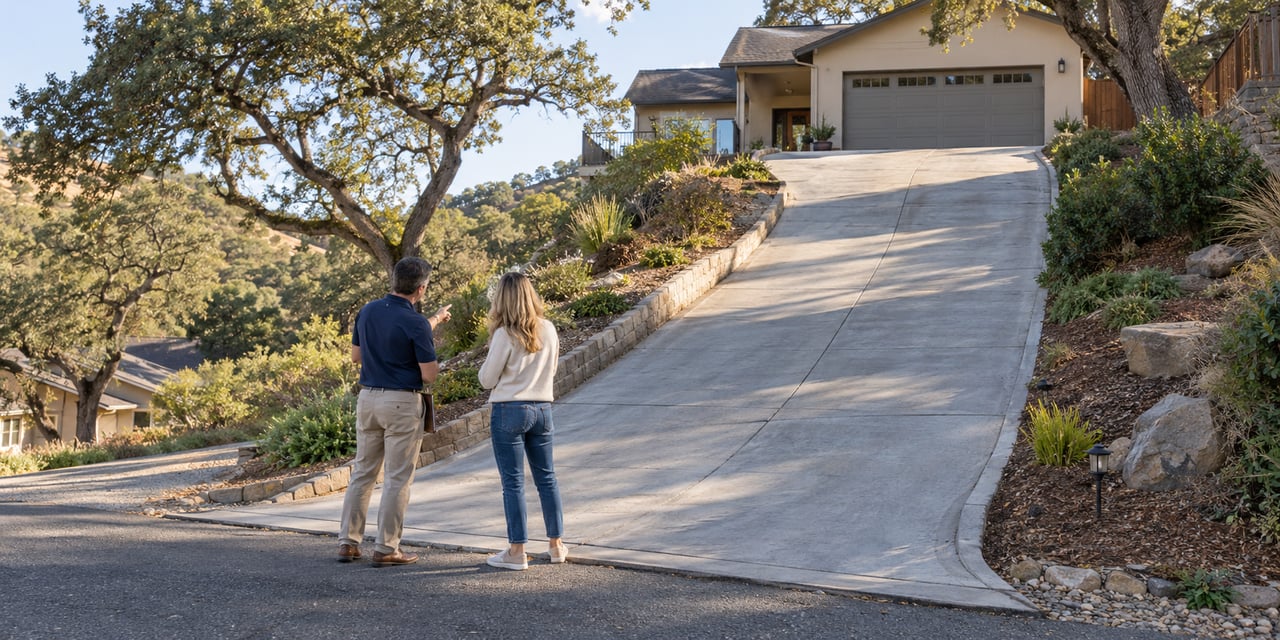
Show access, parking, turnaround space, and the property’s strongest features so buyers can assess the tradeoff clearly.

Amber Johnson | October 4, 2026
Use the flow of new listings to frame choices without treating a single week as the whole market.
Amber Johnson | October 3, 2026
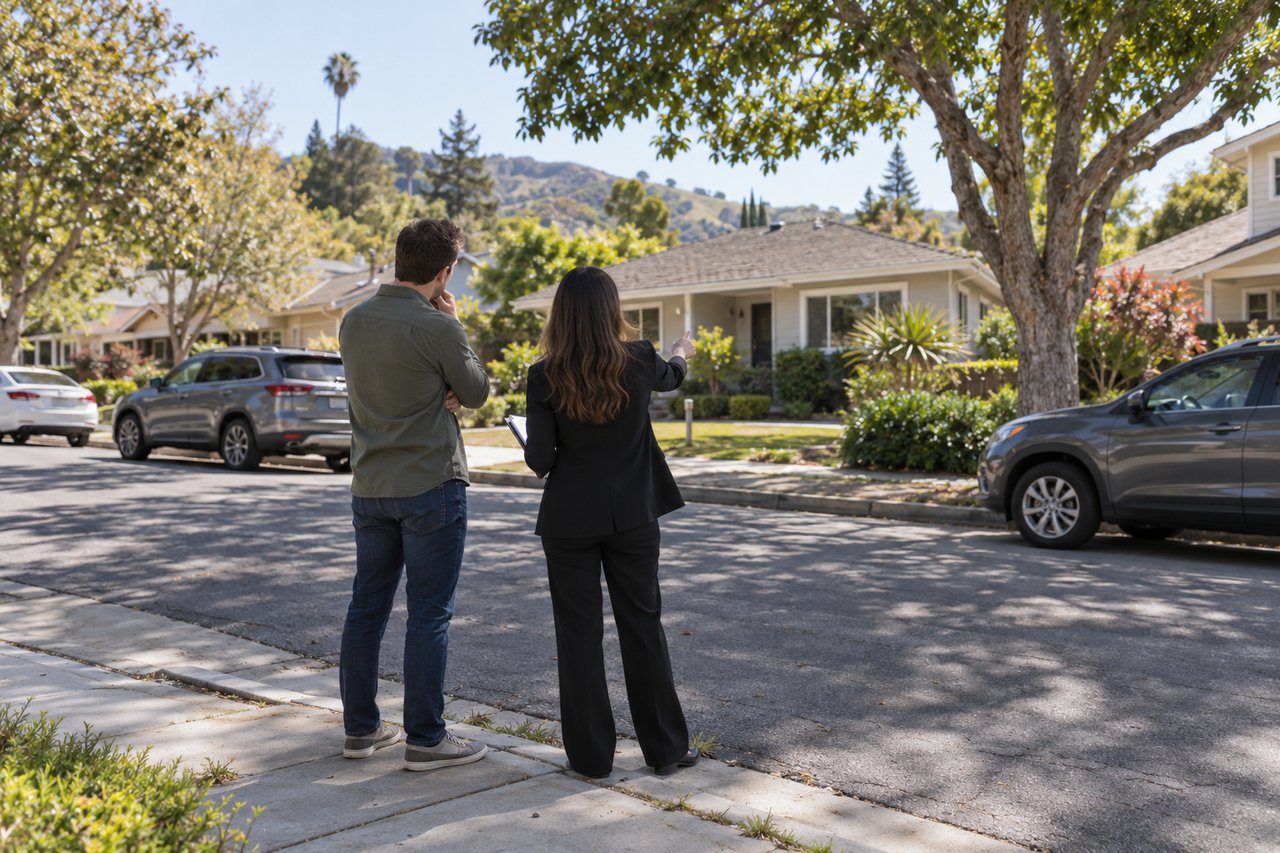
Look closely at parking, street activity, property condition, and everyday fit before making an offer.

Amber Johnson | October 3, 2026
Compare the feel of the inland valley with the walkable beach village before choosing where to live.
You’ve got questions and we can’t wait to answer them.
Amber Johnson, Founder
Pillar Real Estate
805.835.3425
DRE# 01925434
1345 Park Street
Paso Robles, CA 93446