What If the Home Inspection Finds a Lot of Problems?
July 30, 2026
July 30, 2026
You loved the house.
Your offer was accepted.
Then the inspection report arrives.
And it's long.
Really long.
There are photos.
Warnings.
Recommendations.
Things you've never heard of.
Things you didn't notice when you toured the home.
Suddenly, you're looking at the same house very differently.
And one thought starts running through your mind:
"Did I just make a huge mistake?"
This is one of the most stressful moments for many first-time buyers.
Here's the thing.
A home inspection finding a lot of items doesn't automatically mean you're buying a bad house. It means you now have more information about the house you're considering buying.
Some findings may be relatively minor.
Some may involve normal maintenance.
Some may deserve additional investigation.
And yes, sometimes an inspection uncovers something significant that needs careful consideration.
The goal isn't to ignore the problems.
It's to understand them before deciding what they mean for you.
Amber is a real estate agent in Paso Robles, CA helping buyers throughout San Luis Obispo County navigate inspections and other important decisions during the home-buying process. Her approach is clear and practical, helping buyers understand the information in front of them rather than making decisions from fear.
A long inspection report can feel overwhelming. Before deciding what it means for your purchase, understand what the individual findings actually say.
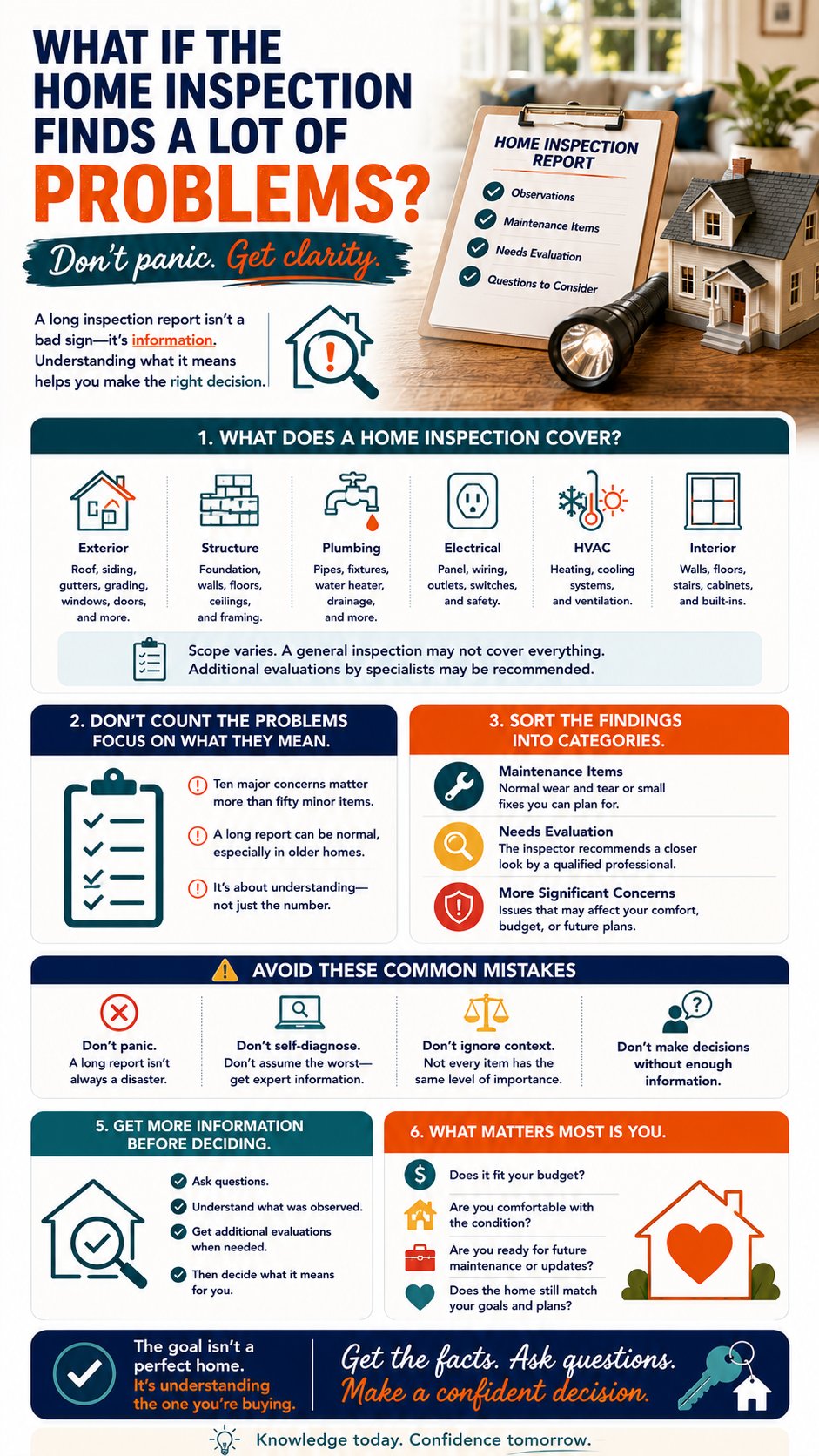
First, Don't Count the Problems
This is where buyers can get overwhelmed quickly.
They open the report and start counting.
Twenty items.
Thirty items.
Fifty items.
Maybe more.
That number by itself doesn't tell you very much.
An inspection report may document everything from relatively simple maintenance observations to conditions that deserve additional professional evaluation.
Ten significant concerns could matter much more than fifty minor observations.
So don't ask:
"How many things did the inspector find?"
Ask:
"What did the inspector find that actually deserves my attention?"
That's a much more useful place to start.
The Biggest Misconception
One of the biggest misconceptions is:
"A good house should have a short inspection report."
That's not necessarily true.
Inspectors document what they observe.
And depending on the property, there may be a lot to document.
This can be especially noticeable with older homes.
Paso Robles, Templeton, Atascadero, and the surrounding areas have homes from many different eras, along with rural properties and homes that may have been updated at different times.
An older home may simply have more history.
That doesn't automatically make it a bad purchase.
But it does make understanding the property important.
Separate the Findings Into Categories
When buyers see a long report, I like to make the conversation smaller.
Instead of treating the entire report as one giant problem, start separating the findings.
There may be:
Maintenance items
Things that may need attention as part of owning and maintaining the property.
Items that deserve additional evaluation
The inspector may recommend that a particular condition be looked at by an appropriate specialist.
More significant concerns
Some findings may affect your comfort with the property, your plans for the home, or what you need to investigate before moving forward.
Once you start looking at the report this way, it becomes much easier to process.
You're no longer reacting to 60 pages.
You're evaluating individual pieces of information.
Don't Diagnose the Problem Yourself
This is important.
Your inspector identifies something and recommends additional evaluation.
Then you go online.
Twenty minutes later, you're convinced the house needs a $75,000 repair.
Don't do that to yourself.
If something deserves further evaluation, get information from the appropriate qualified professional.
An inspector's observation may be the beginning of the conversation, not necessarily the final diagnosis or cost.
Get the right person involved.
Understand the issue.
Then decide what it means for your purchase.
When an inspection identifies something that deserves a closer look, additional evaluation can give you better information before you make a decision.
Not Every Problem Has the Same Meaning to Every Buyer
This is where your own situation matters.
Imagine an inspection identifies several projects that may need attention over time.
One buyer may say:
"That's fine. We planned to improve the house anyway."
Another buyer may say:
"We don't want to take on projects right now."
Neither buyer is necessarily wrong.
Your budget matters.
Your experience matters.
Your comfort with repairs matters.
Your plans for the property matter.
That's why there isn't one universal number of inspection findings that means you should or shouldn't buy a home.
The question is whether you're comfortable with the property now that you understand it better.
Get More Information Before Making a Big Decision
There are moments during a home purchase when buyers want an immediate answer.
"Should we still buy it?"
But sometimes you don't have enough information yet.
If an inspection identifies something that deserves additional evaluation, the next step may simply be getting that evaluation.
You may need to understand:
What is happening?
How significant is it?
What might be involved in addressing it?
Is it something that needs immediate attention?
Is it something that can be monitored or handled later?
Those are questions for the appropriate professionals.
Once you have better information, your options usually become much clearer.
Don't Let the House You Imagined Compete With the House That Exists
Before the inspection, it's easy to see the home through the excitement of buying it.
You picture your furniture.
Your family.
Your future.
Then the inspection introduces reality.
Homes require maintenance.
Things age.
Systems eventually need repair or replacement.
That doesn't mean you should accept every issue.
It means you need to evaluate the house that actually exists.
Not the perfect version you imagined during the showing.
That's part of becoming a homeowner.
What I'm Seeing Right Now
Working with buyers throughout Paso Robles, Templeton, Atascadero, and San Luis Obispo County, I've seen buyers react very differently to inspection reports.
Some see three pages of findings and immediately worry.
Others see a much longer report and calmly start asking questions.
The difference usually isn't the report.
It's how they process the information.
The buyers who handle this stage best don't ignore problems.
They also don't assume every problem is a disaster.
They gather information.
They ask questions.
They bring in additional professionals when appropriate.
Then they decide what they're comfortable with.
That's the goal.
Not pretending the house is perfect.
Understanding it well enough to make a thoughtful decision.
A Real-Life Example
I worked with buyers who were excited about the home they had under contract.
Then the inspection report came in.
There were a lot of findings.
Some electrical items.
Some plumbing concerns.
Deferred maintenance.
A few areas where the inspector recommended additional evaluation.
When we started talking, one of the buyers said:
"I don't know if we should buy this house anymore."
That reaction made sense.
They weren't expecting to see so much in writing.
But we didn't make a decision based on the length of the report.
We started asking questions.
Which items were relatively straightforward?
Which ones needed more information?
Where did we need another professional to take a closer look?
And which findings actually changed how they felt about owning the home?
Once they had more information, the situation looked very different.
There were still things the home needed.
But now they understood what they were looking at.
That's the point.
You don't need to convince yourself that inspection findings don't matter.
You need enough information to understand how much they matter to you.
The Biggest Mistake
The biggest mistake is making a major decision while you're still reacting emotionally to the report.
You open 60 pages.
See photographs.
Read technical language.
And immediately think:
"We're out."
Or you go in the opposite direction and say:
"It's probably nothing."
Neither reaction gives you much information.
Slow down.
Ask questions.
Get additional evaluations when appropriate.
Then make your decision based on what you've learned.
What This Process Should Feel Like
Working through inspection findings should feel like narrowing uncertainty.
At first, you may have a lot of questions.
That's okay.
As you gather information, those questions should become more specific.
What is this?
How significant is it?
Does it need additional evaluation?
What could be involved in addressing it?
Am I comfortable taking this on?
Those answers help you decide what happens next.
The goal isn't to make the report disappear.
It's to understand the property better.
How This Connects to the Bigger Picture
In the last article, we talked about what buyers should expect during a home inspection.
This is the conversation that comes immediately afterward.
The inspector did their job.
Now you have the report.
What do you do with all that information?
Related: What Should I Expect During a Home Inspection in SLO County?
A long inspection report doesn't make the decision for you. Understanding the individual findings helps you decide what you're comfortable taking on.
Steps: What to Do When the Inspection Finds a Lot of Problems
Step 1: Read the Report Without Panicking
Go through the entire report.
Don't make your decision based on the number of pages or photographs.
Focus on what the inspector actually observed.
Step 2: Ask the Inspector Questions
If you don't understand something, ask.
What did they observe?
Why did they flag it?
Are they recommending additional evaluation?
Don't guess at what technical language means.
Step 3: Identify What Needs More Information
Some findings may deserve a closer look from an appropriate qualified professional.
If additional evaluation is recommended and the issue matters to your decision, consider getting that information within the time allowed by your purchase agreement.
Step 4: Think About Your Own Comfort Level
This isn't someone else's house.
It's potentially yours.
Are you comfortable taking on maintenance?
Do you have room in your budget for future projects?
Are there certain issues you simply don't want to deal with?
Your answer may be different from another buyer's.
Step 5: Review Your Options
Once you understand the findings, talk with your real estate agent about the options available under your purchase agreement.
Depending on your contract and circumstances, there may be decisions to make about how you want to proceed.
The important thing is making those decisions with information.
Not fear.
So... What If the Home Inspection Finds a Lot of Problems?
Don't assume the deal is over.
And don't assume everything is fine.
Investigate.
A long report can contain a combination of maintenance items, recommendations, and more significant concerns.
Your job isn't to count them.
It's to understand them.
Then ask yourself:
"Knowing what I know now, am I still comfortable owning this home?"
Sometimes the answer will be yes.
Sometimes you'll need more information.
And sometimes what you learn may genuinely change how you feel about the purchase.
All three are possible.
That's why you do the inspection in the first place.
It's Okay If New Information Changes Your Thinking
This is important.
Earlier in this series, we've talked about not letting normal home-buying nerves convince you that you've made a mistake.
But inspection findings are different.
They can be new information.
If you learn something meaningful about the property, you're allowed to evaluate it carefully.
That's not panic.
That's due diligence.
At the same time, don't let a long list of minor observations convince you that the home is falling apart.
Understand the difference.
That's where good information matters.
The Real Question to Ask
Instead of asking:
"Is this inspection report bad?"
Ask:
"What did we learn about the home, and does any of it change whether this property makes sense for me?"
That's the question that helps you move forward thoughtfully.
Next Steps
If an inspection on a home in Paso Robles, Templeton, Atascadero, or anywhere in San Luis Obispo County uncovers more than you expected, start by getting clarity.
Review the report.
Ask questions.
Get additional evaluations when appropriate.
Understand what you're potentially taking on.
Then decide what matters enough to affect your purchase.
The next article will take this one step further:
Should I ask the seller to fix everything on the home inspection?
From start to finish.
FAQ
Is it normal for a home inspection to find a lot of problems?
It can be. Inspection reports may document a wide range of observations, including maintenance items and conditions that deserve additional evaluation. The number of findings alone doesn't tell you how significant they are.
Does a long inspection report mean I should walk away?
Not necessarily. Focus on the individual findings, get additional information when appropriate, and consider how those findings affect your comfort with the property.
What should I do if the inspector finds something serious?
Ask questions and consider having the issue evaluated by an appropriate qualified professional. Better information can help you understand the condition and your options.
Should I ask the seller to repair everything the inspector finds?
Not automatically. An inspection report is information about the property, not necessarily a list of items the seller must repair. What you decide to request depends on the findings, your priorities, your purchase agreement, and the circumstances of the transaction.
How do I know which inspection findings actually matter?
Consider the significance of the condition, whether additional evaluation is recommended, what may be involved in addressing it, and your own comfort with taking it on. Qualified professionals can help you understand issues within their areas of expertise.
Amber Johnson, Founder
Pillar Real Estate
805.835.3425
[email protected]
1345 Park St. Paso Robles, CA 93446
DRE# 01925434

Amber Johnson | September 21, 2026
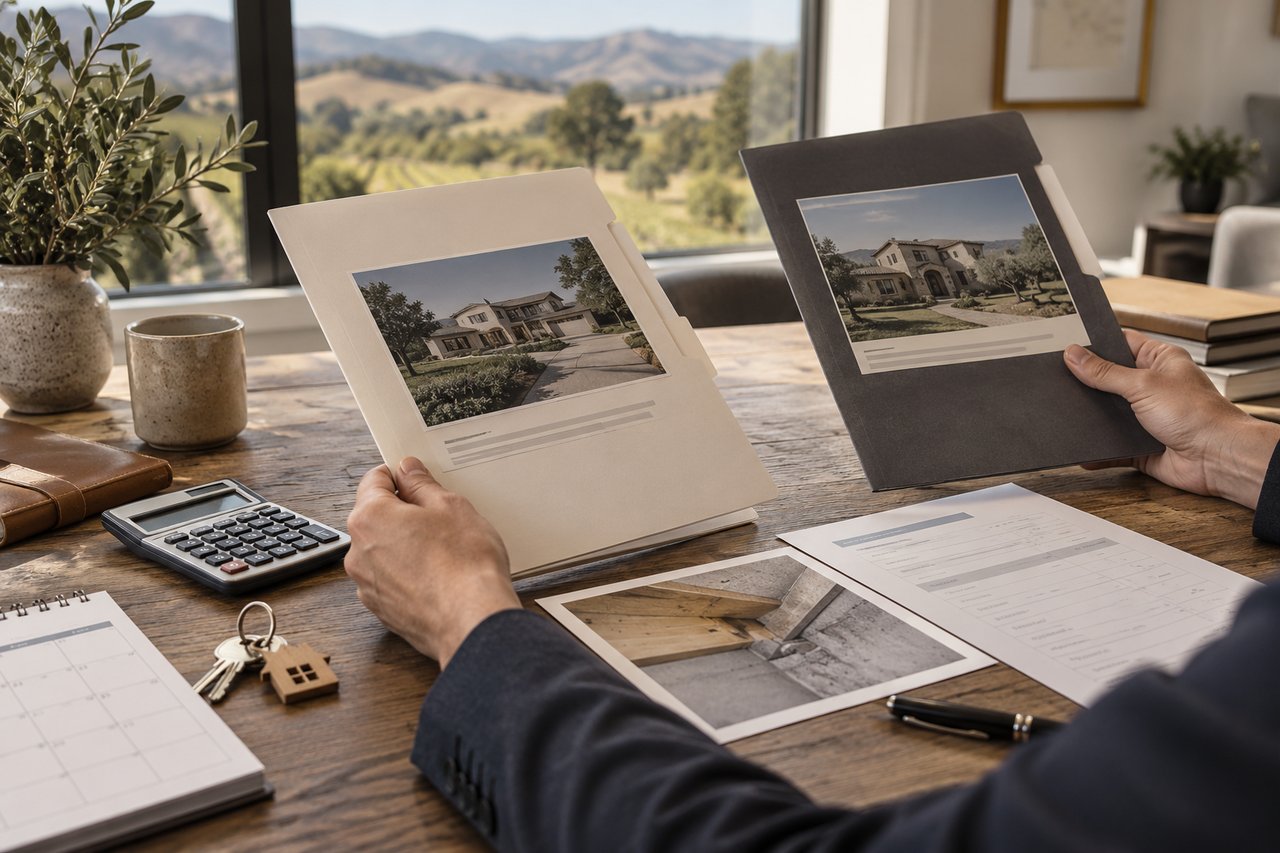
How traffic patterns, privacy, parking, lot shape, and buyer preferences can influence marketing and value.
Amber Johnson | September 21, 2026
The price, credits, repairs, timing, and other terms Paso Robles sellers may need to evaluate this season.

Amber Johnson | September 21, 2026
When an open house can support a launch, when private showings may matter more, and how to judge the results.
Amber Johnson | September 20, 2026
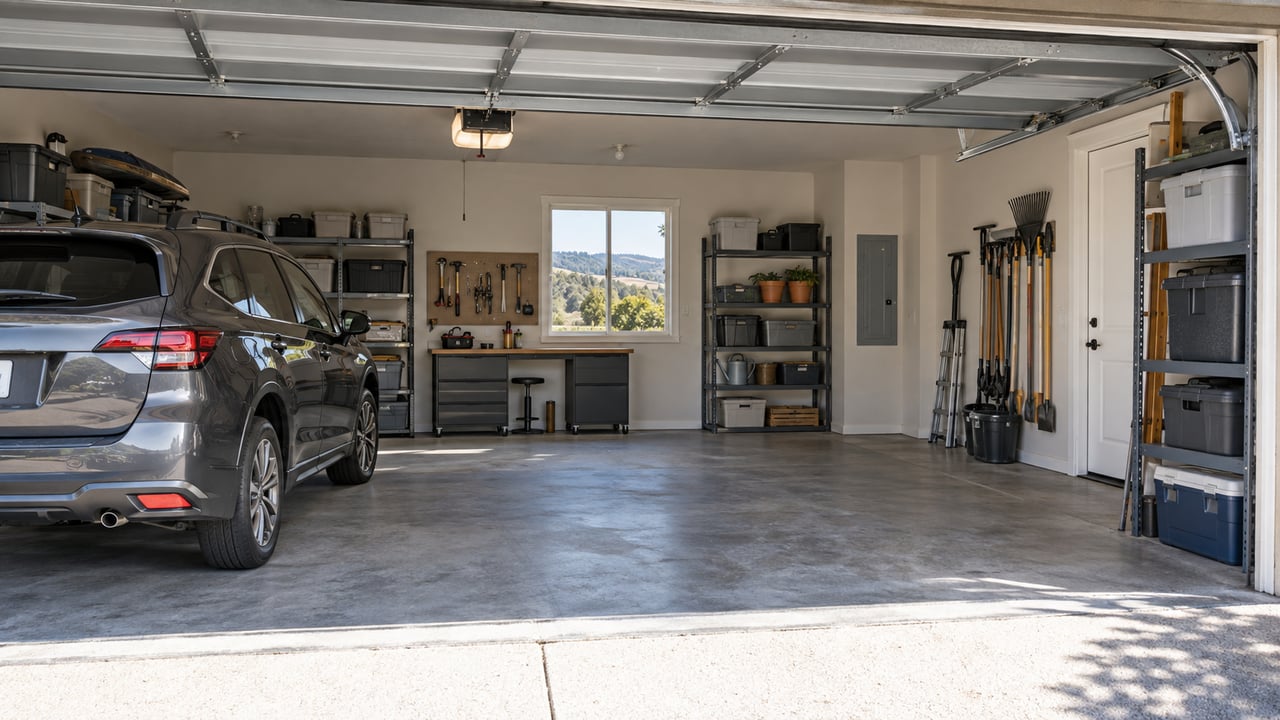
How garage organization, storage, access, and visible maintenance can influence a buyer’s overall impression.

Amber Johnson | September 20, 2026
Why seller absence usually gives buyers more freedom to look, talk, and form an honest impression.
Amber Johnson | September 20, 2026
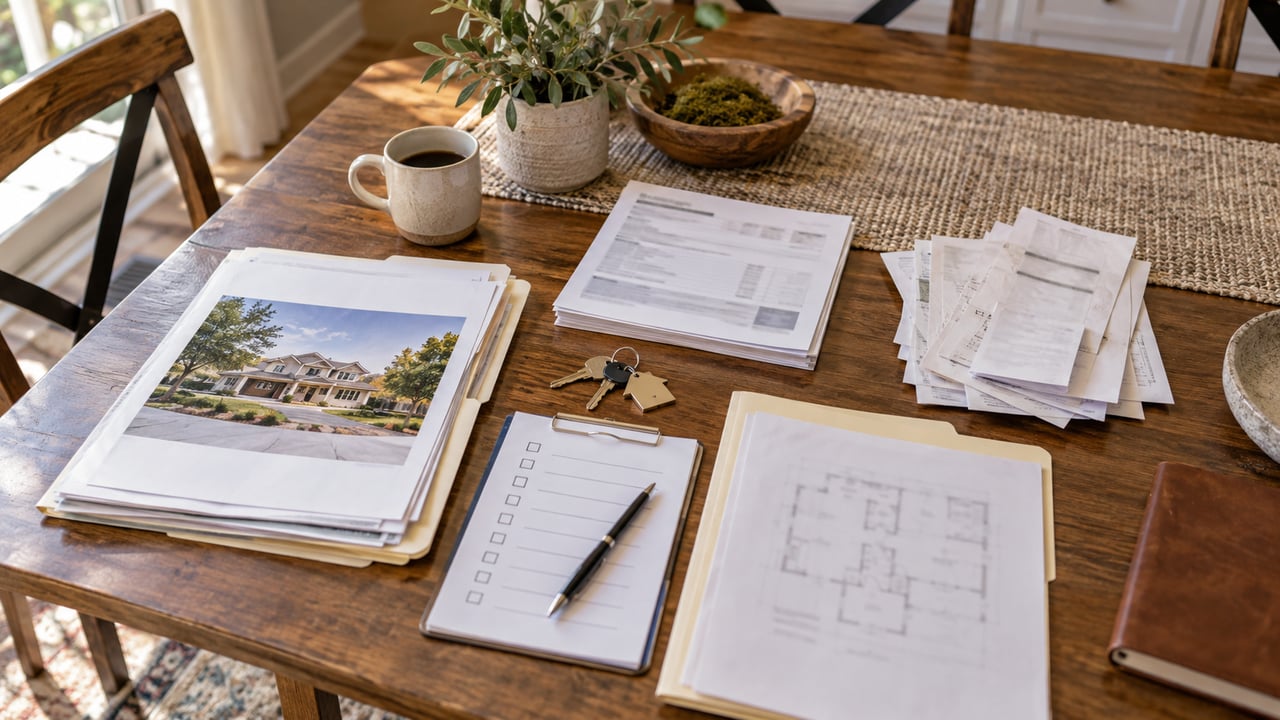
The records that help confirm ownership, payoff information, property history, and a smoother listing process.

Amber Johnson | September 18, 2026

Amber Johnson | September 18, 2026

Amber Johnson | September 18, 2026
How wells, septic systems, acreage, access, and the buyer pool shape a rural-property sale.
You’ve got questions and we can’t wait to answer them.

Amber Johnson, Founder
Pillar Real Estate
805.835.3425
DRE# 01925434
1345 Park Street
Paso Robles, CA 93446