What Should I Expect During a Home Inspection in SLO County?
July 30, 2026
July 30, 2026
Your offer was accepted.
You're excited.
Maybe a little nervous.
Then your real estate agent says:
"It's time to schedule the home inspection."
For many first-time buyers, this is when a whole new set of questions begins.
What exactly is the inspector looking for?
Should I be there?
What if they find something wrong?
How worried should I be?
And maybe the biggest question:
"What if the inspection makes me regret buying the house?"
Here's the thing.
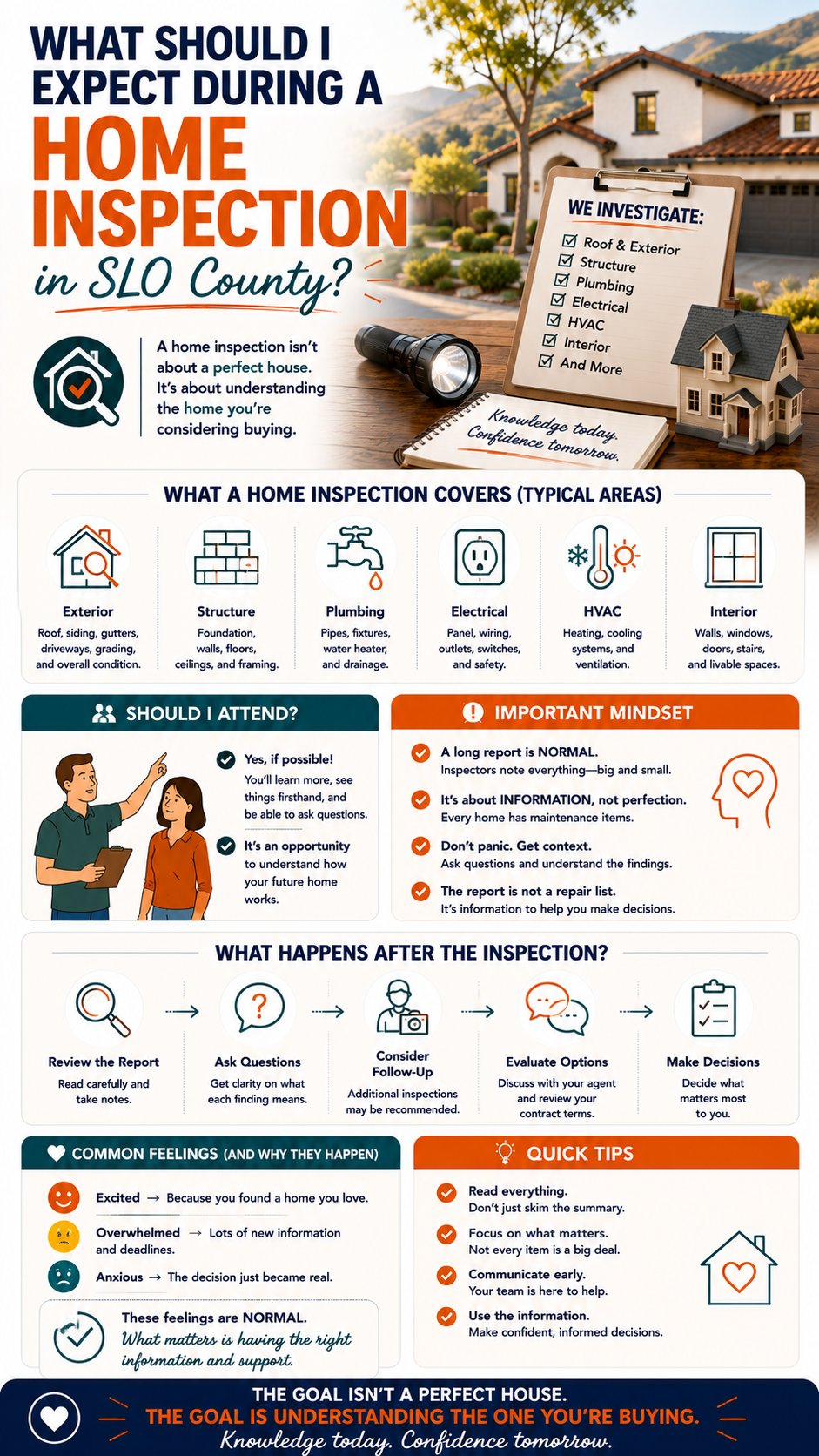
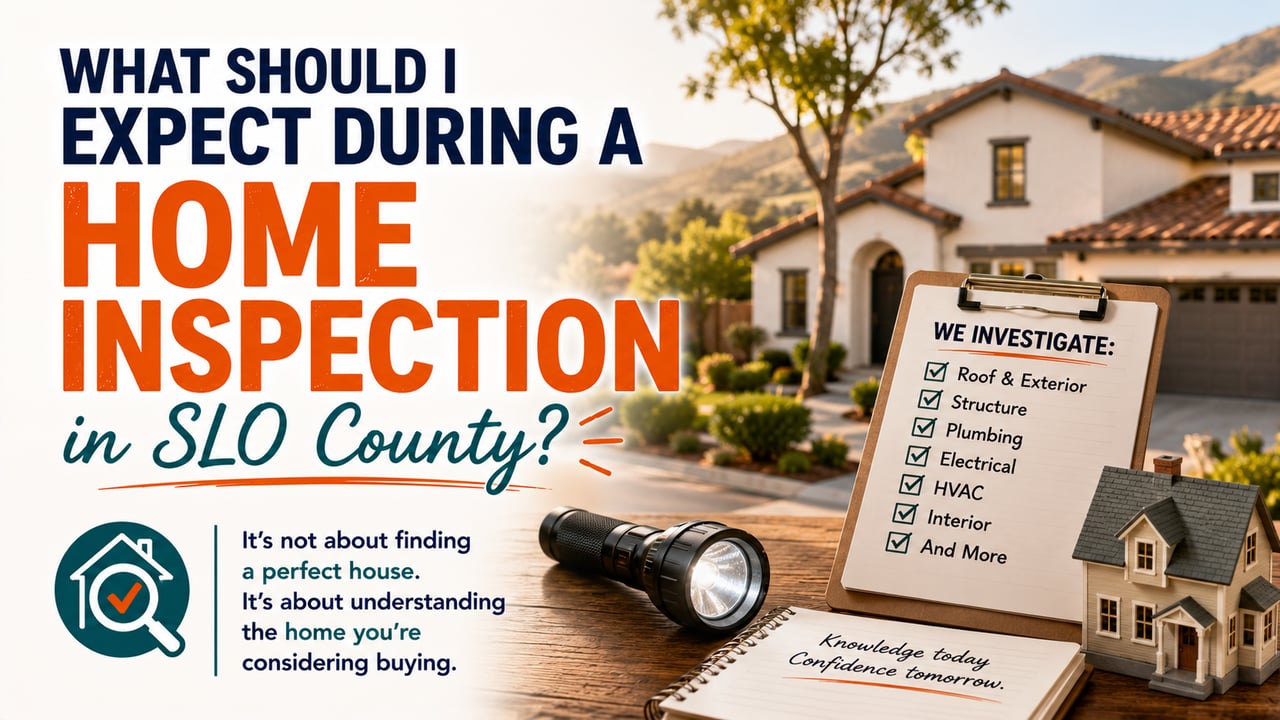
A home inspection isn't about proving you picked a perfect house. It's about helping you better understand the property you're buying.
Homes have issues.
Newer homes can have issues.
Older homes can have a lot of things noted in an inspection report.
The goal isn't to get through the inspection without finding anything.
The goal is to come out of it knowing more about the home than you did before.
Amber is a real estate agent in Paso Robles, CA helping buyers throughout San Luis Obispo County navigate the home-buying process with clear communication and practical guidance. Her approach is to help buyers understand the information in front of them so they can make decisions that fit their goals.
A home inspection isn't a pass-or-fail test. It's an opportunity to learn more about the property you're considering buying.
What Is a Home Inspection?
A general home inspection is a visual examination of accessible areas and systems of a property.
The inspector may look at areas such as:
The exact scope depends on the inspection and the property.
And this is important.
A general home inspection doesn't necessarily cover everything.
Depending on the property and what comes up during your investigation, additional inspections or evaluations by appropriate specialists may be worth considering.
Should I Attend the Home Inspection?
When possible, I think there's real value in buyers being present for at least part of the inspection process.
Why?
Because reading:
"Evidence of moisture observed in..."
can feel very different from standing there while the inspector explains what they're seeing.
You can ask questions.
You can see where things are located.
You can learn more about how the home works.
And you can get context that may be difficult to understand from photographs and written notes alone.
The inspection isn't simply about discovering problems.
It can also be an education about the home you're considering owning.
The Biggest Misconception
One of the biggest misconceptions first-time buyers have is:
"If the inspector finds a lot of things, this must be a bad house."
Not necessarily.
Inspection reports can be long.
Really long.
An inspector may document everything from larger concerns to relatively small maintenance items.
You might see comments about:
A loose handle.
A cracked outlet cover.
Caulking.
Drainage.
A water heater.
Roof components.
Electrical items.
Plumbing.
And dozens of other observations.
Seeing everything together in one document can make a house suddenly look much worse than it felt during the showing.
That's why context matters.
Don't just count the number of items.
Understand what they actually mean.
Older Homes Can Come With Longer Conversations
This is especially relevant when you're buying around San Luis Obispo County.
Paso Robles, Templeton, Atascadero, and surrounding communities have homes from many different eras.
You're going to see newer construction.
Homes that are several decades old.
Rural properties.
Remodeled homes.
Properties where different improvements may have happened at different times.
An older home isn't automatically a bad home.
But it may have different maintenance needs and characteristics than newer construction.
That's why your inspection and any appropriate additional investigations can be so valuable.
You're learning about the specific property.
Not comparing it to an imaginary house where nothing ever needs attention.
An inspector may look at many different areas of the property. Some findings may be simple maintenance items, while others may deserve additional investigation.
What Happens When the Inspector Finds Something?
First, don't panic.
Ask questions.
What did they observe?
Why did they note it?
Is additional evaluation recommended?
Is this something that appears to be routine maintenance, or does it deserve more attention?
Sometimes an inspector may recommend that a particular condition be evaluated by a qualified specialist.
That doesn't automatically tell you what the final answer will be.
It tells you that more information may be appropriate.
Get the information.
Then make your decision.
Your Inspection Report Is Not a Repair List
This is an important distinction.
Buyers sometimes receive an inspection report and immediately start thinking:
"The seller needs to fix all of this."
That's not necessarily how you should approach it.
The inspection report is information about the property.
Your purchase agreement, the findings, your priorities, and the circumstances of the transaction all matter when deciding what happens next.
Some items may be important to investigate further.
Some may become part of a conversation with the seller.
Some may simply be things you know you'll want to maintain or improve after you own the home.
We'll talk specifically about what buyers should consider asking sellers to address in Article #373.
For now, focus on understanding the house.
Don't Forget About Specialized Inspections
A general inspection can be a starting point, but every property is different.
Depending on the home, its location, its features, and what your general inspector observes, other inspections or evaluations may be appropriate.
For example, a buyer may want additional information about particular systems or property conditions.
This can be especially important with unique properties, acreage, older homes, or homes with features that deserve specialized evaluation.
Your real estate agent and inspector can help you understand what additional questions may be worth asking, but the appropriate licensed or qualified professional should evaluate issues within their area of expertise.
What I'm Seeing Right Now
Working with buyers throughout Paso Robles, Templeton, Atascadero, and San Luis Obispo County, I've noticed that first-time buyers often go into the inspection hoping to hear:
"Everything looks great."
That's usually not the most useful expectation.
I'd rather have you leave the inspection understanding the home better.
What should you know about?
What might need maintenance?
What deserves another look?
What questions should we ask?
And which items aren't nearly as scary once someone explains them?
That's what the inspection period is for.
You're gathering information.
And good information helps you make better decisions.
A Real-Life Example
I worked with first-time buyers who absolutely loved the home they were purchasing.
Then inspection day came.
By the time the inspection was finished, they looked worried.
The inspector had pointed out several items.
There were maintenance recommendations.
A few things needed additional attention.
And when the full report arrived, it was pages and pages long.
One of the buyers called me and said:
"Amber, did we pick a bad house?"
That's when we slowed everything down.
Instead of looking at the report as one giant list of problems, we started separating the information.
What was routine maintenance?
What deserved more investigation?
What questions did we need answered?
What items actually mattered to them?
Once we worked through it that way, the report became much less intimidating.
The house hadn't suddenly changed because we received an inspection report.
We simply knew more about it.
That's exactly what the inspection was supposed to accomplish.
The Biggest Mistake
The biggest mistake is reacting to the inspection report before you understand it.
A long report can look scary.
Photos can make relatively small items look dramatic.
Technical language can make something sound much worse when you don't know what it means.
Don't immediately jump to:
"We need to walk away."
And don't immediately jump to:
"The seller needs to fix everything."
Start with:
"What does this actually mean?"
Then get the appropriate information before making decisions.
What This Process Should Feel Like
The inspection process should make you more informed.
Not necessarily more comfortable about every single part of the house.
Sometimes you may learn something you genuinely need to think about.
That's valuable information.
Other times, you'll learn about maintenance items you'll want to address after closing.
That's valuable too.
The goal isn't for the inspector to tell you whether you should buy the home.
The goal is to give you information about the property so you can make your own informed decision.
How This Connects to the Bigger Picture
In the last article, we talked about why buying can suddenly feel more stressful after your offer is accepted.
The home inspection is one of the biggest reasons.
You go from seeing the home as a buyer to examining it much more closely.
That can feel uncomfortable.
But it's also an important part of learning what you're buying.
Related: Why Does Buying a Home Feel More Stressful After My Offer Is Accepted?
The goal isn't an empty inspection report. It's understanding the findings well enough to decide what deserves your attention.
Steps: What to Do During the Home Inspection Process
Step 1: Understand the Scope
Before the inspection, understand what your inspector will and won't be evaluating.
A general home inspection may not cover every system, condition, or feature of the property.
If you have questions about the scope, ask.
Step 2: Attend When Possible
Being there can give you context that a written report can't always provide.
Listen.
Ask questions.
Learn where important components of the home are located.
This can be useful information even if you eventually decide not to purchase the property.
Step 3: Read the Entire Report
Don't only look at the summary.
Review the report carefully.
If you don't understand something, ask the inspector what the observation means and whether additional evaluation is recommended.
Step 4: Separate the Findings
Don't treat every item equally.
There may be maintenance items.
There may be things you want to monitor.
There may be items that deserve additional evaluation by an appropriate professional.
Understanding those differences can make the report much easier to process.
Step 5: Get More Information When Needed
If the inspector recommends additional evaluation, consider getting the appropriate professional involved within the time allowed by your purchase agreement.
Don't guess.
Information gives you options.
Step 6: Decide What Matters to You
Once you understand the findings, think about your own comfort level.
What are you willing to take on?
What deserves further discussion?
What affects how you feel about the purchase?
Those answers will be different for every buyer.
So... What Should You Expect During a Home Inspection in SLO County?
Expect to learn things about the house you didn't know before.
That's the point.
Your inspector may identify maintenance items.
They may note conditions that deserve attention.
They may recommend additional evaluation.
And yes, the report may be longer than you expected.
Don't measure the quality of the house by the number of pages.
Understand the individual findings.
Ask questions.
Get additional information when appropriate.
Then evaluate the property based on what you've actually learned.
The Inspection Isn't About Finding a Perfect House
This is worth repeating.
Every home requires maintenance.
Things wear out.
Materials age.
Systems eventually need attention.
The question isn't:
"Did the inspector find anything?"
They probably will.
The better question is:
"Now that I know more about this property, am I comfortable moving forward?"
That's what the inspection helps you answer.
The Real Question to Ask
Instead of asking:
"How many things are wrong with this house?"
Ask:
"Which findings actually matter, and what additional information do I need before making a decision?"
That question turns an overwhelming report into something much more useful.
Next Steps
If you're buying a home in Paso Robles, Templeton, Atascadero, or anywhere in San Luis Obispo County and you're approaching your inspection period, focus on learning as much as you reasonably can about the property.
Attend the inspection when possible.
Ask questions.
Review the report carefully.
Get additional professional evaluations when appropriate.
Then make decisions based on the information you've gathered, not simply on how intimidating the report looks.
The next article will tackle the question that often comes immediately after this:
What if the home inspection finds a lot of problems?
From start to finish.
FAQ
What does a home inspector look for?
A general home inspector typically visually examines accessible components and systems of the property. The exact scope varies, so ask your inspector what is and isn't included.
Should I attend the home inspection?
When possible, attending can be helpful. It gives you an opportunity to see findings firsthand, ask questions, and learn more about the property.
Is a long inspection report a bad sign?
Not necessarily. Reports can include everything from minor maintenance observations to items that deserve additional evaluation. Focus on the significance of the findings rather than the number of pages.
What happens if the inspector finds a serious problem?
Start by understanding the finding. If appropriate, obtain additional evaluation from a qualified professional and review your options based on your purchase agreement and circumstances.
Does a home inspection tell me whether I should buy the house?
No. An inspection provides information about observed property conditions. You can use that information, along with appropriate professional guidance and your own priorities, to decide how you want to proceed.
Amber Johnson, Founder
Pillar Real Estate
805.835.3425
[email protected]
1345 Park St. Paso Robles, CA 93446
DRE# 01925434

Amber Johnson | October 21, 2026

Amber Johnson | October 21, 2026
Amber Johnson | October 21, 2026
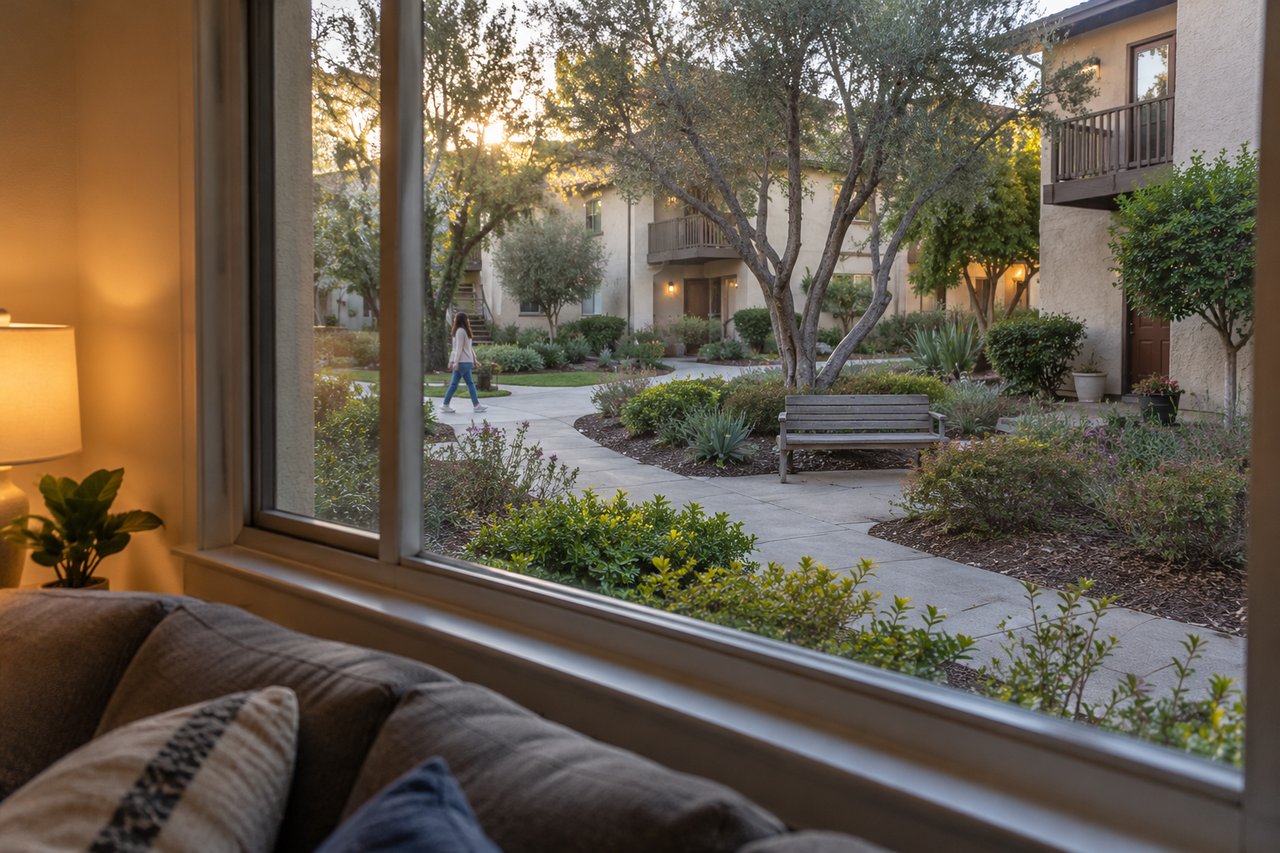
Check privacy, shared-space rules and activity near the unit before deciding whether courtyard-facing condo living suits you.
Amber Johnson | October 20, 2026
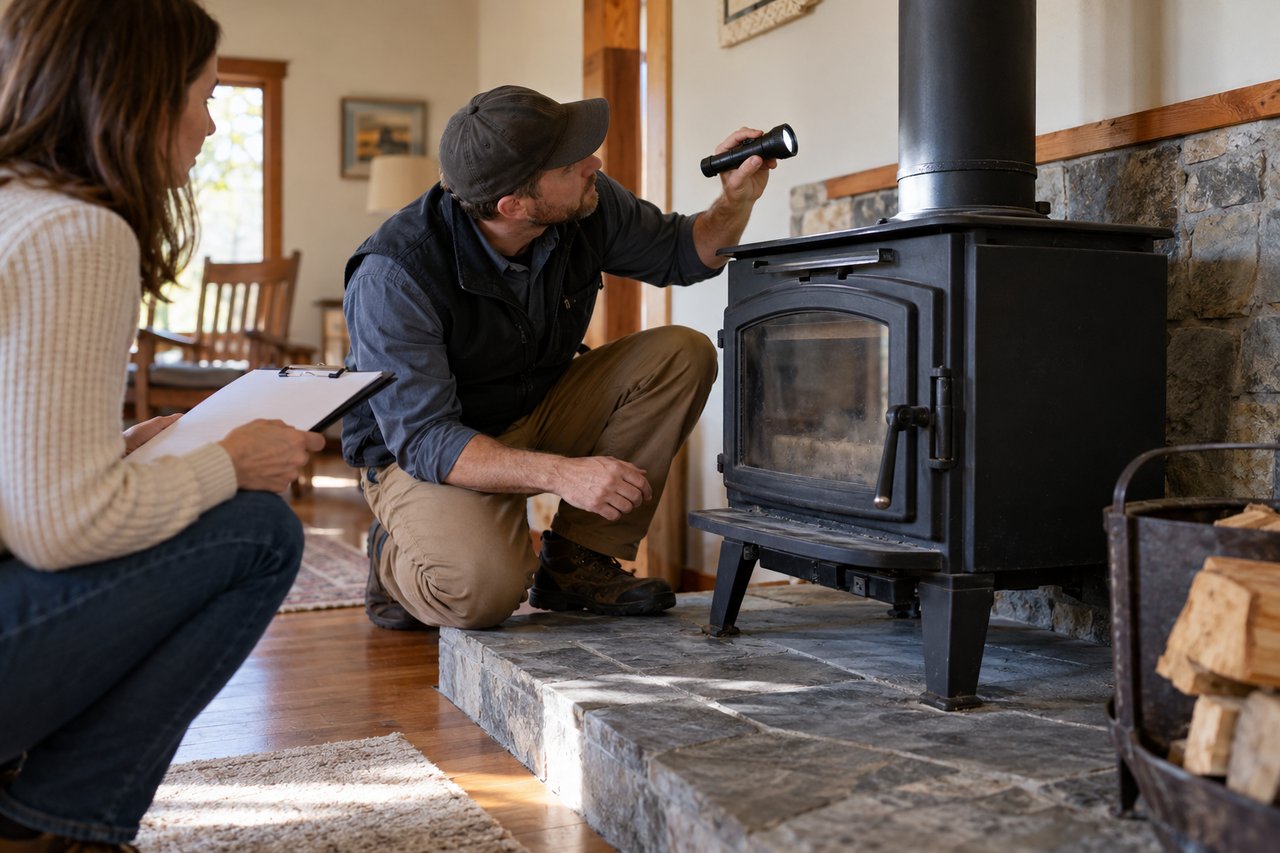
Review the stove, venting, documentation and insurance questions before treating wood heat as a benefit of the purchase.

Amber Johnson | October 20, 2026
Test the routes to your actual errands, what you need to carry and your backup options before choosing a home around cycling.
Amber Johnson | October 20, 2026
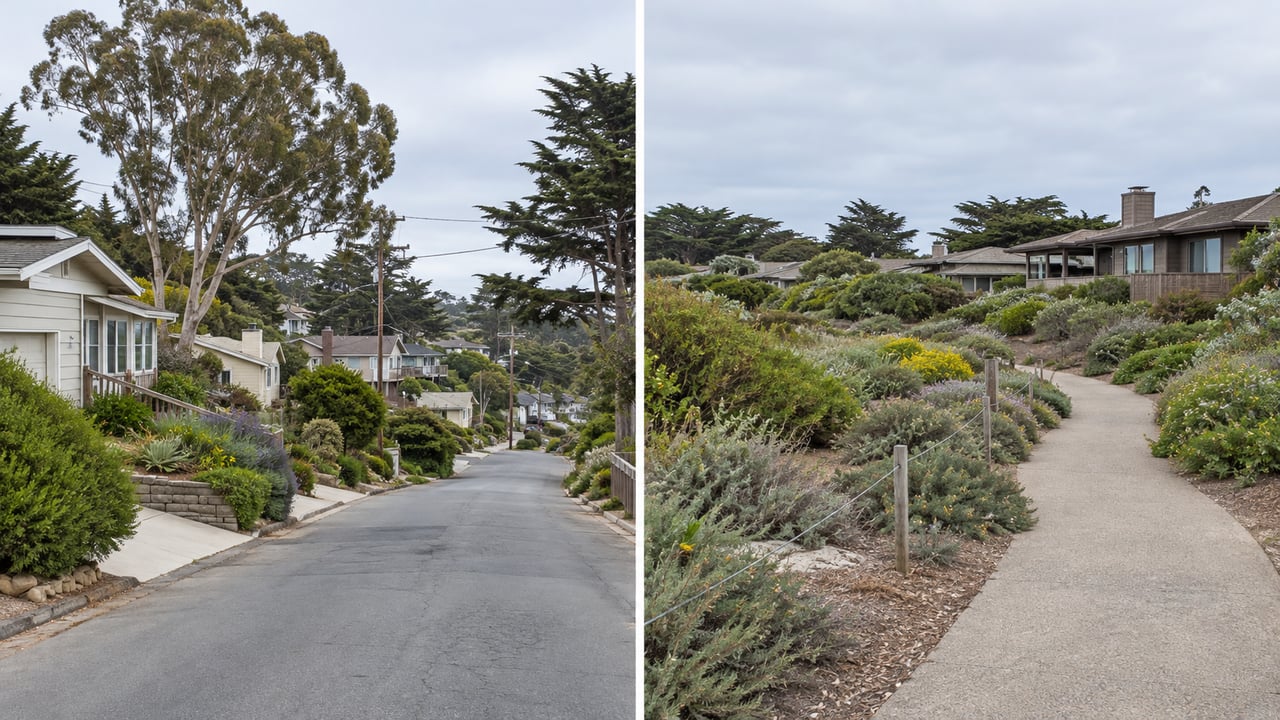
Compare these two Morro Bay areas through the specific homes, daily routes and property features that matter to your household.
Amber Johnson | October 20, 2026
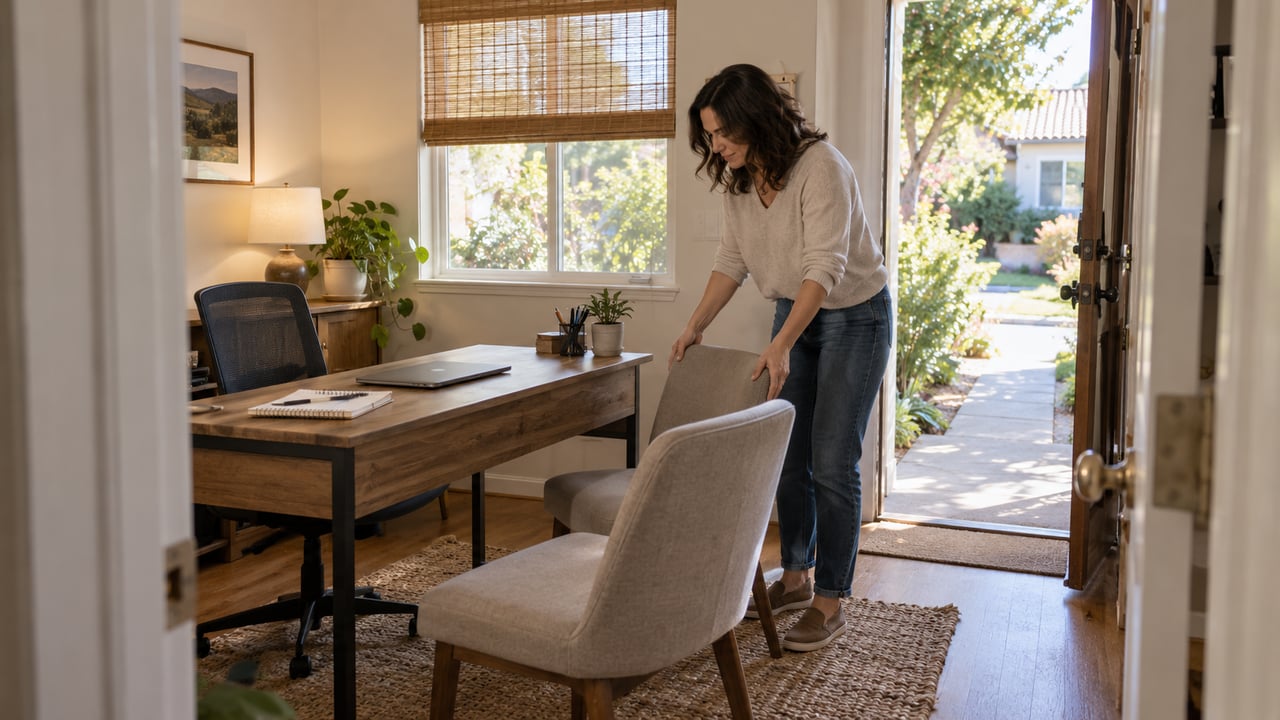
Check the property’s jurisdiction, current home-business rules and private restrictions before assuming clients can visit your home.
Amber Johnson | October 20, 2026
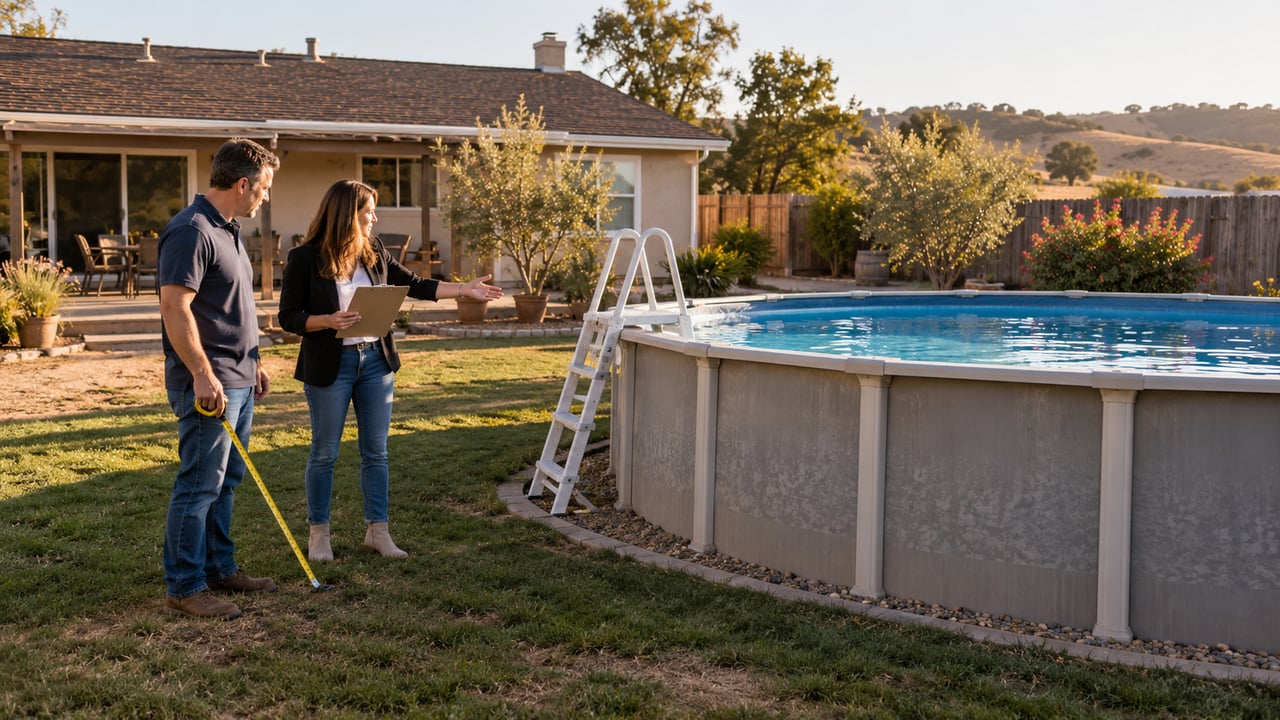
Compare keeping the pool with removal, site restoration and buyer appeal before spending money on pre-sale work.
Amber Johnson | October 20, 2026
Compare a consistent property type and reporting period within relevant price brackets before treating a broad market headline as guidance for a particular home.
You’ve got questions and we can’t wait to answer them.

Amber Johnson, Founder
Pillar Real Estate
805.835.3425
DRE# 01925434
1345 Park Street
Paso Robles, CA 93446