How Should I Market an Atascadero Home with Limited Closet Space?
November 7, 2026
November 7, 2026
Market an Atascadero home with limited closet space by showing the storage honestly, removing excess belongings, and helping buyers understand how the full layout works in daily life. Do not hide the closet or use a lens that makes it look larger than it is. A clear presentation builds trust. The right staging, photography, measurements, and property description can keep a modest closet from becoming the only thing buyers remember.
Here’s the thing. Buyers do not expect every home to have a modern walk-in closet. They do want to know where their belongings will go. Your marketing should answer that practical question without apologizing for the house or promising storage that does not exist.
A small closet is not only a question about square footage. It is a question about function. Buyers may be thinking about clothing, linens, cleaning supplies, sports equipment, luggage, work gear, children’s belongings, or seasonal items. They are trying to picture their routines inside the home.
If your marketing ignores storage completely, buyers will fill in the gap themselves. If it exaggerates the space, the showing can feel disappointing. A better approach is to present the closet accurately and show how storage is distributed throughout the property.
That may include bedroom closets, hallway cabinets, pantry space, laundry storage, garage shelving, a shed, built-ins, or usable wall space. Only highlight what is truly present and included with the property. The goal is a complete picture, not a clever distraction.
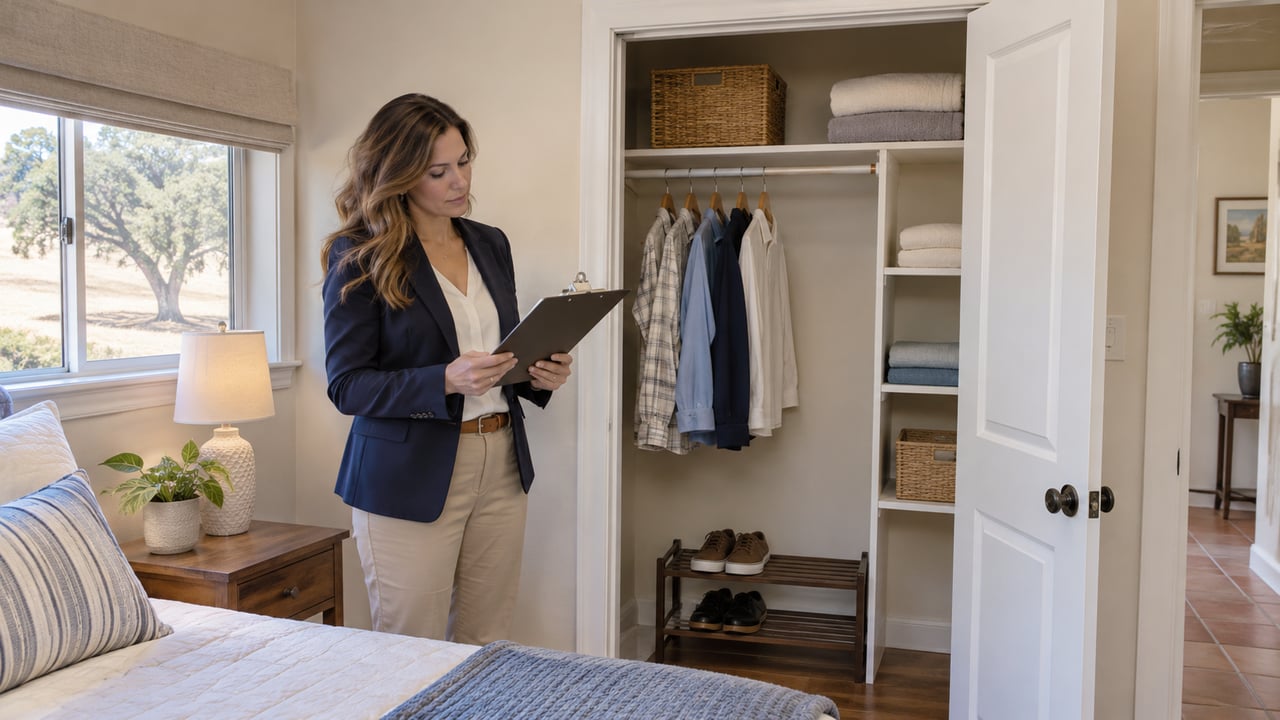
The camera records volume, color, clutter, and visual noise. A packed closet looks smaller because buyers cannot see its boundaries. Remove items that are not needed during the listing period. Keep enough belongings to show the closet’s normal purpose, but leave visible space between items.
Use matching or simple hangers if you already have them. Group similar clothing and remove bulky storage bags from the floor. Fold linens evenly. Keep the top shelf from becoming a wall of boxes. Clean the baseboards, shelf surfaces, door tracks, and corners. Replace a burned-out bulb if the closet has a light and the work is appropriate for you to handle.
Do not empty the closet completely unless that fits the staging plan. An empty closet can make it harder to understand scale. A few everyday items can help buyers see how the space functions without making it feel crowded.
For a broader staging plan, Do I Really Need to Stage My Home to Sell in Atascadero, CA? explains why staging decisions should match the property, buyer pool, and seller’s goals. The answer is rarely to make every room look like a showroom. It is to make the home easy to understand.
Include a closet photo when the space is important to the room or when buyers are likely to ask about it. Photograph it from a natural standing position with the doors open and the interior visible. Use good lighting and a lens that represents the proportions accurately.
A wide-angle lens can be useful in real estate photography, but it should not distort the closet into something it is not. Avoid an angle that stretches the walls, hides the back corner, or makes a shallow closet appear deep. The showing should confirm what buyers saw online.
The closet does not always need its own hero image. It can appear as part of a bedroom photograph when that gives better context. Your photographer and agent can decide which view communicates the layout most clearly.
Keep the closet doors, trim, and nearby floor visible when possible. Those details help buyers understand placement and access. If the doors interfere with the room or require a specific opening pattern, do not crop so tightly that the arrangement becomes confusing.
Measurements can help buyers plan, especially when storage is limited. If you provide them, use a consistent method and label them as approximate when appropriate. Distinguish the opening width from the interior width, depth, and height. Note shelving or rods that reduce usable space.
Do not promise that a specific organizer, dresser, wardrobe, or built-in will fit unless the buyer verifies the dimensions. A measured sketch can be useful, but it should not be presented as architectural documentation.
If a floor plan is part of the marketing package, make sure the closet location is shown accurately. Buyers may care as much about where the closet sits in the room as they do about its size. Door swings, windows, and wall lengths affect furniture placement.
A small bedroom closet may be less important when the home has useful storage elsewhere. Walk through the property and make a factual list. Include cabinets, pantry areas, linen storage, garage space, accessible attic storage, built-ins, or an outbuilding only when their use and status are clear.
Do not call every niche “storage.” Buyers can tell when a claim is stretched. Focus on spaces that are practical, accessible, and part of the sale.
If the garage has shelving, clarify whether it stays. If a freestanding cabinet or wardrobe appears in photographs, confirm whether it is included, excluded, or simply staging. Buyers should not have to guess which storage elements transfer with the property.
A small closet can also be presented within the larger way the home uses space. The article How Should I Market a Nipomo Home with a Deep Lot but a Small House? discusses a similar principle: lead with the property’s confirmed strengths while describing its tradeoffs accurately.
The bedroom should demonstrate that a normal routine can work around the closet. Use furniture that fits the room. An oversized bed, two large nightstands, a tall dresser, and extra chairs can make the closet issue feel worse because the entire room appears tight.
Keep the path from the doorway to the closet open. Buyers should be able to open the door or doors without moving staging pieces. If the closet is near another door, window, or piece of furniture, make sure the arrangement shows the actual clearance.
A smaller dresser, simple wardrobe, under-bed storage, or wall-mounted hooks may suggest practical options, but use them carefully. Do not crowd the room with storage products in an attempt to prove a point. The best staging usually shows one or two clear solutions and lets the room breathe.
If you add a freestanding wardrobe for staging, identify it accurately and decide whether it will remain. Marketing should never imply that a movable piece is built in or included when it is not.
Avoid phrases such as “tiny closet,” “surprisingly small,” or “no storage.” Those labels make the limitation the headline. Also avoid vague claims such as “abundant storage” when the property cannot support them.
Use factual language. You might describe an organized bedroom closet, hallway linen storage, garage shelving, or room for a buyer-selected wardrobe. Mention the broader layout and the home’s other confirmed strengths. Let buyers decide how the storage arrangement fits their needs.
The property description should answer the right questions in the right order. Lead with location, layout, condition, outdoor space, improvements, and lifestyle features that are accurate and meaningful. Add storage details where they naturally belong.
This is the same strategy I recommend when a property has another visible tradeoff. How Should I Market a Paso Robles Home with a Small Backyard? explains how to present a limitation without making it the entire story.
Video can show how the closet relates to the bedroom better than a single still image. A slow, straightforward walkthrough can show the doorway, furniture placement, closet access, and nearby storage. Keep the camera movement natural and avoid sudden lens changes that distort scale.
Open the closet during the video if that fits the marketing plan. Show it long enough for viewers to understand the interior. Do not rush past it or block the view with a person standing in front of the opening.
If the home has a useful storage feature elsewhere, connect the spaces visually. For example, show the bedroom closet, then the hallway linen cabinet or garage storage. The sequence should reflect the real layout, not suggest that two distant areas are directly connected.
Buyers may ask whether the closet can be enlarged, whether a wall can be moved, or whether another room can be converted. Do not guess. Structural, permit, electrical, HVAC, and layout questions should go to the appropriate qualified professionals and public agencies.
You can provide available facts. Share approximate measurements, photographs, floor plans, and information about included storage systems. If the seller has invoices or records for prior closet work, keep them with the property file.
Make sure the closet is accessible during every showing. Do not use it to hide last-minute clutter. Buyers will open doors, and a packed closet can undo the careful presentation in the listing photos.
Some closets benefit from a simple organizer, additional shelf, better lighting, door adjustment, or fresh paint. Other spaces would require carpentry, electrical work, wall changes, or a redesign. Do not start with a product. Start with the problem you are trying to solve.
Ask whether the improvement will make the closet meaningfully easier to use, whether it can be completed well before photography, and whether it fits the property’s expected buyer and price point. A clean, functional closet can be enough. An expensive custom system may not return its cost.
If work involves electrical components, structural changes, permits, or another specialized issue, use the appropriate professionals. Keep invoices and product information. Make sure the finished work is photographed only after it is complete.
Limited closet space does not have to control the marketing for an Atascadero home. Present it clearly, organize it well, and show buyers how storage works across the property. Accurate photography and a thoughtful layout story are more persuasive than trying to make the closet look larger.
The right strategy is property-specific. A modest closet in an otherwise functional home may be a manageable tradeoff for the right buyer. Your job as a seller is to make the facts easy to see and the home easy to evaluate.
Amber Johnson is a Central Coast local and the founder of Pillar Real Estate. She helps Atascadero and San Luis Obispo County homeowners prepare and market their homes with honest presentation, targeted exposure, and clear communication from start to finish.
Thinking about selling your Atascadero home? Visit Sell With Amber to start the conversation.
Amber
Amber Johnson
Founder, Pillar Real Estate
805.835.3425
[email protected]
1345 Park St. Paso Robles, CA 93446
DRE# 01925434
Website: https://pillarrealestate.com/

Amber Johnson | November 8, 2026
Compare access, timing, seasonal conditions and home-to-trail logistics before building regular birdwatching into life in Los Osos.
Amber Johnson | November 8, 2026
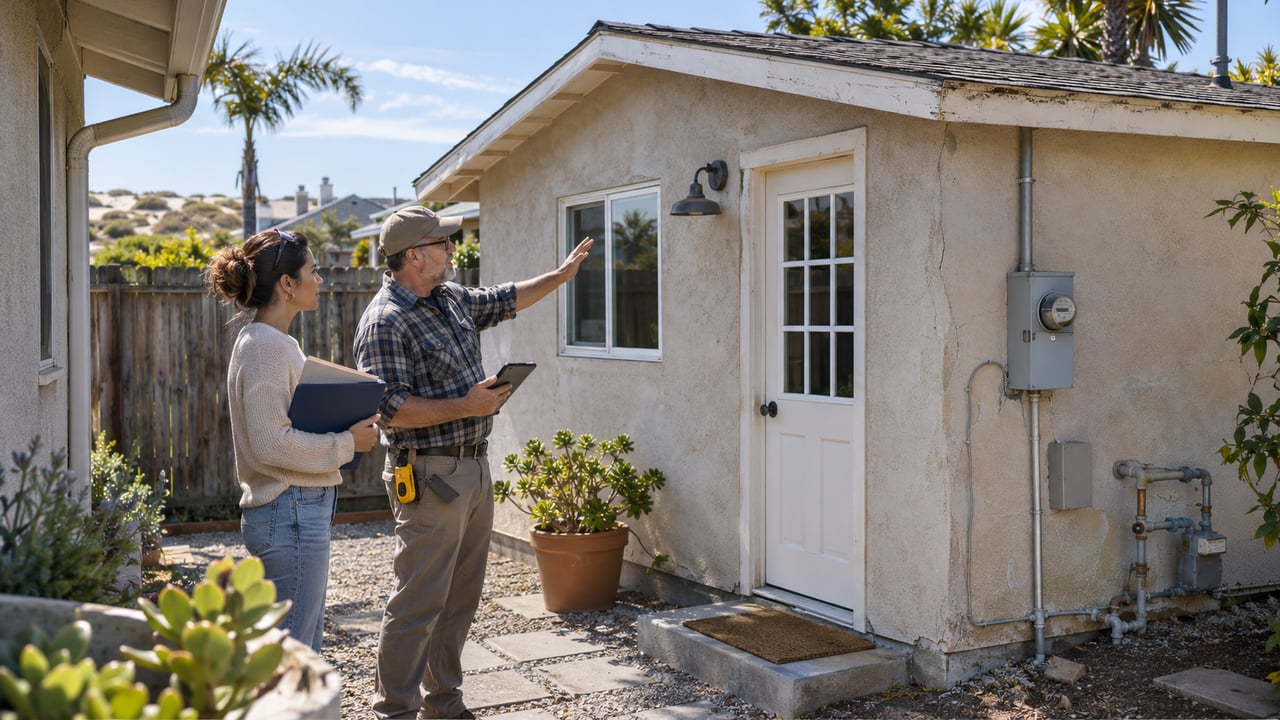
Verify the separate structure's records, condition and permitted use before counting on it.

Amber Johnson | November 7, 2026
Compare specific homes by their street setting, daily routes and access to the places you use.

Amber Johnson | November 7, 2026
Test school logistics, activities and daily routes from the specific home you are considering.

Amber Johnson | November 7, 2026
Amber Johnson | November 7, 2026
Show usable storage honestly and help buyers see how the home's layout fits daily life.
Amber Johnson | November 7, 2026
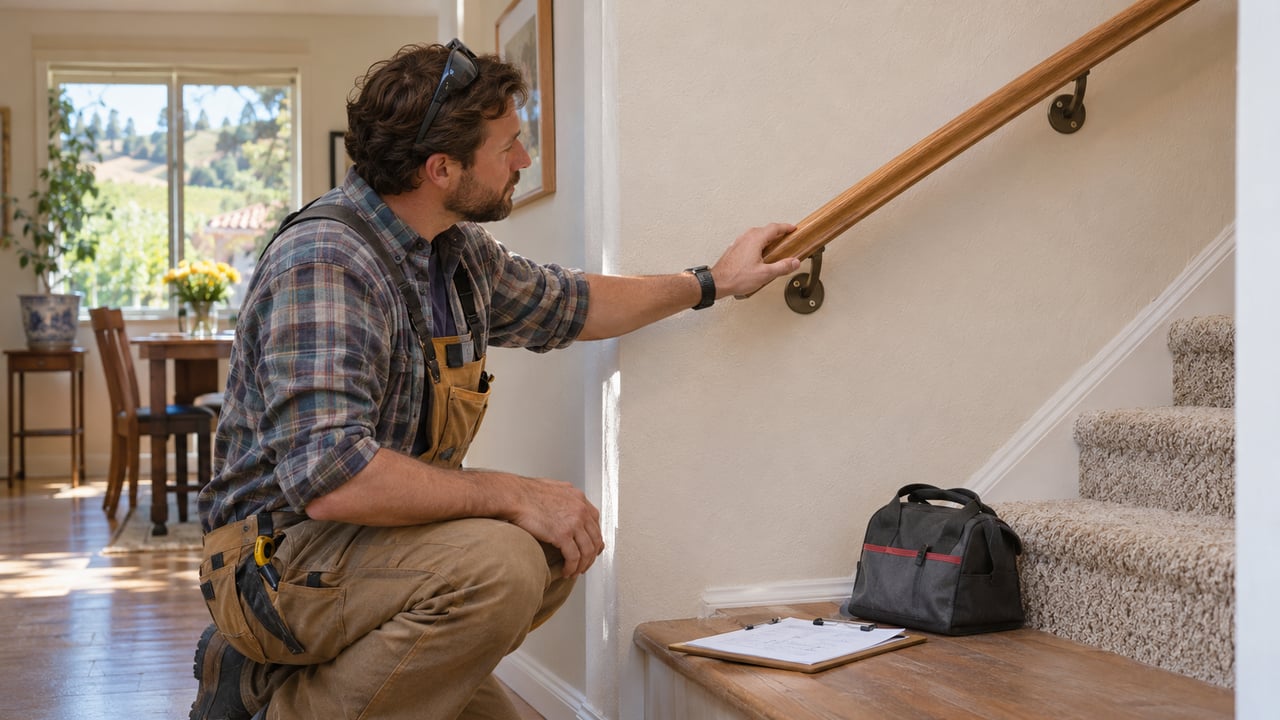
Get the handrail assessed for safe use and decide on a documented repair before listing.

Amber Johnson | November 7, 2026
Compare home styles, street patterns, terrain, access and daily routes before choosing between these San Luis Obispo areas.

Amber Johnson | November 6, 2026
You’ve got questions and we can’t wait to answer them.
Amber Johnson, Founder
Pillar Real Estate
805.835.3425
DRE# 01925434
1345 Park Street
Paso Robles, CA 93446