Is the Housing Market in Trouble? What Foreclosure Data Really Shows
January 21, 2026

January 21, 2026
If you’ve seen headlines saying foreclosure activity has been climbing for ten straight months, it’s easy to jump to worst-case conclusions. A lot of people hear “foreclosures are up” and immediately think: Here we go again.
But when you look past the headlines and into the actual data, the story is very different.
Foreclosures aren’t surging toward crisis levels. Homeowners are far better positioned financially than they were before the last crash. And nothing points to a wave of distressed sales that would derail the housing market.
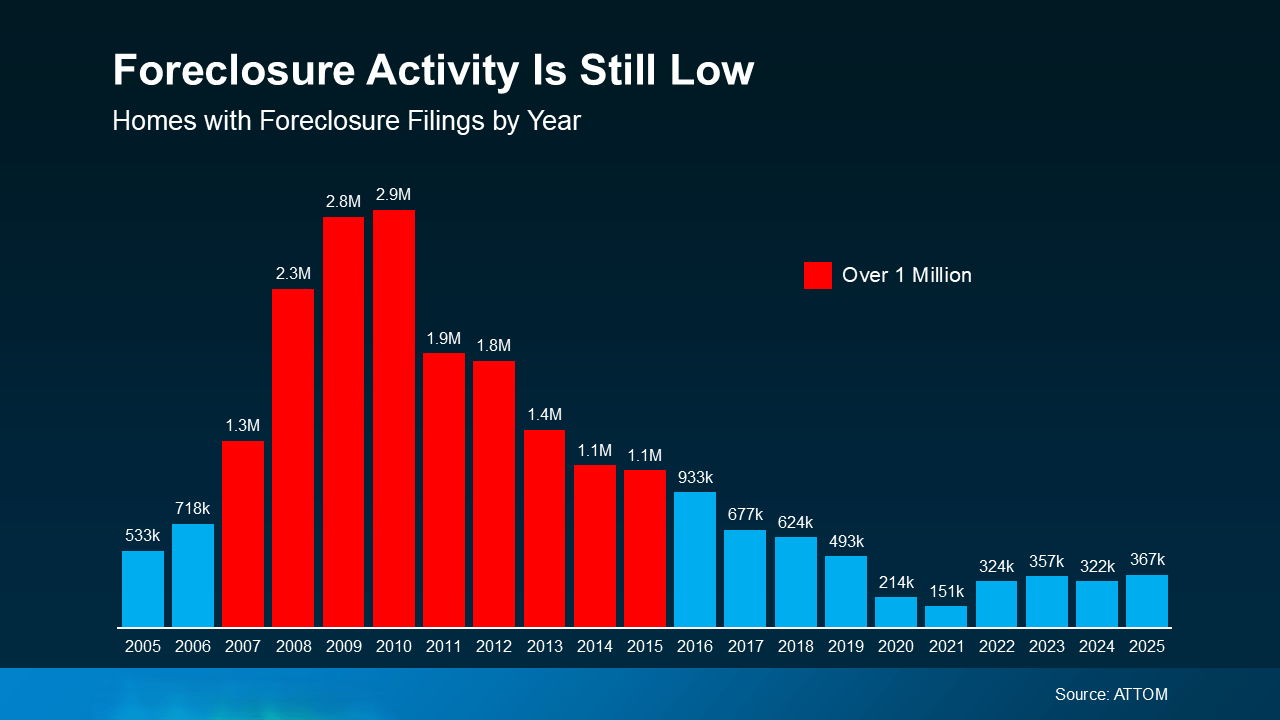
Yes, foreclosure filings are up. According to ATTOM, they’ve increased about 32% year over year. On its own, that sounds alarming. But that stat only matters when you compare it to where we’ve been and what’s normal.
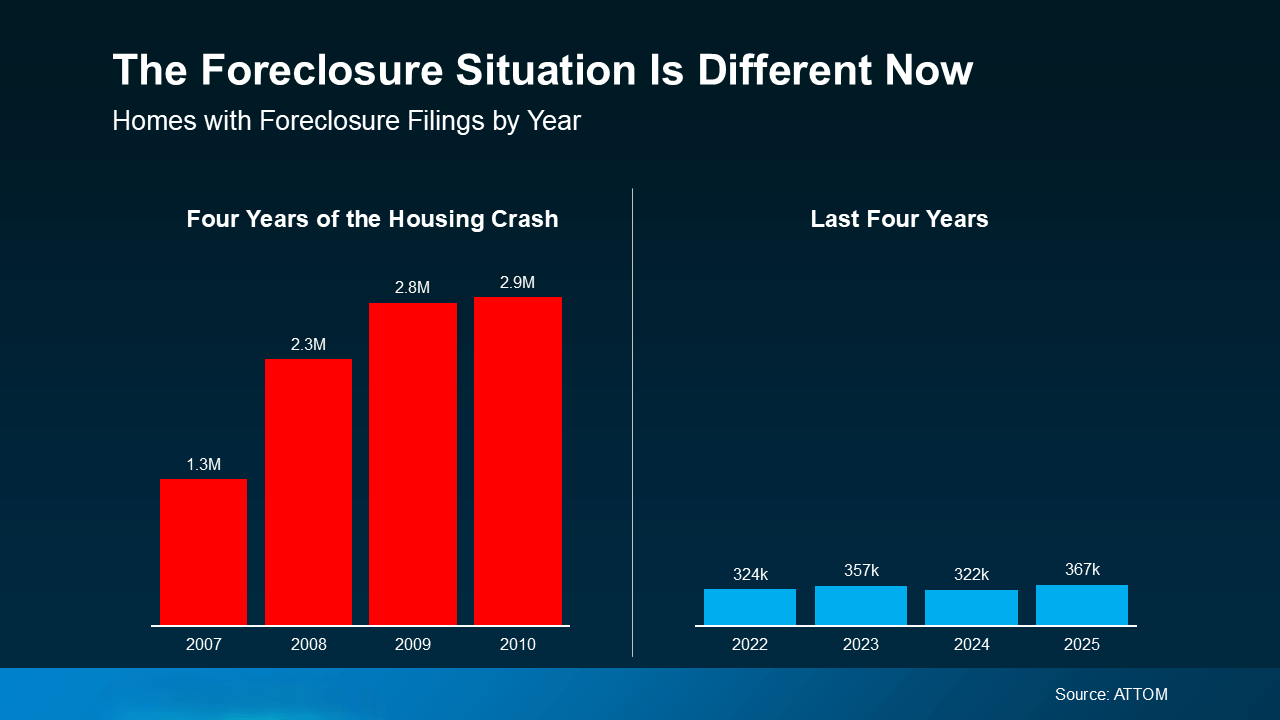
Before the pandemic, foreclosure activity sat at much higher levels year after year without causing market instability. During the housing crash, filings regularly exceeded one million annually. Today, even with the recent uptick, we’re nowhere near those numbers.
What we’re seeing now isn’t a return to crisis. It’s a return to normal.
Rob Barber, CEO of ATTOM, put it plainly:
“Foreclosure activity increased in 2025, reflecting a continued normalization of the housing market following several years of historically low levels… today’s uptick is being driven more by market recalibration than widespread homeowner distress.”
That word — normalization — matters. For years, foreclosure activity was unusually low due to pandemic relief programs and homeowner forbearance. As those protections ended, filings naturally moved back toward historical norms.
That doesn’t signal collapse. It signals adjustment.
The housing crash still shapes how people interpret market news, but today’s conditions are fundamentally different.
Lending standards are far stricter. Borrowers are more qualified. And most importantly, homeowners are sitting on record levels of equity.
Over the last five years, home prices rose dramatically. That equity acts as a financial safety net. When homeowners face hardship today, many have options — including selling and walking away with cash — instead of being forced into foreclosure.
That’s a major contrast to 2008, when millions of owners owed more than their homes were worth and had no exit strategy.
In short: fewer risky loans, more equity, and far less systemic risk.
For buyers, rising foreclosure headlines don’t mean discounted inventory is about to flood the market. Distressed sales remain a small slice of overall activity.
For sellers, this isn’t a warning sign for home values. Prices are still being supported by supply constraints, strong equity positions, and steady demand in most markets.
And for homeowners in general, this data should be reassuring. A modest increase in foreclosures does not equal instability — especially when the broader financial foundation of the market remains solid.
Foreclosure activity is rising, but it’s doing so within a healthy, historically normal range — not anywhere close to crisis territory. The headlines may sound dramatic, but the data tells a much calmer story.
If you ever see housing news that makes you uneasy, the smartest move isn’t to panic — it’s to get local context.
If you want to understand what this really means for your home value or your local market, let’s talk. A quick conversation can replace fear with clarity.
Amber Johnson, Founder
Pillar Real Estate
805.835.3425
[email protected]
1345 Park St. Paso Robles, CA 93446
DRE# 01925434
Amber Johnson | September 21, 2026
How traffic patterns, privacy, parking, lot shape, and buyer preferences can influence marketing and value.

Amber Johnson | September 21, 2026
The price, credits, repairs, timing, and other terms Paso Robles sellers may need to evaluate this season.
Amber Johnson | September 21, 2026
When an open house can support a launch, when private showings may matter more, and how to judge the results.
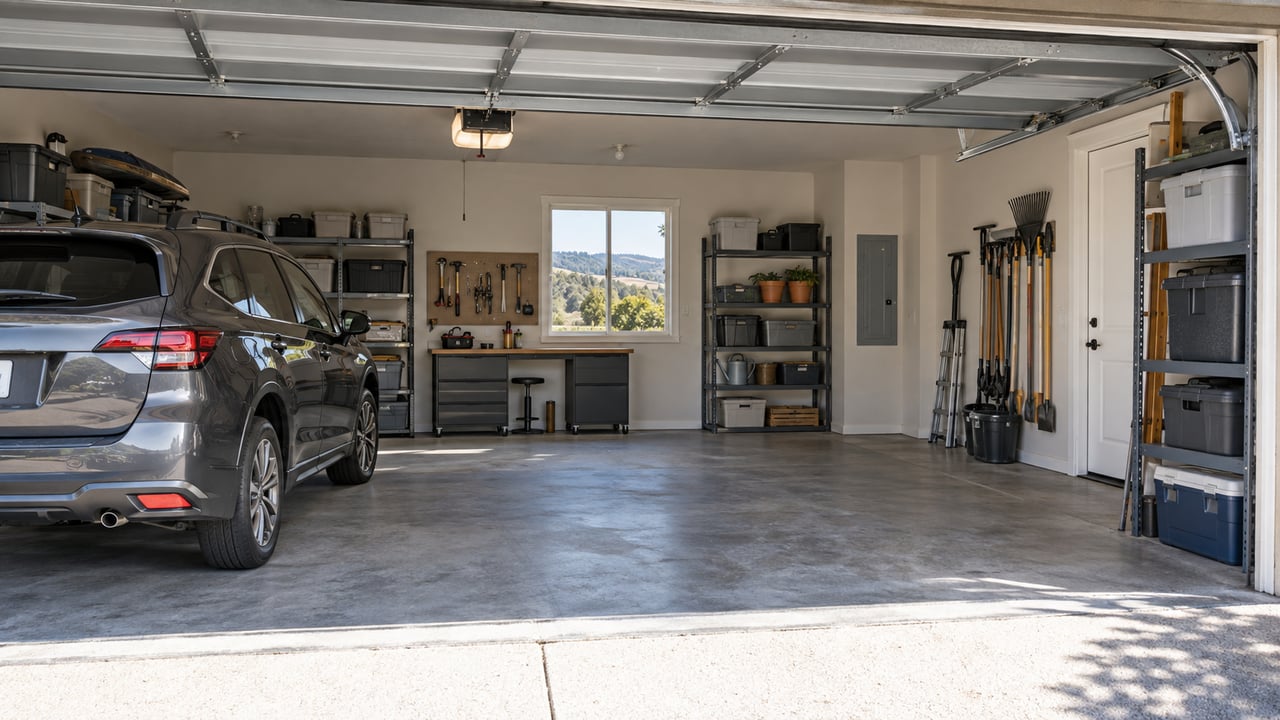
Amber Johnson | September 20, 2026
How garage organization, storage, access, and visible maintenance can influence a buyer’s overall impression.
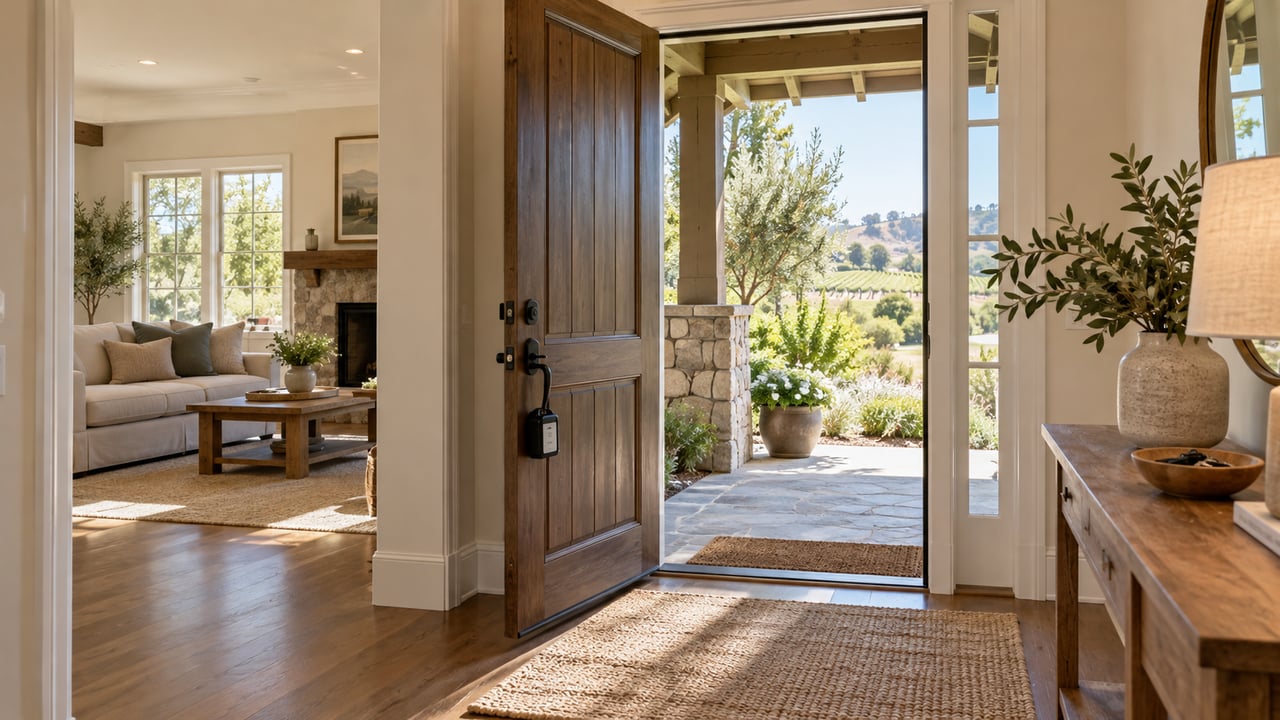
Amber Johnson | September 20, 2026
Why seller absence usually gives buyers more freedom to look, talk, and form an honest impression.
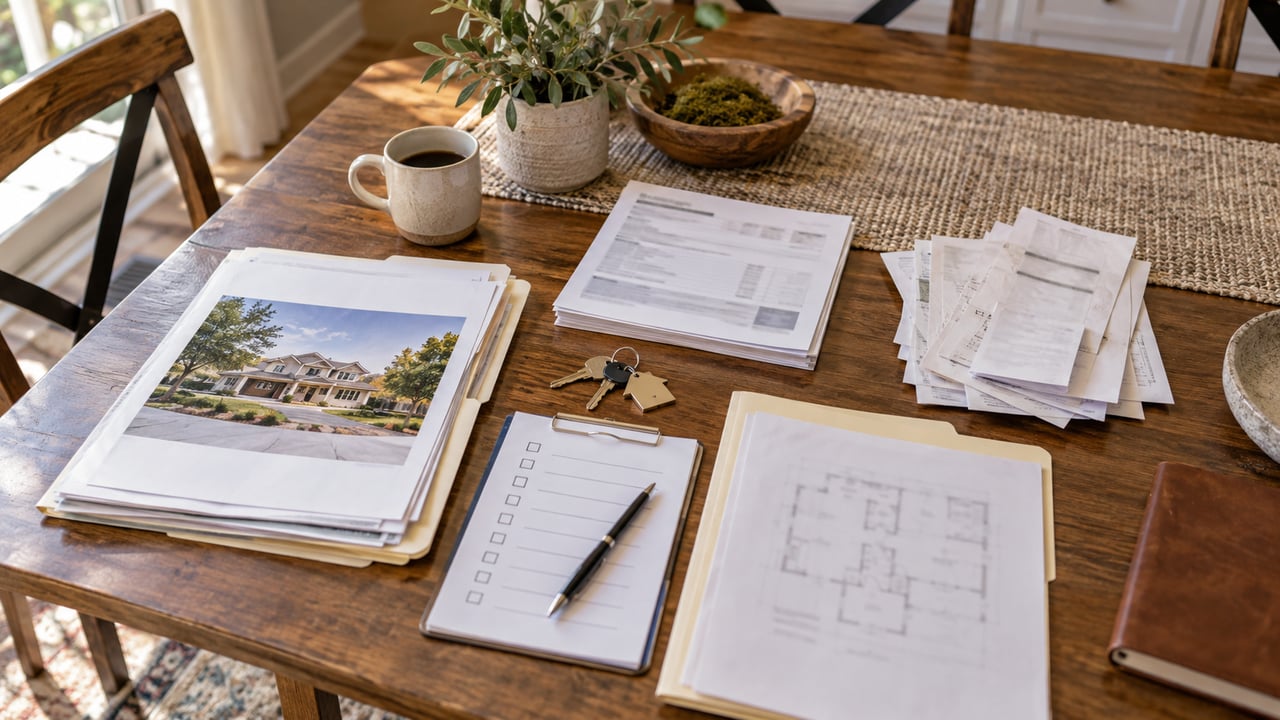
Amber Johnson | September 20, 2026
The records that help confirm ownership, payoff information, property history, and a smoother listing process.

Amber Johnson | September 18, 2026

Amber Johnson | September 18, 2026

Amber Johnson | September 18, 2026
How wells, septic systems, acreage, access, and the buyer pool shape a rural-property sale.
You’ve got questions and we can’t wait to answer them.

Amber Johnson, Founder
Pillar Real Estate
805.835.3425
DRE# 01925434
1345 Park Street
Paso Robles, CA 93446