How Much Should I Compromise on My First Home?
July 29, 2026
July 29, 2026
Most first-time buyers start with a list.
Three bedrooms.
Two bathrooms.
Updated kitchen.
Good-sized yard.
The right neighborhood.
Plenty of storage.
Maybe a home office.
Then you start looking at actual homes.
That's when something becomes clear.
The home that checks every box may not exist within the budget you want to maintain.
So now what?
Do you increase your budget?
Change locations?
Buy something smaller?
Accept an older kitchen?
Keep waiting?
Here's the thing.
Buying your first home usually involves some compromise. The important part is knowing what you should compromise on and what you shouldn't.
You don't want to give up something that will make you unhappy every day.
But you also don't want to miss a great home because it didn't check a box that really wasn't that important.
Amber is a real estate agent in Paso Robles, CA helping first-time buyers throughout San Luis Obispo County separate their true priorities from their wish list. Her approach is simple: the right strategy depends on the specific property, your budget, and what makes sense for your goals.
The goal isn't finding a home that checks every box. It's understanding which boxes actually matter.
Why Compromise Feels So Difficult
Before you start looking, everything exists on paper.
You know what you want.
Then you begin touring homes.
One has the perfect backyard but a small kitchen.
Another has the space you need but isn't in your first-choice location.
A third is beautifully updated but stretches the budget.
Suddenly, every home has a trade-off.
That's normal.
The challenge is deciding which trade-offs you can comfortably live with.
The Biggest Misconception
Many first-time buyers believe:
"If I'm spending this much money, I shouldn't have to compromise."
I understand that feeling.
A home is a major purchase.
Of course you want to love it.
But loving your home doesn't mean loving every single thing about it.
I've been in real estate for 13 years, and even buyers with larger budgets make compromises.
The compromises simply change.
The goal isn't perfection.
It's finding a home where the things that matter most are right.
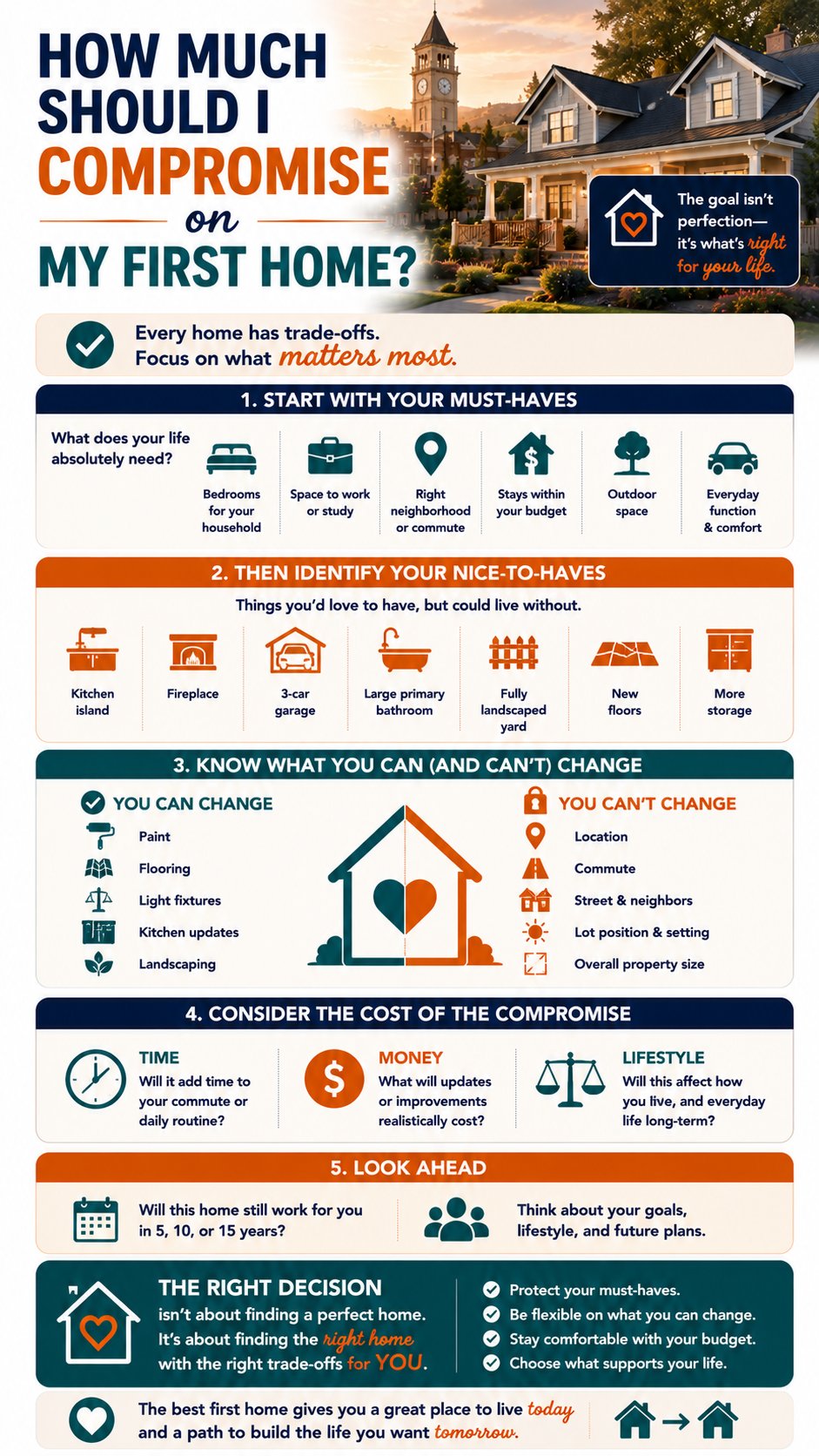
Start With Must-Haves
Before looking at another listing, ask yourself:
What does this home absolutely need to have for my life to work?
Not what would be nice.
What do you actually need?
Maybe that's three bedrooms because you have children.
Maybe you work from home and need dedicated office space.
Maybe you have pets and outdoor space matters.
Maybe you need to stay within a certain commute.
Those are very different from:
"I'd really like white kitchen cabinets."
Both preferences matter.
But they shouldn't necessarily carry the same weight.
Then Identify Your Nice-to-Haves
This is where home searches often become much easier.
Make a second list.
Things you'd love to have, but could live without.
Maybe it's:
Would those things be nice?
Absolutely.
But if a home fits your budget, location, space needs, and long-term goals, should one missing feature automatically eliminate it?
Maybe not.
That's why separating needs from preferences matters.
A home doesn't have to look exactly how you imagined on day one. Some of the easiest compromises are things you can change over time.
Compromise on Things You Can Change
This is one of the simplest ways to evaluate a home.
Ask:
"Can I change this?"
Paint?
Yes.
Flooring?
Usually.
Light fixtures?
Absolutely.
Landscaping?
Probably.
An older kitchen?
Potentially.
Now compare those things with:
Location.
Lot position.
Street.
Commute.
Overall property size.
Those are much harder, or impossible, to change.
That doesn't mean you should automatically buy a fixer in your favorite neighborhood.
It simply means permanent features deserve more weight than cosmetic ones.
Be Careful Compromising on Your Budget
This is one area where I encourage buyers to be especially thoughtful.
It's easy to start at one price point and slowly move higher.
You see a home that's $20,000 more.
Then another that's $30,000 more.
Pretty soon, you're looking at homes well beyond where you originally felt comfortable.
Your lender may tell you that you qualify for more.
That doesn't necessarily mean you should spend more.
There's a difference between what you can qualify for and what you want your monthly life to feel like.
Your home should fit into your life.
Your life shouldn't have to revolve around paying for your home.
What I'm Seeing Right Now
Working with buyers throughout Paso Robles, Templeton, Atascadero, and San Luis Obispo County, I've noticed that the search often gets easier once buyers stop trying to find everything in one property.
They start recognizing what actually matters.
Maybe they realize they'd rather have the right location than a remodeled kitchen.
Maybe a smaller home with the right floor plan works better than a larger home with wasted space.
Maybe having money left in the monthly budget matters more than getting one extra bedroom.
That's when the search becomes much more focused.
You're no longer comparing homes against an imaginary perfect house.
You're comparing them against your actual priorities.
And that's a much better way to buy.
A Real-Life Example
I worked with first-time buyers who started their search with a pretty specific list.
They wanted the right location.
Enough bedrooms.
A large backyard.
An updated kitchen.
Plenty of storage.
And they wanted to stay comfortably within their budget.
Nothing on that list sounded unreasonable.
The problem was finding all of those things in the same house.
We'd tour one home with a great floor plan, but the kitchen needed updating.
Another had the beautiful finishes they wanted, but the yard was smaller.
Then we'd find the space they wanted, but the monthly payment was higher than they felt comfortable with.
After several showings, they started getting frustrated.
So we stopped talking about houses for a minute.
I asked them:
"If you could only keep three things on your list, what would they be?"
That changed the conversation.
They realized the location mattered.
The number of bedrooms mattered.
Staying within a comfortable monthly budget mattered.
The updated kitchen?
They could live without it.
Once we knew that, the search became much easier.
They eventually bought a home that wasn't exactly what they pictured when we started.
But it gave them the things that actually mattered.
And the things they compromised on could be improved over time.
The Biggest Mistake
The biggest mistake is compromising without knowing you're compromising.
That happens when buyers become tired of looking.
They've toured house after house.
Nothing feels perfect.
Eventually, they start saying:
"Maybe this is good enough."
That's different from making an intentional compromise.
There's nothing wrong with buying a home that doesn't check every box.
But you should understand exactly what you're giving up and why you're comfortable giving it up.
That's a thoughtful decision.
Settling because you're exhausted is not.
What You Probably Shouldn't Compromise On
Every buyer is different, but there are a few areas where I encourage people to slow down.
Your Financial Comfort
If the payment makes you uncomfortable before you even own the home, pay attention to that.
Owning a home should still leave room for the rest of your life.
Your True Space Needs
Wanting a fourth bedroom is different from needing three bedrooms for your household to function.
Know the difference.
Major Location Concerns
If something about the location already bothers you during the showing, don't assume you'll stop noticing it after you move in.
Serious Property Concerns
Cosmetic imperfections are one thing.
Issues involving the home's condition, property characteristics, or other significant concerns deserve careful evaluation.
Ask questions.
Get the appropriate inspections.
Understand what you're buying before deciding whether that compromise makes sense.
What This Process Should Feel Like
Compromise shouldn't feel like defeat.
It should feel intentional.
You should be able to look at the home and say:
"It doesn't have everything we originally wanted, but it has the things that matter most."
That's very different from convincing yourself to like something you don't.
A good compromise gives something up while protecting the bigger goal.
Maybe you accept an older kitchen to stay in your preferred location.
Maybe you choose a smaller yard to keep the payment comfortable.
Maybe you give up the extra bedroom because the rest of the floor plan works beautifully.
Those can all be smart decisions.
It depends on your situation.
How This Connects to the Bigger Picture
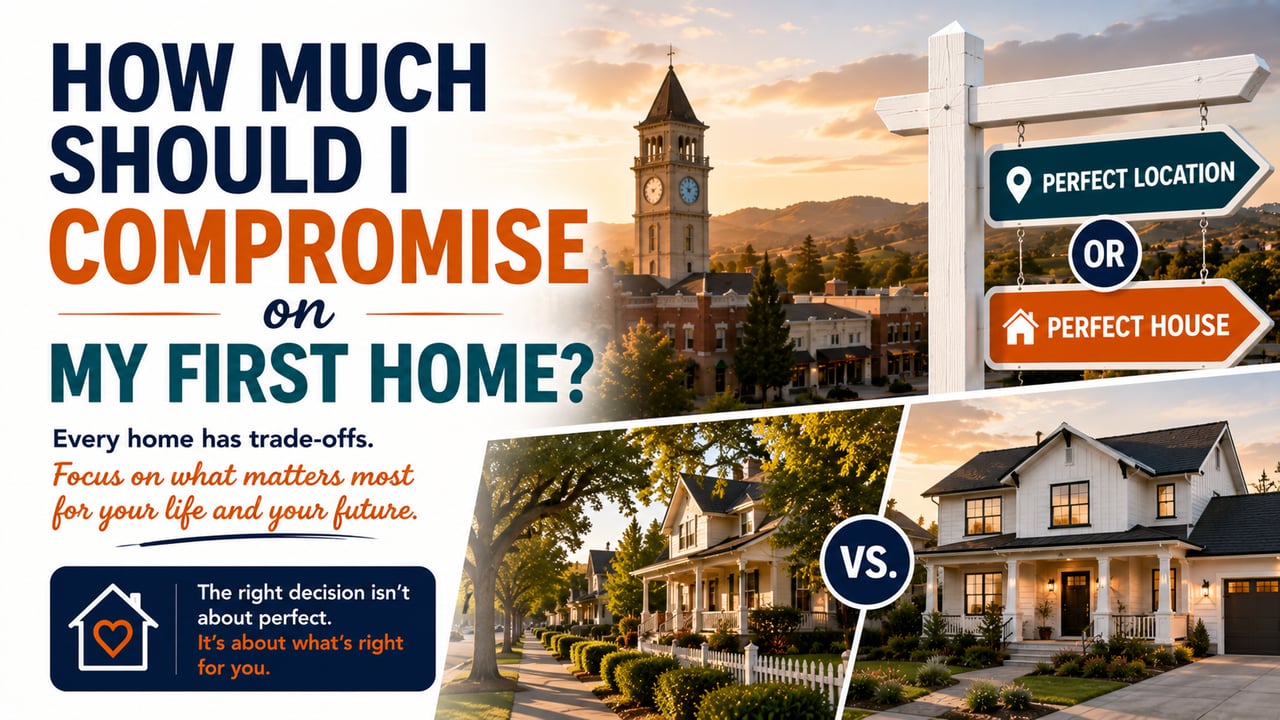
In the last article, we talked about choosing between the perfect house and the perfect location.
This is really the next part of that conversation.
Once you accept that every home has trade-offs, the question becomes which trade-offs make sense for you.
Related: Should I Buy the Perfect Location or the Perfect House?
The right first home may not have everything on your original wish list. What matters is whether it gives you the things that are most important for your life.
Steps: How to Decide What to Compromise On
Step 1: Pick Your Top Three
If you could only keep three things from your home search criteria, what would they be?
Be specific.
Those are probably much closer to your true priorities than the original ten-item wish list.
Step 2: Separate Permanent From Changeable
Look at each compromise and ask whether you can realistically change it.
Paint is easy.
A kitchen may be possible over time.
The location isn't moving.
Permanent characteristics deserve more consideration.
Step 3: Put a Price on the Compromise
If the home needs work, what might that require?
If it's farther away, what does that mean for your commute?
If you're stretching the budget, what does the monthly payment mean for the rest of your life?
Every compromise has a cost.
Sometimes it's money.
Sometimes it's time.
Sometimes it's convenience.
Understand that cost before you decide.
Step 4: Ask Whether You'll Still Care in Five Years
This is a great filter.
Will you still care that the countertops weren't your favorite?
Maybe not.
Will you still care about a commute that takes significantly longer every day?
Possibly.
Think beyond the showing.
You're choosing a home for your life after closing.
So... How Much Should You Compromise on Your First Home?
Enough to be realistic.
But not so much that the home no longer makes sense for your goals.
You probably won't get every feature you imagined when you started looking.
That's okay.
Focus on the things that affect your everyday life.
Protect your financial comfort.
Pay attention to the things you can't change.
Then be flexible with the things that can improve over time.
The goal isn't to buy a perfect first home.
It's to buy a home that works for you.
Your First Home Doesn't Have to Be Your Forever Home
Sometimes first-time buyers put extra pressure on themselves because they're trying to solve the next twenty years with one purchase.
You don't necessarily have to.
Your needs may change.
Your career may change.
Your household may change.
What makes sense for you today may look different years from now.
That doesn't make today's decision wrong.
Your first home needs to make sense for the life you're living and the future you can reasonably see.
It doesn't need to predict every version of your future.
The Real Question to Ask
Instead of asking:
"How much should I compromise?"
Ask yourself:
"Which compromises can I comfortably live with, and which ones will I wish I hadn't made?"
That's the conversation that matters.
Next Steps
If you're buying your first home in Paso Robles, Templeton, Atascadero, or anywhere in San Luis Obispo County and you're struggling with what to compromise on, I'd be happy to help you sort through it.
Sometimes buyers don't need more listings.
They need more clarity.
We can look at your budget, your priorities, the homes available, and what you actually want your everyday life to look like.
Then we build the search around what matters most.
From start to finish.
FAQ
Is it normal to compromise when buying your first home?
Yes. Most buyers make some compromises, regardless of budget. The goal is to protect your most important priorities and stay flexible on features that matter less.
What should I not compromise on when buying a home?
That depends on your situation, but be especially thoughtful about your financial comfort, true space needs, major location concerns, and significant property issues.
What are the easiest things to compromise on?
Cosmetic features are often easier to compromise on because they may be changed later. Paint colors, fixtures, flooring, landscaping, and some finishes don't necessarily need to eliminate an otherwise good home.
Should I increase my budget to get everything I want?
Not automatically. What you're approved to borrow and what you're comfortable paying each month can be very different numbers. Protecting your financial comfort should remain part of the decision.
How do I know if I'm compromising too much?
Go back to your must-haves. If you're giving up several things that directly affect your daily life or long-term goals, the home may not be the right fit. If the compromises are mostly preferences you can change later, the home may deserve a closer look.
Amber Johnson, Founder
Pillar Real Estate
805.835.3425
[email protected]
1345 Park St. Paso Robles, CA 93446
DRE# 01925434
Amber Johnson | September 20, 2026
The records that help confirm ownership, payoff information, property history, and a smoother listing process.

Amber Johnson | September 18, 2026

Amber Johnson | September 18, 2026

Amber Johnson | September 18, 2026
How wells, septic systems, acreage, access, and the buyer pool shape a rural-property sale.
Amber Johnson | September 17, 2026
What concession requests can signal about buyer leverage, affordability, and current negotiations.
Amber Johnson | September 17, 2026
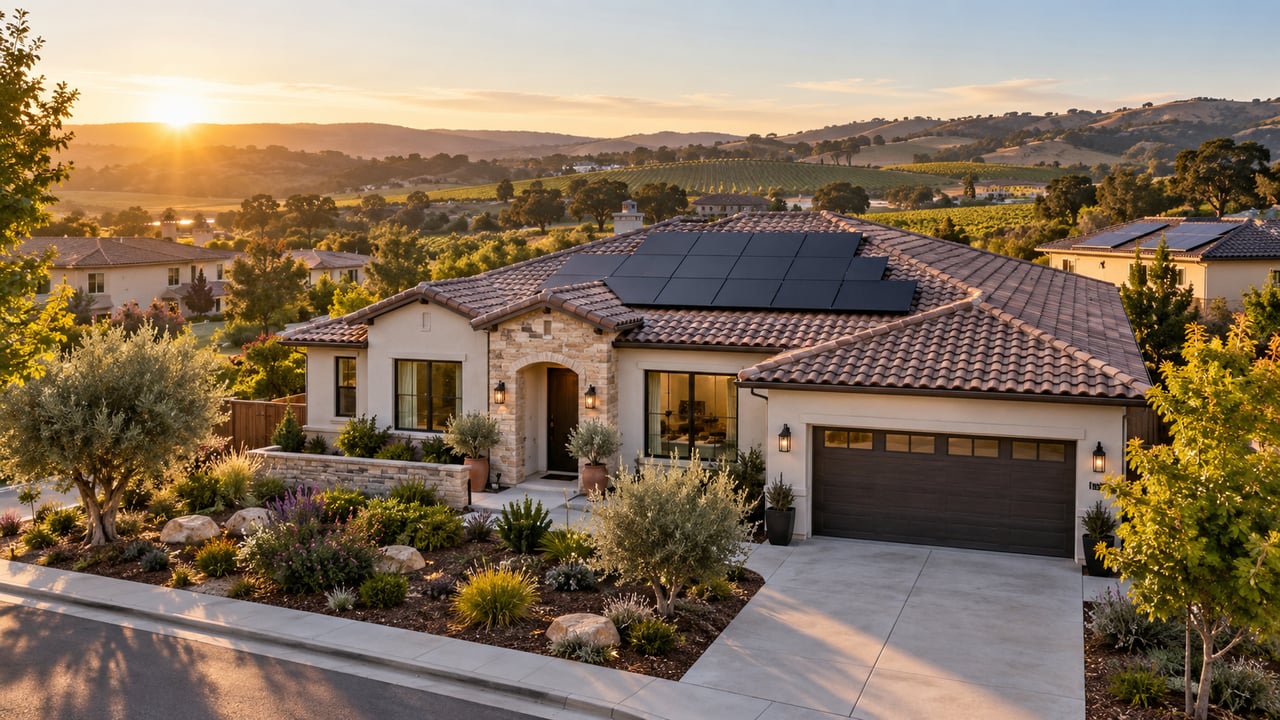
What sellers should know about owned, financed, and leased solar before listing.

Amber Johnson | September 17, 2026
How roof condition, insurance, buyer financing, and repair costs can shape the right decision.
Amber Johnson | September 17, 2026

Amber Johnson | September 17, 2026
You’ve got questions and we can’t wait to answer them.
Amber Johnson, Founder
Pillar Real Estate
805.835.3425
DRE# 01925434
1345 Park Street
Paso Robles, CA 93446