How Does Living Near Railroad Tracks Affect a Paso Robles Home Sale?
October 1, 2026
October 1, 2026
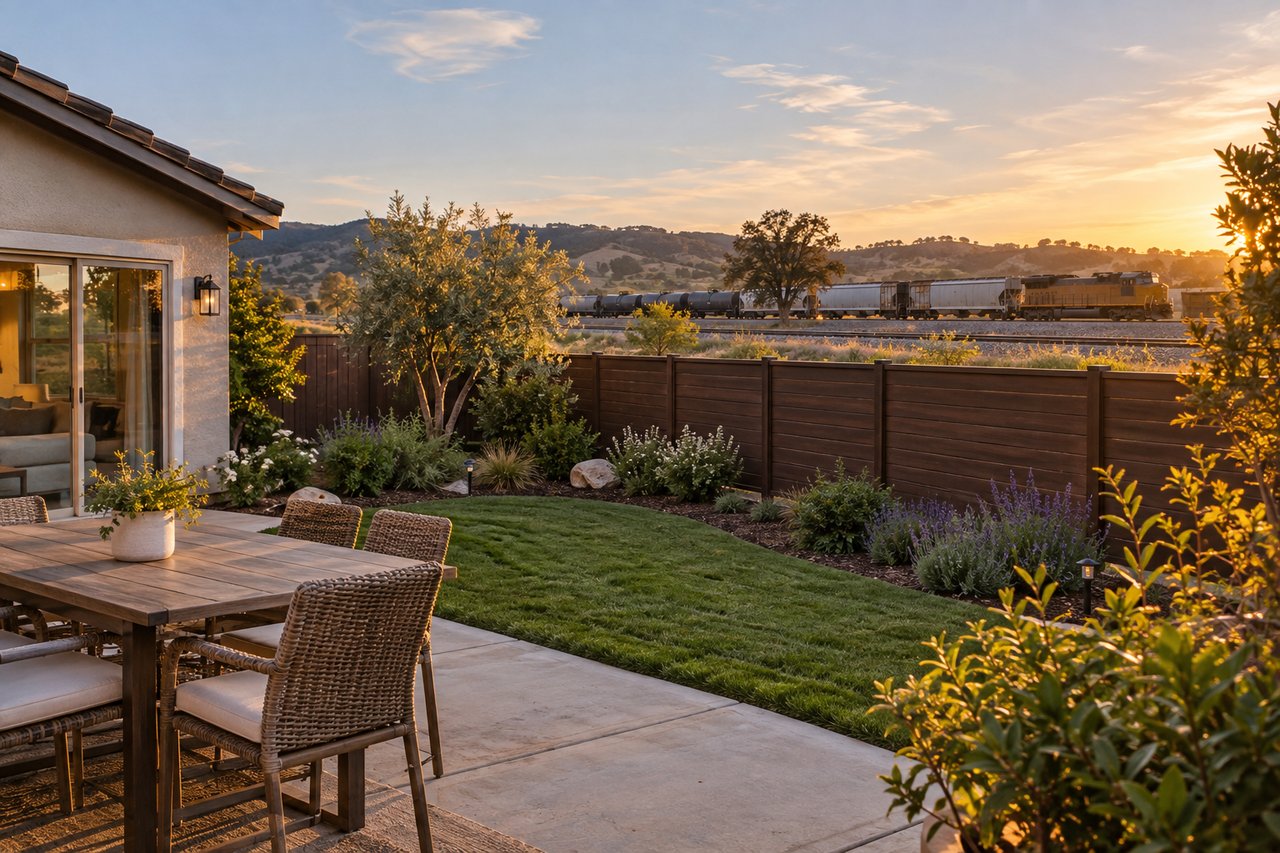
Living near railroad tracks can affect a Paso Robles home sale, but the impact is not automatic or identical for every property. Buyers usually respond to the actual experience of the home: how often trains pass, whether horns are common nearby, how sound carries inside and outside, the distance and elevation between the house and tracks, and whether the property still feels comfortable and private.
That means the right strategy is not to hide the tracks or assume they make the home difficult to sell. The goal is to understand the property's specific position, price it against relevant comparable sales, and market it honestly to the buyer pool most likely to appreciate the home's other strengths.
A map can show that railroad tracks are nearby, but it cannot tell a buyer what the home feels like. Two properties at a similar straight-line distance may have very different sound levels. Terrain, buildings, fences, trees, prevailing conditions, track elevation, and the home's orientation can all change the experience.
Walk through the property at different times. Listen from the primary bedroom, main living areas, backyard, front porch, and any work-from-home space. Notice whether doors and windows are open or closed. A seller needs to understand where train activity is most noticeable and where it fades into the background.
This practical review is more useful than a vague statement that the home is “near the tracks.” Buyers want context. The better you understand the property, the more accurately you can position it.
The first question many buyers will ask is simple: How often do trains pass? The honest answer should come from current, property-specific observation and any reliable information available to the seller. Do not guess or repeat an old schedule as if it is guaranteed. Rail activity can change, and a buyer should verify any detail that is important to the decision.
Timing can matter as much as frequency. A train that passes during the day may feel different from one heard late at night or early in the morning. A buyer who sleeps lightly, works from home, records audio, or spends a great deal of time outside may evaluate the same sound differently from someone who is away during most weekdays.
Here is the thing: there is no universal response. Some buyers are highly sensitive to intermittent noise. Others adapt quickly or consider it a reasonable tradeoff for the home's price, lot, location, or access.
Tracks alone do not tell the full story. A nearby public crossing can affect how often train horns are heard and how sound reaches the property. Distance from a crossing, the direction the home faces, and intervening structures may all influence the experience.
Sellers should avoid making promises about horn use or future operations. Instead, describe what you know about the property and encourage buyers to perform their own review. If a buyer is concerned, a thoughtful visit at more than one time of day may help them evaluate the setting for themselves.
Traffic near a crossing can matter too. Buyers may consider vehicle delays, access routes, and whether a regular commute requires crossing the tracks. My guide to living in Paso Robles without a long commute explains why everyday travel patterns deserve attention alongside the home itself.
Distance is important, but it is only one part of the evaluation. A home may sit below the tracks, above them, or behind another row of buildings. The backyard may face the rail corridor, or the garage and secondary rooms may be on that side. Each arrangement creates a different experience.
Look at the position of the main living spaces. If the primary bedroom and patio face away from the tracks, the home's layout may help reduce the perceived impact. If the tracks are immediately beyond the backyard, buyers may pay closer attention to sound, privacy, fencing, vibration, and outdoor use.
Features such as solid fencing, dual-pane windows, weatherstripping, insulation, and thoughtful landscaping may help. They should not be presented as guarantees, but their condition is worth reviewing before the home reaches the market. A loose window, damaged seal, or rattling fixture can make intermittent sound feel more noticeable than it otherwise would.
A home may feel quiet inside with the windows closed while train activity remains more noticeable in the yard. That distinction matters in Paso Robles, where many buyers care about patios, gardens, pets, entertaining, and outdoor living.
Do not evaluate only from the kitchen or living room. Spend time in the spaces buyers are likely to use. If a property has a pool, detached office, guest space, workshop, or bedroom near the rear lot line, include those areas in the review.
At the same time, keep the property's full value in view. A well-designed yard, mature landscaping, useful outbuildings, an appealing floor plan, or convenient access may still be important advantages. Buyers compare the entire package, not one characteristic in isolation.
One buyer may immediately rule out any home near railroad tracks. Another may see the setting as manageable because the house offers the right size, neighborhood, lot, or price. Neither reaction is wrong.
This is why marketing should focus on fit rather than trying to persuade everyone. The strongest buyer is the person who understands the setting and still sees clear value in the property. Honest information helps that buyer make a confident decision.
Location decisions always involve tradeoffs. The article Should I Buy the Perfect Location or the Perfect House? looks at that choice from the buyer's side. Sellers benefit from recognizing that buyers weigh home features and location together.
Railroad proximity may affect price when buyers view it as a negative and have comparable alternatives without the same influence. But there is no reliable flat percentage that applies to every Paso Robles property. The effect depends on the home's exact setting, market competition, condition, price range, and buyer demand.
The best evidence comes from relevant sales. Look for homes with similar property types, sizes, conditions, lots, and locations. Then study whether the most comparable properties were also influenced by railroad activity. A sale from a different neighborhood or a home much farther from the tracks may need careful interpretation.
The surrounding area matters too. Read more about how a neighborhood can affect a Paso Robles home's sale price. Buyers respond to the block, access, nearby uses, and overall setting, not just the address.
Pricing too high because you ignore the tracks can reduce early interest. Pricing too low without evidence can leave money on the table. The right strategy reflects the property buyers will actually experience and the competition they will see at the same time.
A seller does not need to overcorrect by spending heavily on every possible sound-reduction project. Start with the basics. Make sure windows and exterior doors close properly. Repair obvious rattles. Review fencing and gates. Clean and stage outdoor spaces so buyers can see how the yard functions.
If a larger improvement is being considered, compare the likely cost with the property's needs, comparable sales, and the goals for the move. A sound wall, extensive window replacement, or major planting project may not be the best pre-listing investment for every home.
This is where a property-specific plan matters. Generic advice is not enough. The decision should reflect the condition of the home, the level of train influence, the likely buyer pool, and what makes sense for your goals.
Professional marketing should show the home accurately. Photography and video can highlight the property's best features without using angles intended to conceal the surrounding area. A buyer who discovers an obvious railroad corridor only after arriving may lose trust before considering the rest of the home.
Clear positioning works better. Lead with the home's genuine strengths, such as layout, lot use, updates, access, neighborhood character, views, storage, or outdoor space. Be prepared to answer factual questions about the setting without minimizing a buyer's concern.
That approach protects the sale from start to finish. It helps attract buyers who understand the property and reduces the chance that railroad proximity becomes a late surprise during inspections, disclosures, or final decision-making.
A buyer may want to visit more than once, listen from different rooms, or review the surrounding area. Reasonable access can help a serious buyer make an informed decision. Sellers should also complete applicable disclosures carefully and consult the appropriate professionals when legal or technical questions arise.
Avoid promising that train activity will remain the same. Avoid claiming the home is silent if that is not accurate. Straight answers build confidence, even when a property has a location factor that will not work for everyone.
For buyers considering the larger area, what to look for when choosing a Paso Robles neighborhood offers a useful framework. Daily routines, access, surroundings, and personal priorities all belong in the decision.
Living near railroad tracks can influence a Paso Robles home sale, especially when train frequency, horns, crossings, vibration, or outdoor sound are noticeable. The size of that influence depends on the property. Distance, elevation, layout, barriers, window condition, neighborhood competition, and buyer preferences all matter.
The strongest plan is specific and honest. Understand the real experience, compare the home with relevant sales, prepare the areas that matter, and price for the buyer response you are likely to receive. Railroad proximity may narrow the buyer pool, but it does not erase the value of a well-positioned home.
If you are preparing to sell a home near railroad tracks and want a clear, property-specific plan, Sell With Amber. I help Paso Robles homeowners evaluate the setting, understand the likely buyer pool, and choose a strategy that makes sense for their goals.
Amber Johnson, Founder
Pillar Real Estate
805.835.3425
[email protected]
1345 Park St. Paso Robles, CA 93446
DRE# 01925434
Amber Johnson | October 1, 2026
How train frequency, noise, crossings, property position, and buyer preferences can influence demand.
Amber Johnson | September 30, 2026
How home size, condition, lot, location, and comparable sales can limit what this metric means.

Amber Johnson | September 30, 2026
How worn sealant, moisture protection, appearance, and project scope can guide the decision.
Amber Johnson | September 30, 2026
How air gaps, door operation, comfort concerns, and replacement cost can shape the decision.

Amber Johnson | September 30, 2026
How ventilation, sound, moisture control, and repair scope can help determine the next step.

Amber Johnson | September 30, 2026

Amber Johnson | September 30, 2026
How water waste, visible condition, inspection concerns, and repair scope can guide the decision.
Amber Johnson | September 30, 2026
How aircraft noise, access, property position, and buyer preferences can influence demand.

Amber Johnson | September 29, 2026
How market pace, pricing, competition, and property condition can shape the meaning of this number.
You’ve got questions and we can’t wait to answer them.
Amber Johnson, Founder
Pillar Real Estate
805.835.3425
DRE# 01925434
1345 Park Street
Paso Robles, CA 93446