Your Paso Robles Home Didn't Sell the First Week... Now What?
October 15, 2026

October 15, 2026
Your home has been listed for seven days.
You've watched the online views.
You've waited for showing requests.
Maybe several buyers have toured the property.
But there's no offer.
So now what?
For many homeowners, this is when anxiety starts to creep in.
Does something need to change?
Is the price wrong?
Did we miss our opportunity?
September's Paso Robles real estate activity gives us a useful reminder:
The first week is information, not a deadline.
During September, the Paso Robles data showed:
• 33 new listings
• 36 homes under contract
• Roughly 55 closed sales
For comparison, August brought:
• 40 new listings
• 43 homes under contract
• 46 closed sales
September therefore brought fewer new listings and fewer homes entering contract than August, while more transactions reached the closing table.
But those totals aren't the most interesting part of this month's market.
How Long Did Paso Robles Homes Take to Sell?
Among September's closed sales, the median cumulative market time was 56 days.
But that number needs context.
Some homes found their buyer extremely quickly, with closed properties showing cumulative market times of zero, three, four and five days.
Others needed considerably longer including homes that accumulated 50, 80, 100, 200 or even more than 300 days before ultimately closing.
Those are dramatically different selling experiences within the same Paso Robles market.
And they illustrate why an arbitrary seven-day deadline isn't particularly useful by itself.
What Did Your First Seven Days Actually Tell You?
Instead of immediately reacting to the calendar, I prefer to look at buyer behavior.
Imagine four different listings.
Scenario One: Plenty of Online Views, Almost No Showings
Buyers are finding the property.
They're seeing the photos, price and basic information.
But they're not taking the next step.
That's useful information.
Scenario Two: Plenty of Showings, No Second Visits
Buyers are interested enough to walk through the door.
But something changes once they experience the property in person.
That's a different signal.
Scenario Three: Second Showings, Questions, But No Offers
Now we're seeing a much higher level of interest.
The property may be getting close but something is keeping buyers from committing.
Again, that's different from receiving no showing activity at all.
Scenario Four: Buyers Consistently Choose the Competition
This may be some of the most useful feedback available.
If buyers repeatedly tour your home and then purchase or offer on another property, understanding why can help determine the next move.
These four situations shouldn't automatically receive the same solution.
“Just Lower the Price” Is Too Simple
Price absolutely matters.
Sometimes price is the problem.
But not every listing issue is automatically solved by reducing it.
Maybe the online presentation isn't creating enough interest.
Maybe an aspect of the property's condition is creating hesitation.
Maybe buyers aren't recognizing something valuable about the home.
Maybe a competing property currently offers a more compelling combination of price, condition, location or features.
Or perhaps the right buyer simply hasn't arrived yet.
The point isn't to make excuses for a listing that isn't performing.
It's to diagnose the problem before choosing the solution.
When Should a Paso Robles Seller Be Concerned?
There's no universal day when a listing suddenly becomes a problem.
Instead, I would look at the quality and consistency of the feedback.
If buyers repeatedly communicate the same concern, that's information.
If similar homes are going under contract while yours receives little attention, that's information.
If buyers are engaging heavily online but aren't scheduling appointments, that's information.
And if you've had strong showing activity and repeat visits, that's information too.
Days on market tells us how long something has been happening.
Buyer behavior can help tell us why.
What Longer Market Time Means for Buyers
Buyers can make the opposite mistake.
A home has been available for 30, 60 or 90 days and they assume:
“Something must be wrong with it.”
Maybe.
But September's closed sales demonstrate that many Paso Robles properties ultimately sold after needing additional time to find their buyer.
Longer market time is information.
It isn't a diagnosis.
For a buyer, it can be an opportunity to ask better questions.
Has the price changed?
What feedback has the seller received?
Have previous negotiations occurred?
Has anything about the property or seller's situation changed?
How does it compare with what's available now rather than what was available when it first listed?
Those answers can help determine whether there's an opportunity and what kind of opportunity it actually is.
What I'm Watching in October
As we move through October, I'll be watching more than the average or median days on market.
I want to see where buyers act quickly and where they hesitate.
What characteristics separate those properties?
How does the available competition change?
And does September's lower contract activity continue into the fall?
Those answers will give us a better understanding of where the Paso Robles housing market is headed.
The Bottom Line
If your Paso Robles home doesn't sell during its first weekend, don't automatically assume something has gone wrong.
But don't ignore the first week either.
Use it.
Look at what buyers did.
Look at what they didn't do.
Listen to what they're saying.
Compare your property with the choices they're making instead.
Because:
Seven days tells you how long you've been on the market. What happened during those seven days tells you what to do next.
If you're thinking about selling a home in Paso Robles or your property is already on the market and you're trying to understand the response. I'm always happy to help you interpret what buyers are actually telling you.
Amber Johnson, Founder
Pillar Real Estate
805.835.3425
[email protected]
1345 Park St. Paso Robles, CA 93446
DRE# 01925434
Amber Johnson | October 15, 2026

Amber Johnson | October 15, 2026
Test overlapping work schedules, shopping trips, appointments, transportation alternatives, and backup plans before choosing a home.
Amber Johnson | October 15, 2026
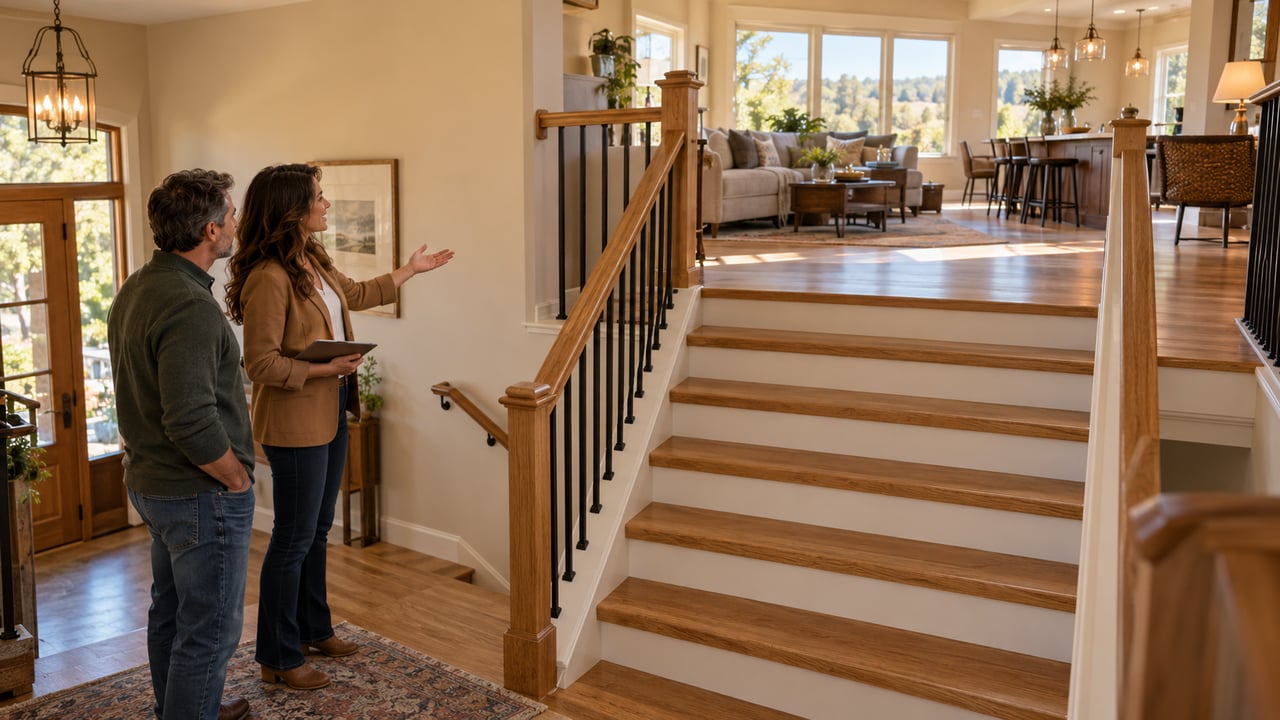
Help buyers understand the layout through accurate photos, clear descriptions, thoughtful showing access, and a property-specific selling plan.

Amber Johnson | October 15, 2026
Use price per square foot as context, then account for property type, location, views, condition, lot, and the limits of a small data set.

Amber Johnson | October 14, 2026
Consider beach access, wind, fog, parking, visitor activity, errands, and the routines that come with living near the shoreline.

Amber Johnson | October 14, 2026
Compare street patterns, access, housing character, nearby services, outdoor options, and the routines each setting supports.
Amber Johnson | October 14, 2026
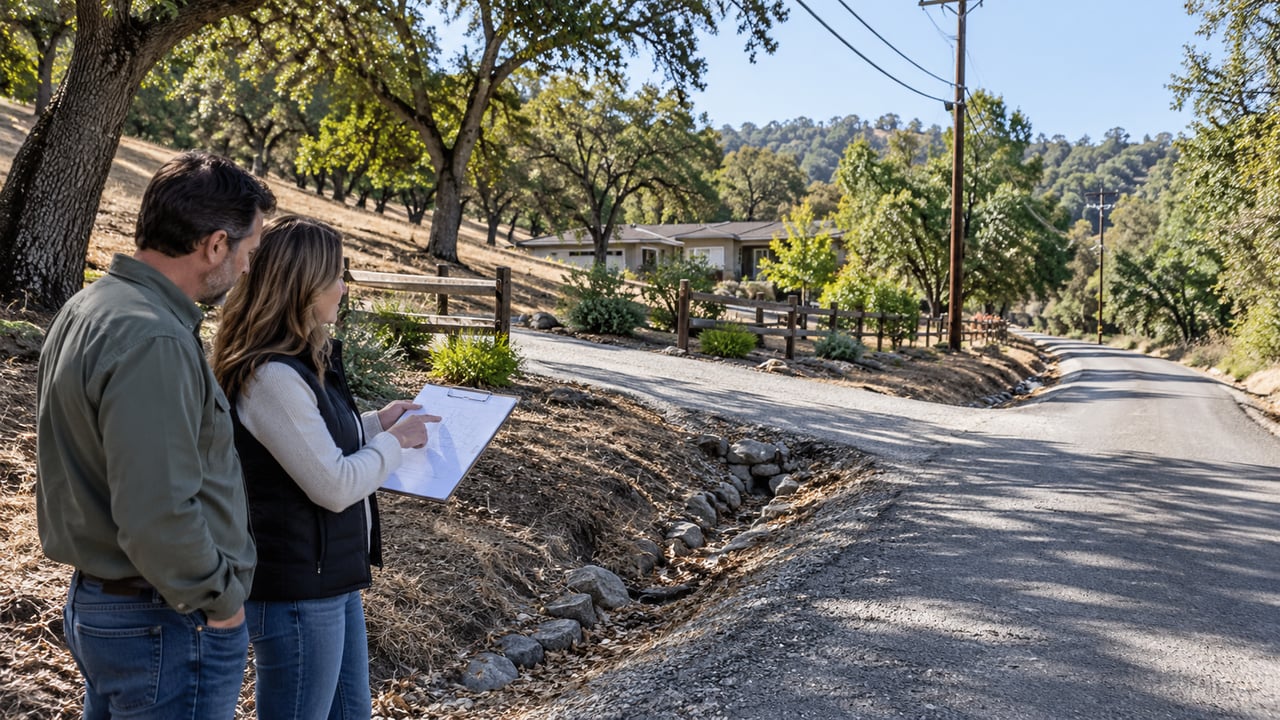
Review access rights, maintenance agreements, road condition, emergency access, drainage, utilities, financing, and insurance before committing.

Amber Johnson | October 14, 2026
Compare walkability, street activity, lot patterns, home styles, recreation, and the daily routines each area supports.

Amber Johnson | October 14, 2026
Evaluate internet reliability, workspace needs, errands, climate, neighborhood choices, and the routines that make remote work sustainable.
You’ve got questions and we can’t wait to answer them.
Amber Johnson, Founder
Pillar Real Estate
805.835.3425
DRE# 01925434
1345 Park Street
Paso Robles, CA 93446