What Is a Contingency When Buying a Home?
August 19, 2026

August 19, 2026
One of the words you'll hear a lot when buying a home is "contingency."
If you've never purchased a home before, it can sound like legal jargon.
I've had buyers ask me,
"Is a contingency a bad thing?"
Or...
"Do I really need contingencies?"
The short answer is yes.
Contingencies are an important part of many real estate transactions because they help protect buyers while they complete important steps like inspections, financing, and the appraisal.
If you're buying a home in Paso Robles, Templeton, Atascadero, San Miguel, or anywhere in San Luis Obispo County, understanding contingencies will help you feel much more confident when it's time to write an offer.
Over the past 13+ years, I've helped buyers navigate every stage of the home buying process. One thing I've learned is that contracts become much less intimidating when you understand why each part is there. My goal is to explain the process in plain English so you can make informed decisions from start to finish.
Here's the thing.
A contingency isn't there to make buying a home harder.
It's there to give you time to complete important parts of the transaction before you're fully committed.
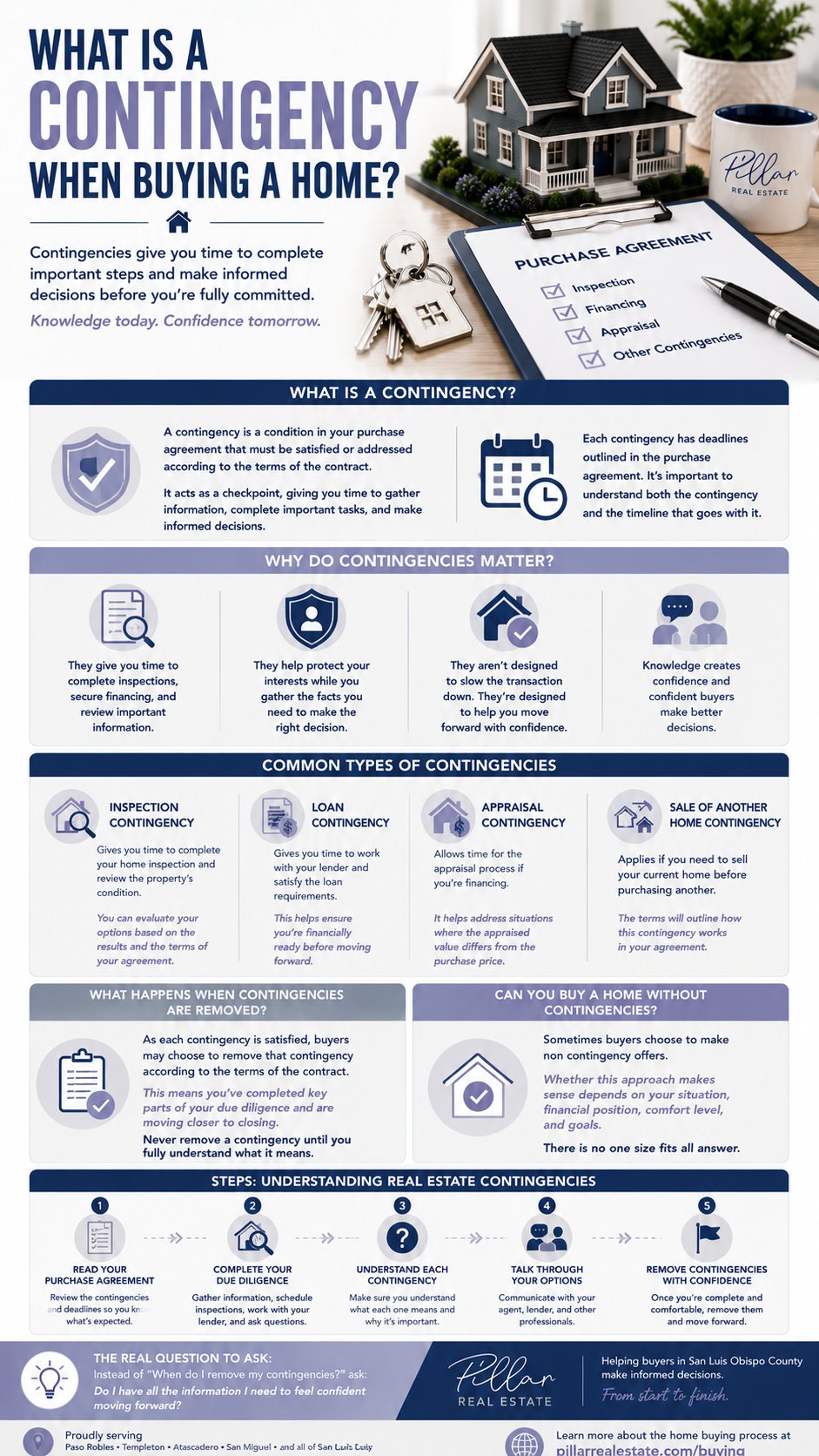
What Is a Contingency?
A contingency is a condition that must be satisfied or addressed according to the terms of the purchase agreement.
Think of it as a checkpoint.
Instead of moving straight from an accepted offer to closing, contingencies give you time to gather information, complete important tasks, and make informed decisions.
Each contingency has deadlines outlined in the purchase agreement, so it's important to understand both the contingency itself and the timeline that goes with it.
Why Do Contingencies Matter?
Buying a home is one of the biggest financial decisions most people will ever make.
Before you remove contingencies, you want to have a clear understanding of the property and your financing.
Contingencies help create that opportunity.
They aren't designed to slow the transaction down.
They're designed to help buyers move forward with confidence.
Common Types of Contingencies
While every purchase agreement is different, here are some of the most common contingencies buyers encounter.
Inspection Contingency
The inspection contingency gives you time to complete your home inspection and review the property's condition.
If questions or concerns come up, you'll have an opportunity to evaluate your options according to the purchase agreement.
Loan Contingency
Buying a home usually depends on financing.
The loan contingency gives you time to work with your lender and satisfy the loan requirements before moving forward.
Appraisal Contingency
If you're financing your purchase, your lender will generally require an appraisal.
The appraisal contingency allows time for that process and helps address situations where the appraised value differs from the purchase price.
Sale of Another Home Contingency
Some buyers need to sell their current home before purchasing another.
Depending on the agreement, a contingency may address that situation.
Every transaction is different, so it's important to understand how this type of contingency applies if you're buying and selling at the same time.
What Happens When Contingencies Are Removed?
As each contingency is satisfied, buyers may choose to remove that contingency according to the terms of the purchase agreement.
Removing contingencies is an important milestone because it means you've completed key parts of your due diligence and are moving closer to closing.
This is one of the reasons I encourage buyers to ask questions throughout the process.
I never want anyone removing a contingency without understanding exactly what it means.
Can You Buy a Home Without Contingencies?
Sometimes buyers hear about "non-contingent offers."
Whether that approach makes sense depends entirely on the situation.
Every buyer's financial position, comfort level, and goals are different.
That's why I believe contingency decisions should be made carefully after understanding both the benefits and the potential risks.
There isn't a one-size-fits-all answer.
What I'm Seeing Right Now
I've found that the word contingency often sounds much scarier than it really is.
Once buyers understand that contingencies are simply built-in opportunities to complete inspections, secure financing, and review important information before moving forward, the process feels much more manageable.
Knowledge creates confidence.
And confident buyers make better decisions.
That's exactly what I want for every client I work with.
From start to finish.
A Real-Life Example
I was working with buyers who had just gotten their offer accepted.
A few days later, they called me and said,
"We just received something about removing contingencies. Are we supposed to sign this already?"
I'm glad they asked.
Instead of rushing through the paperwork, we talked about what each contingency meant.
We reviewed the inspection.
We confirmed where they were in the loan process.
We discussed the appraisal.
Only after they understood what had been completed and felt comfortable with where things stood did we move forward.
By the end of the conversation, they weren't signing documents because someone told them to.
They were making an informed decision because they understood what each contingency was designed to do.
That's exactly how I believe the process should work.
The Biggest Mistake
The biggest mistake buyers make is thinking contingencies are simply paperwork that needs to be checked off.
They're not.
Contingencies are there to give you time to gather information before making one of the biggest financial decisions of your life.
I never want a buyer to remove a contingency without understanding what it means and why it's there.
Once it's removed, you're taking another step toward closing, so it's important to feel confident before moving forward.
What This Process Should Feel Like
Buying a home shouldn't feel like you're signing documents you don't understand.
By the time you're ready to remove contingencies, I want you to know:
What each contingency covered.
What information you've gathered.
Whether your questions have been answered.
And whether moving forward still makes sense for your goals.
When you understand the process, you're making decisions with confidence instead of simply following a timeline.
How This Connects to the Bigger Picture
Over the last several articles, we've talked about inspections, escrow, title, earnest money, closing costs, buyer representation, and title insurance.
Contingencies tie all of those pieces together.
They give you the opportunity to complete each of those important steps before your purchase moves toward closing.
Understanding contingencies helps the entire home buying process make more sense.
Next, we'll shift from the buying process to another topic many homeowners ask about:
Should I renovate my home before I sell it?
Steps: Understanding Real Estate Contingencies
Step 1: Read Your Purchase Agreement
If you're buying a home in Paso Robles, Templeton, Atascadero, San Miguel, or anywhere in San Luis Obispo County, take time to review the contingencies and the deadlines included in your purchase agreement.
Knowing what's expected helps you stay on track throughout escrow.
Step 2: Complete Your Due Diligence
Use your contingency periods to gather information.
Schedule inspections.
Work with your lender.
Review the Preliminary Title Report.
Ask questions.
The purpose of contingencies is to help you make informed decisions, not rushed ones.
Step 3: Understand What Each Contingency Means
Every contingency serves a purpose.
Whether it's related to inspections, financing, or the appraisal, make sure you understand what has been completed before deciding to remove it.
Step 4: Talk Through Your Options
If questions come up during your contingency period, don't guess.
Talk with your real estate agent, lender, escrow officer, or other professionals involved in your transaction so you understand your options before making a decision.
Step 5: Remove Contingencies With Confidence
Once you've completed your due diligence and you're comfortable moving forward, removing contingencies becomes another milestone that brings you one step closer to closing on your new home.
So... What Is a Contingency?
A contingency is a condition within your purchase agreement that gives you time to complete important parts of the home buying process before moving forward.
They're there to protect you.
They're there to give you time to gather information.
And they're there to help you make confident decisions.
The Best Decisions Come From Understanding the Process
Over the past 13+ years, I've found that buyers aren't intimidated by contingencies once they understand what they do.
They're simply checkpoints.
They give you the opportunity to review the home's condition, finalize your financing, and make sure you're comfortable before taking the next step.
That's exactly how buying a home should feel.
Clear.
Thoughtful.
And focused on what makes sense for your goals.
From start to finish.
The Real Question to Ask
Instead of asking:
"When do I remove my contingencies?"
Ask:
"Do I have all the information I need to feel confident moving forward?"
That's the question that leads to better decisions and a smoother transaction.
Next Steps
If you're thinking about buying a home in Paso Robles, Templeton, Atascadero, San Miguel, or anywhere in San Luis Obispo County, I'd love to help you understand every step of the process before you write an offer.
Learn more about how I help buyers make informed decisions from the first showing to closing by visiting:
👉 https://pillarrealestate.com/buying
My goal is to help you understand the process, answer your questions clearly, and make sure every decision you make is based on knowledge instead of uncertainty.
From start to finish.
FAQ
What is a contingency in real estate?
A contingency is a condition in the purchase agreement that gives buyers time to complete important parts of the transaction, such as inspections, financing, or the appraisal, before moving forward.
Why are contingencies important?
Contingencies give buyers an opportunity to gather information, complete their due diligence, and make informed decisions before closing on a home.
What are the most common contingencies?
Some of the most common contingencies include the inspection contingency, loan contingency, appraisal contingency, and, in some situations, a contingency related to the sale of another home.
Can I remove contingencies before they're due?
Yes, but it's important to understand what you're doing before removing any contingency. I always recommend making sure your questions have been answered and your due diligence has been completed first.
Can I buy a home without contingencies?
It depends on your situation. Some buyers choose to make offers with fewer or no contingencies, but that decision should be made carefully after understanding the potential benefits and risks.
Who can help me understand my contingencies?
Your real estate agent can explain the contingencies in your purchase agreement, the associated deadlines, and what each one means so you can make informed decisions throughout the transaction.
Amber Johnson, Founder
Pillar Real Estate
805.835.3425
[email protected]
1345 Park St. Paso Robles, CA 93446
DRE# 01925434

Amber Johnson | September 18, 2026

Amber Johnson | September 18, 2026

Amber Johnson | September 18, 2026
How wells, septic systems, acreage, access, and the buyer pool shape a rural-property sale.

Amber Johnson | September 17, 2026
What concession requests can signal about buyer leverage, affordability, and current negotiations.

Amber Johnson | September 17, 2026
What sellers should know about owned, financed, and leased solar before listing.

Amber Johnson | September 17, 2026
How roof condition, insurance, buyer financing, and repair costs can shape the right decision.
Amber Johnson | September 17, 2026

Amber Johnson | September 17, 2026

Amber Johnson | September 17, 2026
How tenant occupancy can affect timing, showings, communication, and the selling process.
You’ve got questions and we can’t wait to answer them.

Amber Johnson, Founder
Pillar Real Estate
805.835.3425
DRE# 01925434
1345 Park Street
Paso Robles, CA 93446