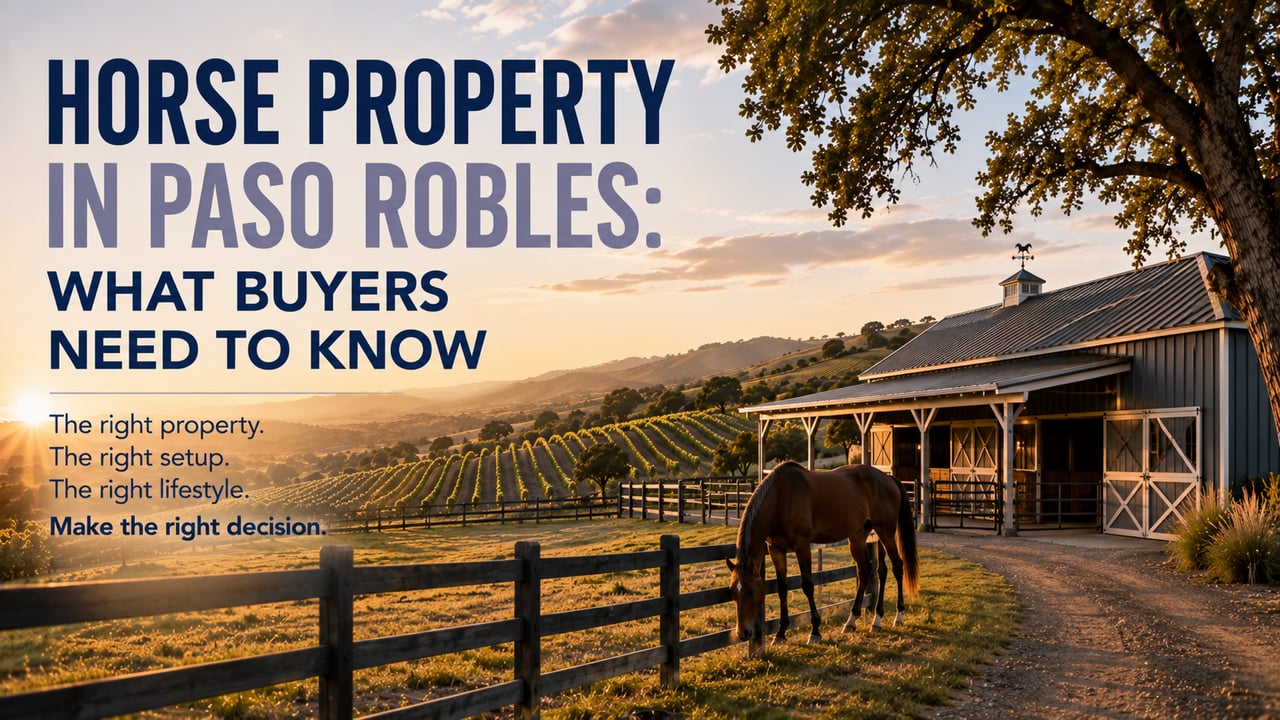
Horse Property in Paso Robles: What Buyers Need to Know
August 28, 2026
August 28, 2026
One of the questions I hear from buyers looking for acreage is,
"Should we buy horse property?"
Sometimes they already own horses.
Sometimes they're planning to in the future.
And sometimes they simply want enough land to keep that option open.
Here's the thing.
Not every property with a few acres is set up for horses.
And not everyone who buys horse property actually needs a full equestrian facility.
Over the past 13+ years, I've helped buyers purchase rural properties throughout Paso Robles, Templeton, San Miguel, and North San Luis Obispo County. One thing I've learned is that horse property isn't about having the most acreage.
It's about having the right property for the way you plan to use it.
My goal is to help you understand what to look for before you buy so you can make a decision that makes sense for your goals.
Before we get started, I also recommend reading my article, "Acreage Property in Paso Robles: What Should Buyers Know?" It explains many of the basics of rural property ownership that also apply to horse properties.
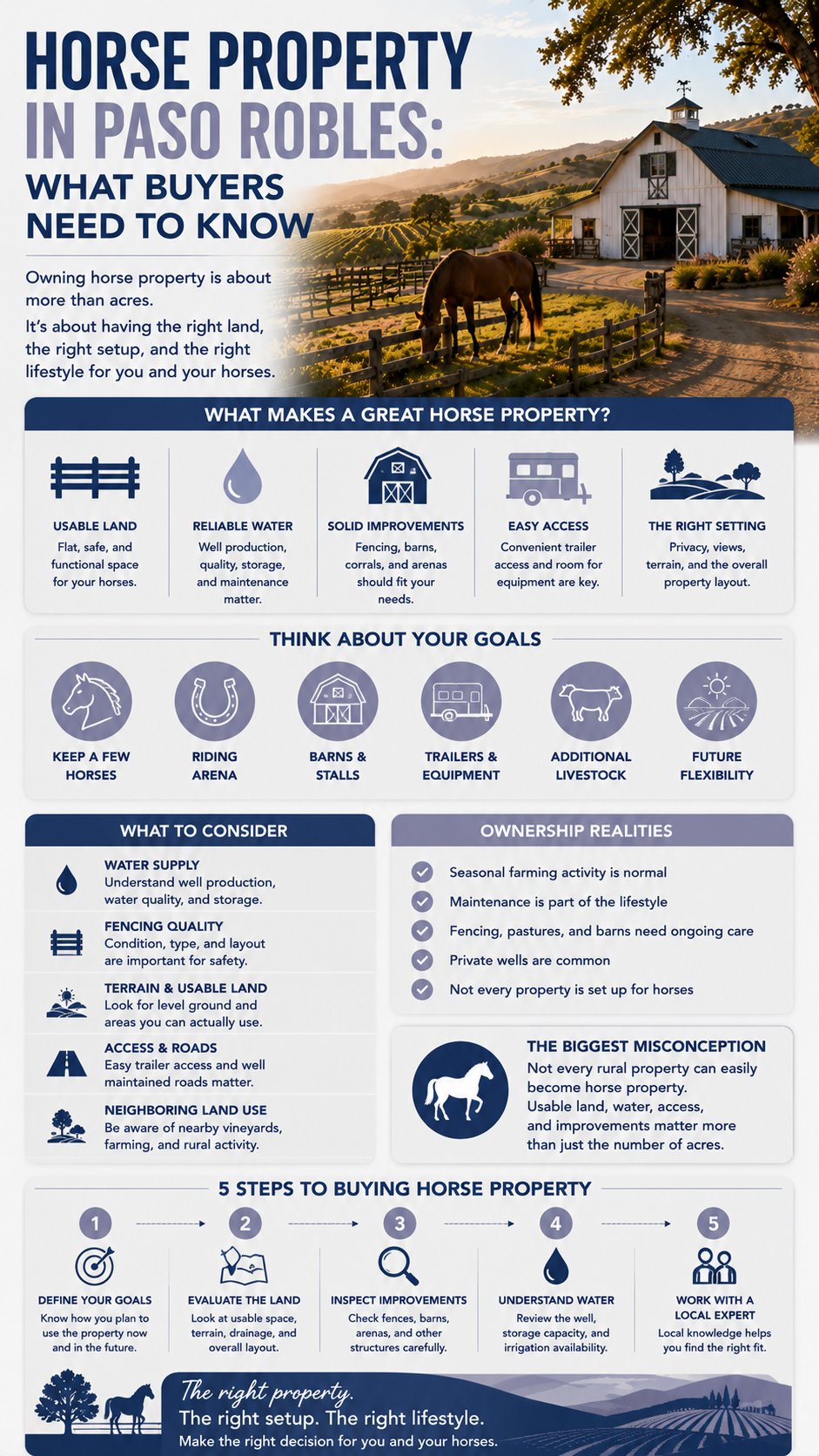
What Makes a Property Good for Horses?
One of the biggest misconceptions is that acreage alone determines whether a property works for horses.
It doesn't.
A five-acre parcel can be an excellent horse property.
Another five-acre parcel may not be practical at all.
Things like usable land, terrain, fencing, access, and water often matter more than the total number of acres.
That's why I always encourage buyers to evaluate the entire property instead of focusing on acreage alone.
Think About Your Goals
Before looking at horse property, ask yourself one question.
What do you actually want to do with the property?
Your answer changes everything.
For example, are you looking for:
Knowing your goals makes it much easier to identify the right property.
Water Is One of the Most Important Considerations
Water is an important part of owning any rural property.
It's especially important if you're planning to keep horses.
Many rural properties rely on private wells.
Before purchasing, buyers should understand:
A well inspection can provide valuable information during the due diligence period.
Fencing Matters
Not all fencing is designed for horses.
When evaluating a property, pay attention to the condition, layout, and type of fencing that's already in place.
If fencing needs to be added or replaced, it's helpful to understand those potential costs before purchasing.
Every property is different, and existing improvements can have a significant impact on your overall investment.
Think Beyond the Barn
Barns, tack rooms, and arenas are certainly valuable features.
But they're only part of the equation.
I encourage buyers to think about the entire property.
Is there enough usable land?
Is trailer access convenient?
Will the property support the lifestyle you're hoping to create?
Those questions are often more important than whether the barn has a fresh coat of paint.
Maintenance Is Part of the Lifestyle
Owning horse property usually involves more maintenance than owning a home in a subdivision.
Depending on the property, that may include:
For many buyers, that's exactly what they're looking for.
Others realize they'd rather spend weekends exploring the Central Coast instead of maintaining several acres.
Neither answer is right or wrong.
It's simply important to understand what ownership actually looks like.
What I'm Seeing
I've noticed more buyers asking about horse property over the past several years.
Interestingly, many don't currently own horses.
They're looking for flexibility.
They want room to grow, more privacy, and the opportunity to enjoy a rural lifestyle if their plans change in the future.
That's one of the reasons horse properties continue to attract interest throughout Paso Robles and North San Luis Obispo County.
From start to finish.
A Real-Life Example
I recently worked with buyers who had always dreamed of owning a horse property.
They had been searching online for months and assumed they simply needed five or ten acres.
Once we started touring properties, they realized acreage was only part of the equation.
One property had plenty of land, but much of it was steep and difficult to use.
Another had fewer acres, but it included usable pasture, quality fencing, a barn, and easy trailer access.
By the end of the day, their priorities had completely changed.
Instead of asking,
"How many acres does it have?"
They started asking,
"Will this property actually work for the way we want to live?"
That's exactly the shift I hope every buyer makes.
The Biggest Misconception
The biggest misconception I hear is that every rural property can easily become horse property.
It doesn't work that way.
Terrain matters.
Water matters.
Access matters.
Usable land matters.
Even neighboring properties can influence how enjoyable the property is for everyday use.
Another misconception is that you need a large equestrian facility to own horses.
Many buyers simply want enough room for a couple of horses and a barn.
Others are looking for an arena or additional improvements.
The right property depends entirely on your situation.
What This Should Feel Like
When you're considering horse property, I don't want you to picture only the barn.
I want you to picture your daily routine.
Walking out to feed your horses in the morning.
Watching the sunset from the pasture.
Having enough room for trailers, equipment, and outdoor projects.
Enjoying the privacy that often comes with rural living.
That's what many buyers are really searching for.
By this point, you should have a better understanding of:
How This Connects to the Bigger Picture
Earlier, I wrote "Acreage Property in Paso Robles: What Should Buyers Know?"
That article explains the fundamentals of buying rural property.
Horse property builds on those same concepts while focusing on buyers who need land that supports a specific lifestyle.
Whether you're planning to own horses now or simply want the option in the future, understanding these differences can help you make a much more informed decision.
Next, we'll answer another question that almost every rural buyer asks:
Living Off a Private Well in Paso Robles: What Homebuyers Should Expect
Steps: Buying Horse Property in Paso Robles
Step 1: Define Your Goals
Think about how you'll actually use the property.
Will you keep a few horses?
Do you need an arena?
Will you store trailers or equipment?
Knowing your goals helps narrow the search.
Step 2: Evaluate the Land
Look beyond the acreage number.
Pay attention to usable pasture, slope, drainage, access, and how the land is laid out.
A smaller property with highly usable land may be a better fit than a larger parcel with limited functionality.
Step 3: Inspect the Improvements
If the property includes fencing, barns, corrals, or arenas, inspect their condition carefully.
Understanding what needs repair or replacement can help you plan for future expenses.
Step 4: Understand the Water Supply
Reliable water is essential for both the property and the animals.
If the home uses a private well, learn about its production, condition, and maintenance history during your due diligence period.
Step 5: Work With a Local Expert
Horse properties are very different from traditional neighborhood homes.
Working with someone who understands rural properties in Paso Robles can help you evaluate features that aren't obvious in online listings.
So... Should You Buy Horse Property in Paso Robles?
For many buyers, horse property offers the opportunity to create the lifestyle they've always wanted.
More space.
More privacy.
Room for animals.
A stronger connection to the outdoors.
At the same time, it comes with responsibilities that every buyer should understand before purchasing.
The goal isn't simply to buy land.
It's to buy the right property for the way you want to live.
Why I Enjoy Helping Buyers Find Rural Properties
Over the past 13+ years, I've helped buyers purchase neighborhood homes, acreage, ranches, and horse properties throughout North San Luis Obispo County.
One thing I've learned is that no two rural properties are exactly alike.
Every parcel has its own strengths, challenges, and possibilities.
Helping buyers understand those differences is one of the most rewarding parts of my job because it allows them to make confident decisions instead of expensive assumptions.
From start to finish.
The Real Question to Ask
Instead of asking:
"How many acres do I need for horses?"
Ask:
"Will this property support the lifestyle I want for both my family and my horses?"
That's the question that leads to the right long-term decision.
Next Steps
If you're thinking about buying horse property in Paso Robles, Templeton, San Miguel, Atascadero, or anywhere in North San Luis Obispo County, I'd be happy to help you compare properties and determine which ones best fit your goals.
I also recommend reading my article, "Acreage Property in Paso Robles: What Should Buyers Know?" It's a great companion to this guide and explains many of the fundamentals of rural property ownership.
When you're ready to begin your search, visit:
👉 https://pillarrealestate.com/buying
My goal is to help you understand the property, answer your questions honestly, and help you make informed decisions from your first showing through closing.
From start to finish.
FAQ
What qualifies as horse property in Paso Robles?
Horse property typically includes enough usable land and appropriate improvements to support horses. Depending on the property, that may include pasture, fencing, barns, corrals, arenas, trailer access, and a reliable water source.
How much land do I need for horses?
There's no single answer. The amount of land depends on how many horses you plan to keep, how you intend to use the property, and the layout of the land. Usable acreage is often more important than the total acreage.
Should I inspect the fencing before buying?
Yes. Fencing is an important part of any horse property. Understanding its condition and whether it meets your needs can help you avoid unexpected expenses after closing.
Do most horse properties in Paso Robles have private wells?
Many rural horse properties rely on private wells. During escrow, buyers should learn about the well's production, condition, and maintenance history as part of their due diligence.
Can I buy a property that's not already set up for horses?
In some cases, yes. Depending on the property and applicable regulations, buyers may be able to add fencing, barns, or other improvements. It's important to evaluate the land and understand what's feasible before purchasing.
Is horse property more expensive to maintain?
It can be. Maintenance may include fencing, pastures, driveways, barns, irrigation, and other rural improvements. Understanding those responsibilities ahead of time helps buyers choose a property that fits both their lifestyle and budget.
Should I buy horse property even if I don't own horses yet?
Some buyers do because they want the flexibility to own horses in the future or simply enjoy the privacy and open space these properties often provide. The right decision depends on your long-term goals and how you plan to use the property.
Amber Johnson, Founder
Pillar Real Estate
805.835.3425
[email protected]
1345 Park St. Paso Robles, CA 93446
DRE# 01925434

Amber Johnson | September 18, 2026
Amber Johnson | September 18, 2026
Amber Johnson | September 18, 2026
How wells, septic systems, acreage, access, and the buyer pool shape a rural-property sale.
Amber Johnson | September 17, 2026
What concession requests can signal about buyer leverage, affordability, and current negotiations.
Amber Johnson | September 17, 2026
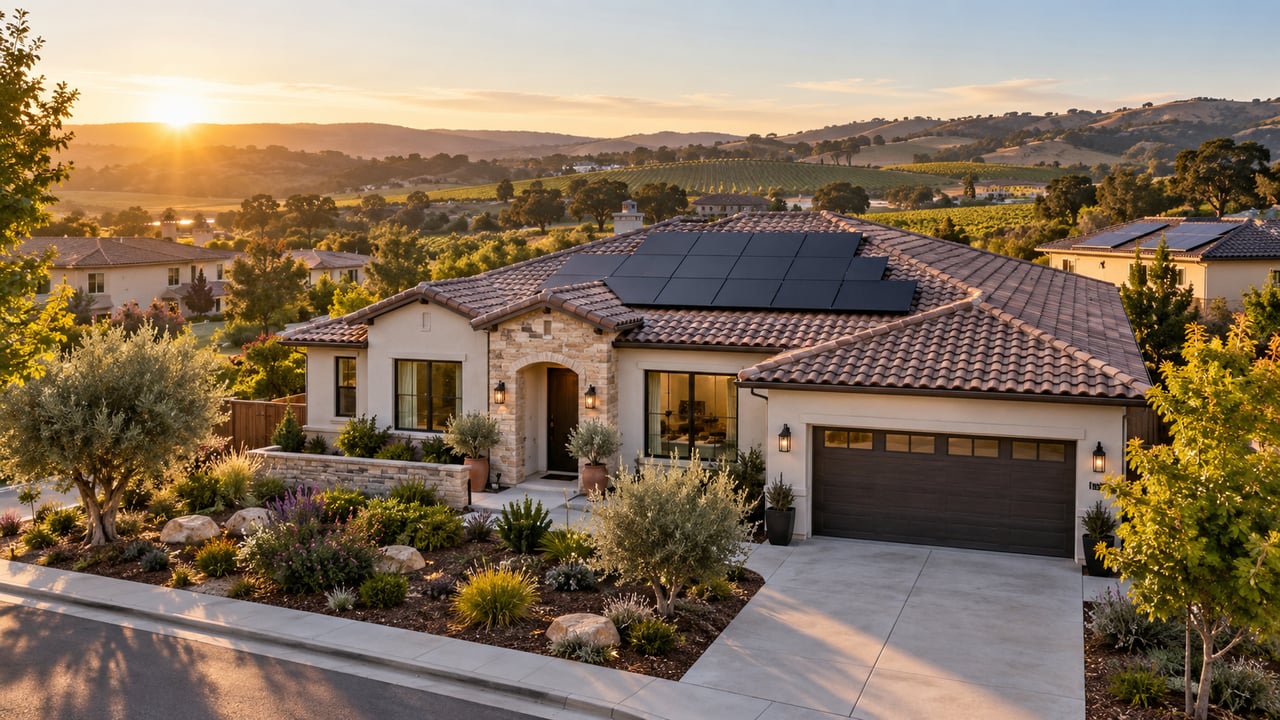
What sellers should know about owned, financed, and leased solar before listing.
Amber Johnson | September 17, 2026
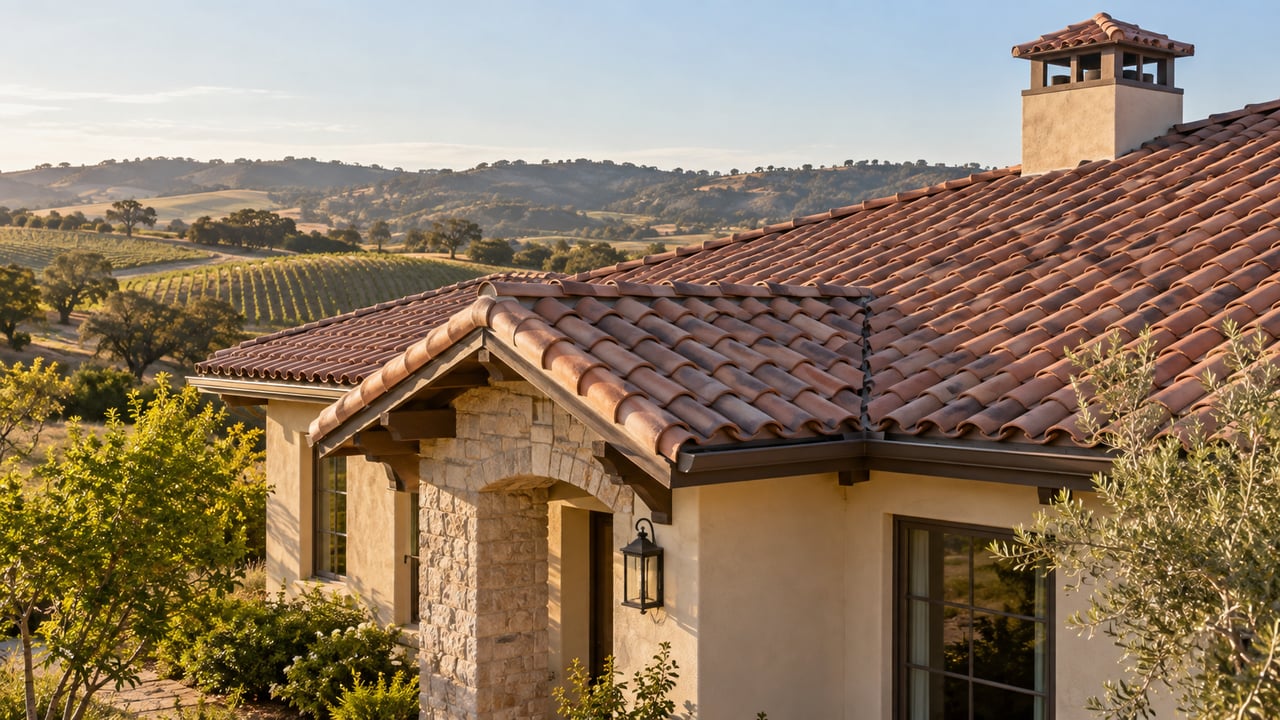
How roof condition, insurance, buyer financing, and repair costs can shape the right decision.
Amber Johnson | September 17, 2026

Amber Johnson | September 17, 2026
Amber Johnson | September 17, 2026
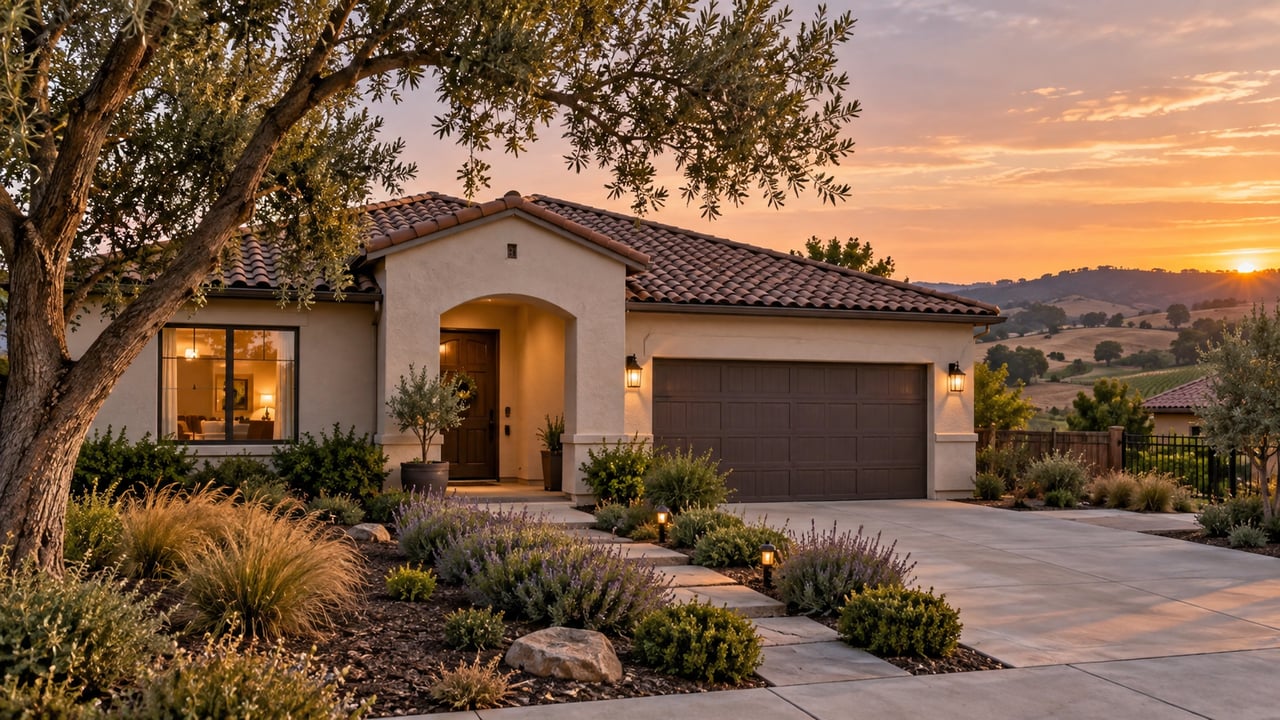
How tenant occupancy can affect timing, showings, communication, and the selling process.
You’ve got questions and we can’t wait to answer them.
Amber Johnson, Founder
Pillar Real Estate
805.835.3425
DRE# 01925434
1345 Park Street
Paso Robles, CA 93446