Is San Luis Obispo Practical for Someone Who Travels Often?
October 8, 2026
October 8, 2026
If you travel often, San Luis Obispo can be a practical place to live. The answer depends less on the city in general and more on your travel pattern, the routes you use, the way you work, and the kind of home you choose.
Here’s the short answer. San Luis Obispo offers a local airport, highway access, a compact daily routine, and several housing styles that can work well for frequent travelers. The tradeoff is that your most convenient flight may still require a connection, a drive to another airport, or a careful plan for early departures and late returns.
The right strategy is to test your real schedule before you choose a neighborhood or property. A home that feels perfect on a Saturday afternoon may work very differently when you are leaving before sunrise with a carry-on bag and returning after a long week away.
Frequent travel means different things to different households. One person may fly twice a month for short business trips. Another may spend a full week away every month. A remote worker may take longer trips but need reliable space to work between them.
Write down what your routine really looks like:
This list matters because convenience is personal. A nearby airport has real value when its current routes fit your trips. If your common destination usually requires a connection or a different departure point, the calculation changes. Verify current schedules with the airport and airlines rather than relying on an old route list.
Living in San Luis Obispo puts you close to a commercial airport without making airport access the center of daily life. For travelers whose itineraries fit the available service, that can simplify departures, arrivals, parking, and pickups.
But do not stop at the map. Check a sample of the trips you actually take. Search your usual dates, preferred airlines, connection tolerance, bag needs, and return times. Compare the full itinerary, not only the first flight.
A useful test is to review several recent trips and several likely future ones. Would you have used the local airport? Would a connection have worked? Would you have preferred to drive to another airport for a nonstop option? The pattern will tell you more than a single fare or one convenient itinerary.
Also consider what happens when a schedule changes. If a delayed connection brings you home later than planned, how will you get from the terminal to your house? A practical location should still work on the difficult travel day, not only the easy one.
Air travel is only part of the question. Many Central Coast residents also drive for meetings, family visits, or flights from another region. Highway access can matter as much as proximity to the local terminal.
Before choosing a home, test the route during the hours you are most likely to leave. Look at the turns between the property and the highway, school or commuter traffic, construction patterns, and the last few miles after a late return. A route that looks short on a map may feel less convenient when it includes several busy intersections or a difficult parking setup at home.
If you are comparing San Luis Obispo with North County, read my guide to living in Paso Robles or San Luis Obispo. The right choice often comes down to the routines you repeat, including where you work, how you travel, and what you want when you are home.
San Luis Obispo neighborhoods do not all create the same travel routine. Some put you closer to downtown services. Others offer easier parking, quieter streets, different housing types, or a more direct route out of town.
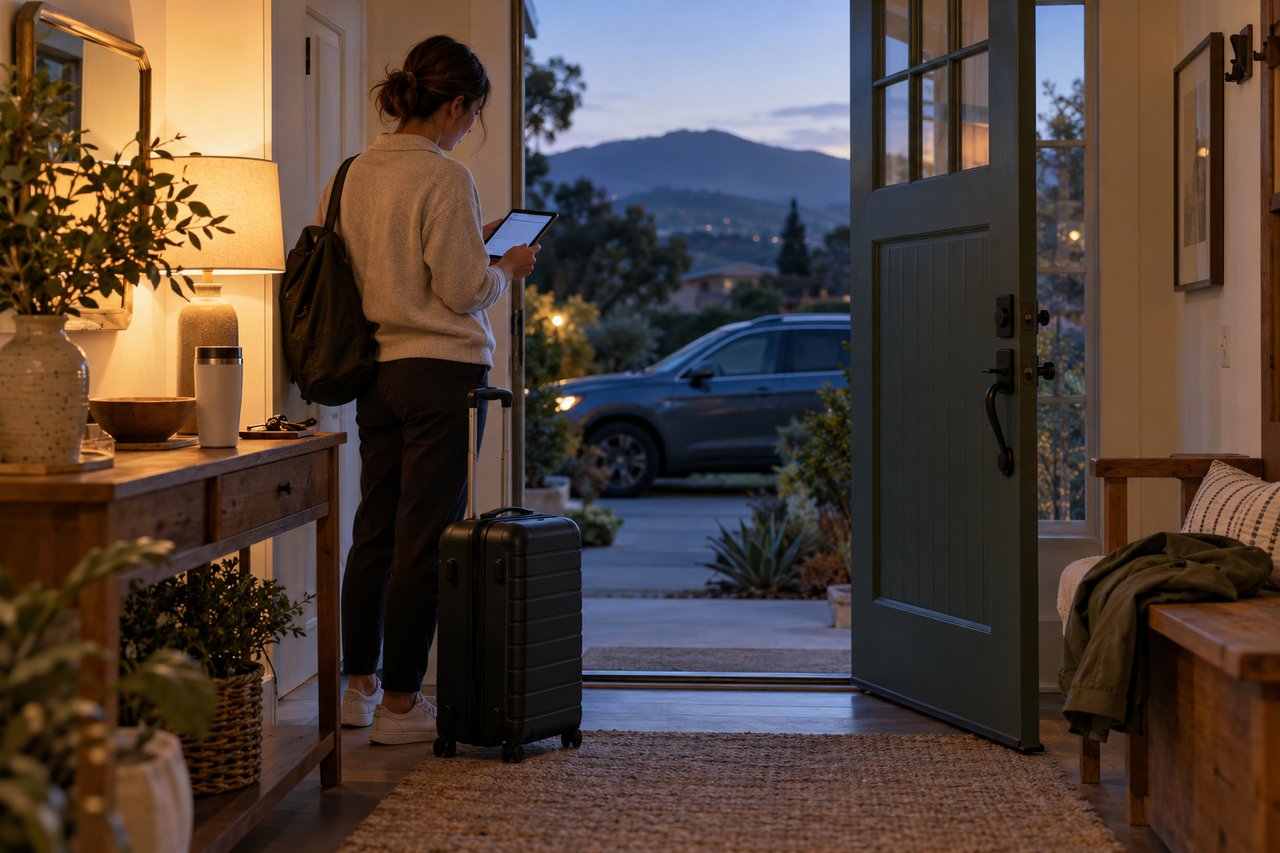
Think through two ordinary scenes. First, you are leaving before dawn with luggage. Second, you are coming home tired and still need to park, unload, pick up food, and settle back in. Which property makes those moments simple?
Questions worth checking include:
My overview of the best neighborhoods in San Luis Obispo can help you compare community character and housing choices. Then visit your strongest options at the times that match your own travel schedule.
A practical travel home is not only easy to reach. It is also easy to leave.
A condominium or smaller home may reduce exterior upkeep, but you should still review association rules, parking, guest access, package handling, and what maintenance is actually covered. A detached house may give you more control and storage, but it can also create more yard, security, and repair responsibilities while you are away.
Focus on the property rather than the label. Check locks, windows, exterior lighting, water shutoff access, irrigation, drainage, smoke and carbon monoxide alarms, and any equipment that needs regular attention. If the home has a yard, pool, private gate, or older mechanical system, decide who will monitor it during longer trips.
Do not assume newer automatically means easier or that smaller automatically means low maintenance. Read the disclosures, inspect the property, and estimate the routine you will actually have to manage.
Parking deserves more attention than it usually gets. Frequent travelers may leave a car at home, use airport parking, arrange a ride, or rotate among those options. Each pattern affects the type of property that works best.
If a household has two vehicles, make sure the garage, driveway, assigned space, permits, and street restrictions fit the plan. If you expect to use rides, check whether pickup is simple and whether a driver can stop without blocking traffic. If you return with luggage, consider the distance from the parking space to the door and whether it is well lit.
These details sound small. They are not. Repeating an awkward parking routine every time you leave or return can turn a convenient city into an inconvenient home.
Travel often overlaps with remote or hybrid work. You may need a reliable place to take calls between trips, organize equipment, or work after a late arrival. A spare room is helpful, but it is not the only answer.
Look at noise, natural light, door placement, internet service available to the address, and how the work area relates to the rest of the home. If two people work from home, test whether both can have a call without competing for the same quiet space.
Storage matters too. A practical setup may include a place for luggage, chargers, coats, work materials, and travel supplies close to the entry. The goal is not to design the whole house around a suitcase. It is to reduce the repeated friction of packing, unpacking, and getting back to normal.
Travel convenience extends beyond transportation. A good home base should support the small responsibilities that continue while you are gone.
Think about mail and package delivery. Is there a secure location, parcel locker, trusted neighbor, or service that fits your routine? If you have pets, how easily can a sitter enter and follow the animal’s normal schedule? If you have landscaping or indoor plants, who will check them during longer absences?
Also decide how you will handle urgent property issues. Keep contact information for a trusted local person and qualified service providers. Know where the water shutoff and electrical panel are. Provide access instructions without compromising security.
This is part of understanding what it is like living in San Luis Obispo. The city may fit your work and travel needs, but the property still has to support the routines that make your life manageable.
The best home base should feel good when you are not traveling. That point is easy to overlook when airport access is at the top of the list.
Do you want to walk to coffee, dinner, or daily errands? Would you rather return to a quieter residential setting? Do you need room for visitors, outdoor equipment, or a pet? Are you hoping to spend weekends at home without driving for every activity?
San Luis Obispo can support several versions of daily life. Downtown proximity may appeal to someone who wants a compact routine. A neighborhood farther from the center may offer a different balance of parking, space, and quiet. Neither is automatically more practical.
The better choice is the one that supports both sides of your schedule: efficient departures and a satisfying life at home.
Do not evaluate a home only by purchase price or rent. Frequent travel can add parking, rides, pet care, yard service, association dues, storage, security, and maintenance costs. A location that reduces some expenses may add others.
Create a simple monthly and annual estimate based on your real routine. Include the costs you already pay and the new ones each property would create. Then weigh those numbers against time, stress, and predictability.
For example, a home with easy parking and less exterior work may be worth more to one traveler. Another person may accept more maintenance for a property that offers privacy, workspace, and room for family. It depends on your situation.
When a property becomes a serious option, run a travel-day test. Drive from the home toward the airport or highway during a realistic departure window. Return by the route you would use at night. Park, carry a bag to the entry, and notice the lighting, steps, gate, and distance.
Then test the ordinary days. Visit a grocery store, find a coffee stop, check the work route, and see how the neighborhood feels when you are home. Review the property’s disclosures and inspection findings with the same care you would give any other purchase.
If you are moving from outside the area, my guide to moving to San Luis Obispo County can help you organize the larger decision. A short scouting trip is more useful when you plan it around the routines you will repeat.
Yes, it can be. San Luis Obispo is most practical for a frequent traveler when the current flight options, highway routes, parking plan, work setup, and home responsibilities fit that person’s actual schedule.
The deciding factor is rarely one feature. It is the combination. A nearby airport helps. A manageable drive helps. Secure parking, an easy-to-leave property, reliable help while you are away, and a good life between trips matter just as much.
I help buyers and relocating households compare San Luis Obispo homes through the routines that will shape their week, not a generic checklist. We can look at neighborhood access, property upkeep, parking, work space, and the tradeoffs that make sense for your goals.
If you are considering San Luis Obispo as your home base, I can help you build a focused property search around the way you travel and live.
Amber
Pillar Real Estate | Amber Johnson, Founder
805.835.3425 | [email protected]
1345 Park St. Paso Robles, CA 93446 | DRE# 01925434
Amber Johnson | November 10, 2026
Learn what each listing outcome may mean, what it leaves unanswered and how price range, location and timing affect the comparison.

Amber Johnson | November 9, 2026
Amber Johnson | November 9, 2026
Review inspection findings, service records, capacity, access and local requirements before relying on the system.

Amber Johnson | November 8, 2026
Compare access, timing, seasonal conditions and home-to-trail logistics before building regular birdwatching into life in Los Osos.
Amber Johnson | November 8, 2026
Verify the separate structure's records, condition and permitted use before counting on it.

Amber Johnson | November 7, 2026
Compare specific homes by their street setting, daily routes and access to the places you use.

Amber Johnson | November 7, 2026
Test school logistics, activities and daily routes from the specific home you are considering.

Amber Johnson | November 7, 2026
Amber Johnson | November 7, 2026
Show usable storage honestly and help buyers see how the home's layout fits daily life.
You’ve got questions and we can’t wait to answer them.

Amber Johnson, Founder
Pillar Real Estate
805.835.3425
DRE# 01925434
1345 Park Street
Paso Robles, CA 93446